
UK Government Borrowing Sees Sharp Decline Amid Record Tax Revenues
In This Article
HIGHLIGHTS
- UK government borrowing in December 2025 fell to £11.6bn, a significant drop from £18.7bn in December 2024.
- The decrease in borrowing was driven by a record £7.7bn increase in tax revenues, including income tax and National Insurance Contributions.
- Public spending rose by £3.2bn to £92.9bn, but was outweighed by the increase in tax receipts.
- The national debt reached 95.5% of GDP, with £9.1bn spent on interest payments in December.
- The Office for Budget Responsibility forecasts a decrease in public sector net borrowing to £138bn for the financial year.
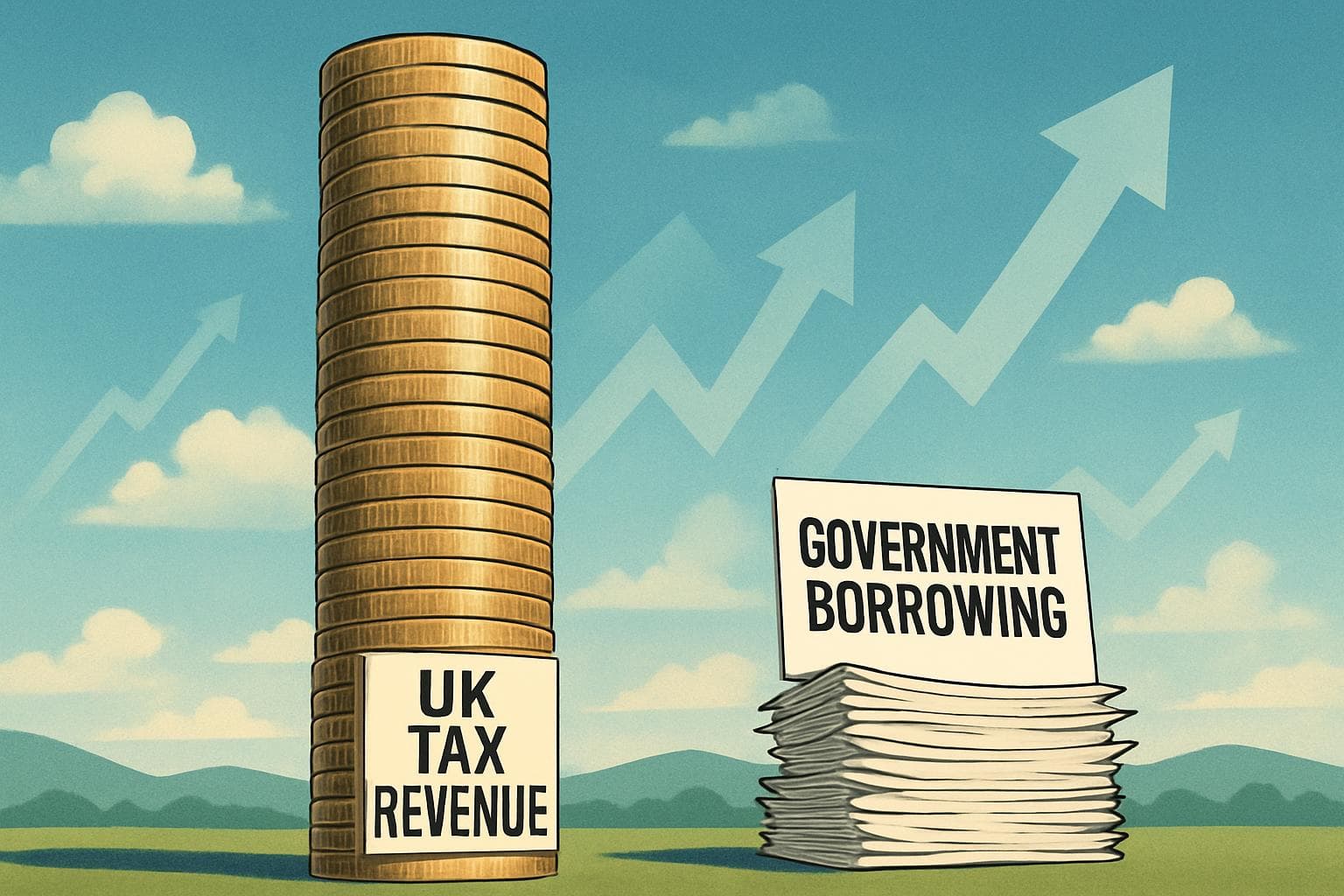
In a surprising turn of events, the UK government reported a significant reduction in borrowing for December 2025, as tax revenues soared to record levels. According to the Office for National Statistics (ONS), public sector net borrowing fell to £11.6bn, a stark contrast to the £18.7bn borrowed in the same month the previous year. This figure not only surpassed economists' expectations but also marked a positive shift in the country's fiscal policy.
Record Tax Revenues Boost Fiscal Health
The decline in borrowing was primarily attributed to a substantial £7.7bn increase in tax revenues, which included income tax and National Insurance Contributions (NICs). These gains were bolstered by changes to NIC rates introduced in April and higher wage growth, leading to the highest tax receipts for any December on record. Tom Davies, a senior statistician at the ONS, noted that while public spending increased by £3.2bn to £92.9bn, the surge in tax income more than compensated for this rise.
National Debt and Fiscal Policy
Despite the positive news on borrowing, the national debt remains a concern, reaching 95.5% of GDP. The cost of servicing this debt is significant, with £9.1bn spent on interest payments in December alone. Chancellor Rachel Reeves has prioritized reducing government borrowing, implementing a fiscal rule to ensure day-to-day spending is funded by taxes by the end of the parliamentary term. Her autumn budget included £26bn in tax rises aimed at lowering the debt and supporting public services.
Future Projections and Economic Stability
The Office for Budget Responsibility (OBR) has projected that public sector net borrowing will decrease to £138bn for the current financial year, down from £152.6bn the previous year. This reduction is expected to bring the deficit down to 4.5% of GDP. The OBR forecasts a continued decline in borrowing, potentially reaching £67bn by 2031, signaling a path towards greater economic stability.
WHAT THIS MIGHT MEAN
Looking ahead, the UK government's ability to maintain this positive trend in borrowing will depend on sustained economic growth and effective fiscal management. The projected decrease in borrowing could enhance the country's financial stability, but challenges remain, particularly with the high national debt and interest payments. Experts suggest that continued vigilance in fiscal policy and strategic investments in public services and infrastructure will be crucial in navigating the economic landscape. As the government works to balance its books, the impact of these fiscal measures on public services and economic growth will be closely monitored.
Related Articles
UK Achieves Record Budget Surplus Amid Calls for Fiscal Policy Reform

Middle East Conflict Drives UK Energy Prices to New Highs

Government Announces £4 Billion Overhaul of SEND Support in England

UK Government Announces Major Overhaul of SEND System with £3.4 Billion Investment

Prince Andrew's Ties to Epstein Under Scrutiny Amid Calls for Inquiry

Government Criticized for Mishandling Maccabi Tel Aviv Fan Ban
UK Government Borrowing Sees Sharp Decline Amid Record Tax Revenues
In This Article
 Daniel Rivera| Published
 HIGHLIGHTS
- UK government borrowing in December 2025 fell to £11.6bn, a significant drop from £18.7bn in December 2024.
- The decrease in borrowing was driven by a record £7.7bn increase in tax revenues, including income tax and National Insurance Contributions.
- Public spending rose by £3.2bn to £92.9bn, but was outweighed by the increase in tax receipts.
- The national debt reached 95.5% of GDP, with £9.1bn spent on interest payments in December.
- The Office for Budget Responsibility forecasts a decrease in public sector net borrowing to £138bn for the financial year.
In a surprising turn of events, the UK government reported a significant reduction in borrowing for December 2025, as tax revenues soared to record levels. According to the Office for National Statistics (ONS), public sector net borrowing fell to £11.6bn, a stark contrast to the £18.7bn borrowed in the same month the previous year. This figure not only surpassed economists' expectations but also marked a positive shift in the country's fiscal policy.
Record Tax Revenues Boost Fiscal Health
The decline in borrowing was primarily attributed to a substantial £7.7bn increase in tax revenues, which included income tax and National Insurance Contributions (NICs). These gains were bolstered by changes to NIC rates introduced in April and higher wage growth, leading to the highest tax receipts for any December on record. Tom Davies, a senior statistician at the ONS, noted that while public spending increased by £3.2bn to £92.9bn, the surge in tax income more than compensated for this rise.
National Debt and Fiscal Policy
Despite the positive news on borrowing, the national debt remains a concern, reaching 95.5% of GDP. The cost of servicing this debt is significant, with £9.1bn spent on interest payments in December alone. Chancellor Rachel Reeves has prioritized reducing government borrowing, implementing a fiscal rule to ensure day-to-day spending is funded by taxes by the end of the parliamentary term. Her autumn budget included £26bn in tax rises aimed at lowering the debt and supporting public services.
Future Projections and Economic Stability
The Office for Budget Responsibility (OBR) has projected that public sector net borrowing will decrease to £138bn for the current financial year, down from £152.6bn the previous year. This reduction is expected to bring the deficit down to 4.5% of GDP. The OBR forecasts a continued decline in borrowing, potentially reaching £67bn by 2031, signaling a path towards greater economic stability.
WHAT THIS MIGHT MEAN
Looking ahead, the UK government's ability to maintain this positive trend in borrowing will depend on sustained economic growth and effective fiscal management. The projected decrease in borrowing could enhance the country's financial stability, but challenges remain, particularly with the high national debt and interest payments. Experts suggest that continued vigilance in fiscal policy and strategic investments in public services and infrastructure will be crucial in navigating the economic landscape. As the government works to balance its books, the impact of these fiscal measures on public services and economic growth will be closely monitored.
Related Articles
UK Achieves Record Budget Surplus Amid Calls for Fiscal Policy Reform
Middle East Conflict Drives UK Energy Prices to New Highs
Government Announces £4 Billion Overhaul of SEND Support in England
UK Government Announces Major Overhaul of SEND System with £3.4 Billion Investment
Prince Andrew's Ties to Epstein Under Scrutiny Amid Calls for Inquiry
Government Criticized for Mishandling Maccabi Tel Aviv Fan Ban