
UK Budget Sparks Debate Over Impact on Living Standards
In This Article
HIGHLIGHTS
- The UK government announced a freeze on income tax thresholds until 2031, impacting living standards, especially for lower-income households.
- The Institute for Fiscal Studies (IFS) predicts a mere 0.5% annual rise in disposable income over the next five years.
- Labour's budget, led by Chancellor Rachel Reeves, faces criticism for breaching its manifesto promise not to raise taxes on working people.
- The Resolution Foundation suggests that a tax rate increase would have been more equitable than freezing thresholds.
- The budget aims to generate £12.4 billion by 2030-31, but experts warn it may disproportionately affect poorer households.
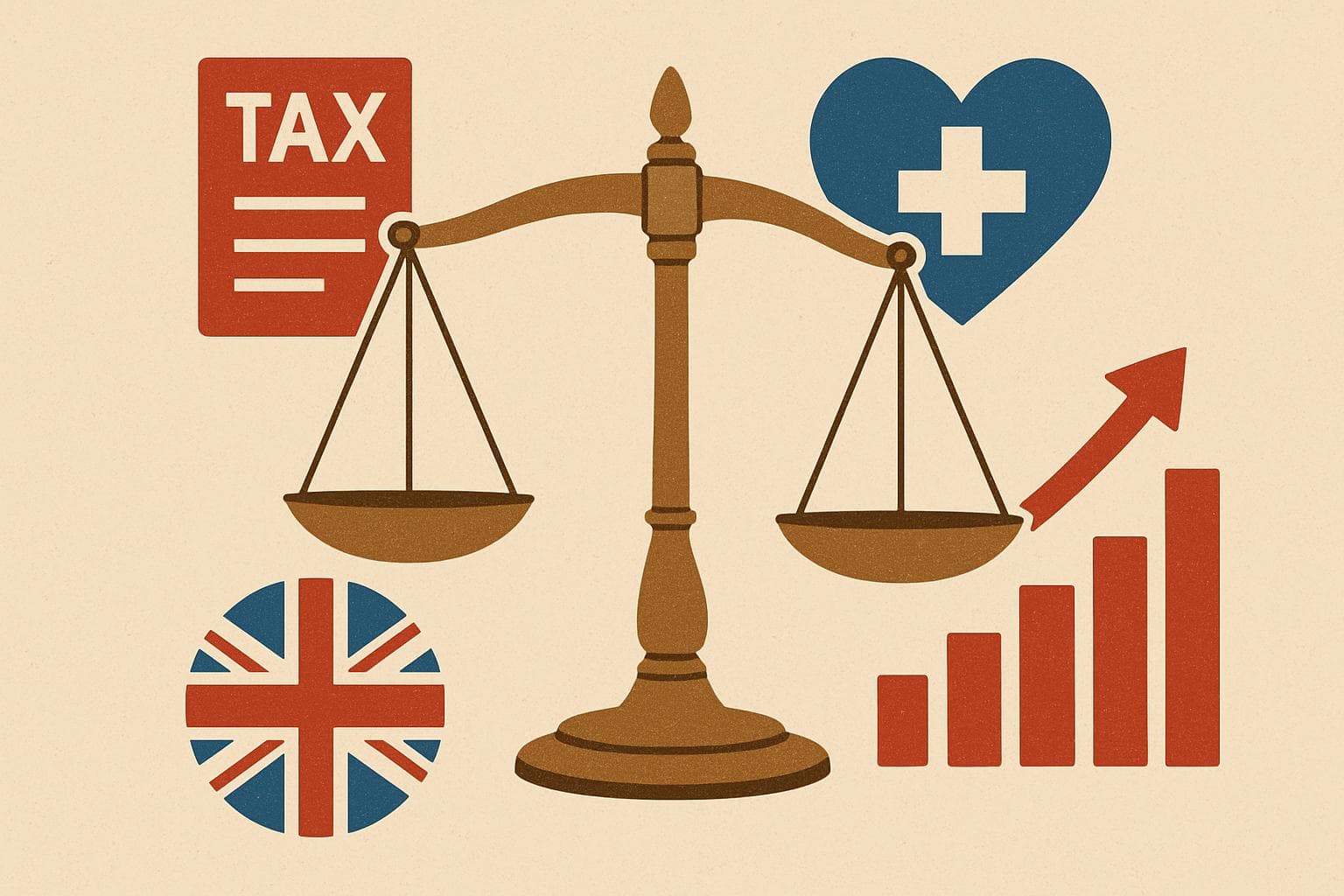
The recent UK budget announcement has sparked significant debate over its potential impact on living standards, particularly for lower-income households. The decision to freeze income tax thresholds until 2031 has drawn criticism from major think tanks, including the Institute for Fiscal Studies (IFS) and the Resolution Foundation.
Economic Impact and Criticism
According to the IFS, the average disposable income is expected to rise by just 0.5% annually over the next five years, a figure described as "truly dismal" by IFS head Helen Miller. This modest increase is attributed to the freeze on income tax thresholds and National Insurance, which some argue breaches Labour's manifesto promise not to raise taxes on working people. "Before this Budget, the UK was faced with lacklustre economic growth, stagnating living standards, and a dizzying array of fiscal pressures," Miller stated, emphasizing that the situation remains unchanged post-Budget.
The Resolution Foundation echoed these concerns, highlighting that the threshold freeze would disproportionately affect taxpayers in the bottom half of the income scale. Ruth Curtice, the foundation's chief executive, argued that a tax rate increase would have been a fairer approach, impacting all households but generating more revenue from wealthier individuals.
Political Reactions and Justifications
Chancellor Rachel Reeves defended the budget, asserting that the measures are "fair and necessary" to address pressing issues such as NHS waiting lists and child poverty. She acknowledged the impact on working people but maintained that the contribution was minimized through other tax changes, including increased levies on online gambling and high-value properties.
Despite the criticism, the budget is projected to bring in £12.4 billion by 2030-31. However, the National Institute of Economic and Social Research criticized the budget for lacking economic vision, warning that it locks the UK into a "high-tax, high-debt steady state" amid low productivity growth and rising interest rates.
WHAT THIS MIGHT MEAN
The freeze on income tax thresholds is likely to remain a contentious issue, with potential political ramifications for the Labour government. As the economic impact unfolds, there may be increased pressure on the government to reconsider its approach, especially if living standards continue to stagnate. Experts suggest that alternative fiscal strategies, such as targeted tax rate increases, could be explored to balance revenue generation with equitable economic growth. The coming years will test the resilience of the UK economy and the government's ability to navigate these fiscal challenges while maintaining public trust.
Related Articles
Trump's New Tariff Strategy Sparks Global Trade Uncertainty
UK Government to Reform Asylum Seeker Support and Employment Policies
Middle East Conflict Drives UK Energy Prices to New Highs
Persistent Safety Concerns in Nottingham Maternity Services Amidst Calls for Systemic Reform
Canada and Australia Forge Strategic Partnership Amid Global Uncertainty

UK Faces Dilemmas Amid Iran Conflict and China Spying Allegations
UK Budget Sparks Debate Over Impact on Living Standards
In This Article
 Daniel Rivera| Published
 HIGHLIGHTS
- The UK government announced a freeze on income tax thresholds until 2031, impacting living standards, especially for lower-income households.
- The Institute for Fiscal Studies (IFS) predicts a mere 0.5% annual rise in disposable income over the next five years.
- Labour's budget, led by Chancellor Rachel Reeves, faces criticism for breaching its manifesto promise not to raise taxes on working people.
- The Resolution Foundation suggests that a tax rate increase would have been more equitable than freezing thresholds.
- The budget aims to generate £12.4 billion by 2030-31, but experts warn it may disproportionately affect poorer households.
The recent UK budget announcement has sparked significant debate over its potential impact on living standards, particularly for lower-income households. The decision to freeze income tax thresholds until 2031 has drawn criticism from major think tanks, including the Institute for Fiscal Studies (IFS) and the Resolution Foundation.
Economic Impact and Criticism
According to the IFS, the average disposable income is expected to rise by just 0.5% annually over the next five years, a figure described as "truly dismal" by IFS head Helen Miller. This modest increase is attributed to the freeze on income tax thresholds and National Insurance, which some argue breaches Labour's manifesto promise not to raise taxes on working people. "Before this Budget, the UK was faced with lacklustre economic growth, stagnating living standards, and a dizzying array of fiscal pressures," Miller stated, emphasizing that the situation remains unchanged post-Budget.
The Resolution Foundation echoed these concerns, highlighting that the threshold freeze would disproportionately affect taxpayers in the bottom half of the income scale. Ruth Curtice, the foundation's chief executive, argued that a tax rate increase would have been a fairer approach, impacting all households but generating more revenue from wealthier individuals.
Political Reactions and Justifications
Chancellor Rachel Reeves defended the budget, asserting that the measures are "fair and necessary" to address pressing issues such as NHS waiting lists and child poverty. She acknowledged the impact on working people but maintained that the contribution was minimized through other tax changes, including increased levies on online gambling and high-value properties.
Despite the criticism, the budget is projected to bring in £12.4 billion by 2030-31. However, the National Institute of Economic and Social Research criticized the budget for lacking economic vision, warning that it locks the UK into a "high-tax, high-debt steady state" amid low productivity growth and rising interest rates.
WHAT THIS MIGHT MEAN
The freeze on income tax thresholds is likely to remain a contentious issue, with potential political ramifications for the Labour government. As the economic impact unfolds, there may be increased pressure on the government to reconsider its approach, especially if living standards continue to stagnate. Experts suggest that alternative fiscal strategies, such as targeted tax rate increases, could be explored to balance revenue generation with equitable economic growth. The coming years will test the resilience of the UK economy and the government's ability to navigate these fiscal challenges while maintaining public trust.
Related Articles
Trump's New Tariff Strategy Sparks Global Trade Uncertainty
UK Government to Reform Asylum Seeker Support and Employment Policies
Middle East Conflict Drives UK Energy Prices to New Highs
Persistent Safety Concerns in Nottingham Maternity Services Amidst Calls for Systemic Reform
Canada and Australia Forge Strategic Partnership Amid Global Uncertainty
UK Faces Dilemmas Amid Iran Conflict and China Spying Allegations