
UK Car Sales Surge Past Two Million as Electric Vehicle Discounts Face Scrutiny
In This Article
HIGHLIGHTS
- UK car sales surpassed two million in 2025, with nearly 500,000 electric vehicles sold, marking a 23.4% market share.
- Chinese car brands captured 9.7% of the UK market, nearly doubling their share from the previous year.
- The Society of Motor Manufacturers and Traders (SMMT) warns that current electric car discounts, averaging £11,000 per vehicle, are unsustainable.
- The Zero Emission Vehicles Mandate requires 28% of car sales to be electric, with potential fines for non-compliance.
- SMMT calls for an early review of the ZEV Mandate, originally scheduled for 2027, due to economic and geopolitical challenges.
The UK automotive market experienced a significant rebound in 2025, with car sales exceeding two million for the first time since the pandemic. This resurgence was driven in part by a notable increase in electric vehicle (EV) sales, which accounted for nearly 500,000 of the new registrations, according to the Society of Motor Manufacturers and Traders (SMMT). Despite this growth, industry leaders caution that the heavy discounts offered on electric cars are unsustainable.
Electric Vehicle Sales and Market Dynamics
Electric vehicles made up 23.4% of the UK car market in 2025, a substantial rise from the previous year. However, this figure still falls short of the government's Zero Emission Vehicles (ZEV) Mandate, which sets a target of 28% for electric car sales. The mandate imposes fines on manufacturers who do not meet these targets, though there are provisions for flexibility, such as purchasing emissions credits.
SMMT chief executive Mike Hawes highlighted the financial strain on manufacturers, who offered discounts averaging £11,000 per electric vehicle, totaling over £5 billion last year. "The question is, at what cost?" Hawes remarked, emphasizing the need for a market that better reflects actual consumer demand.
The Rise of Chinese Car Brands
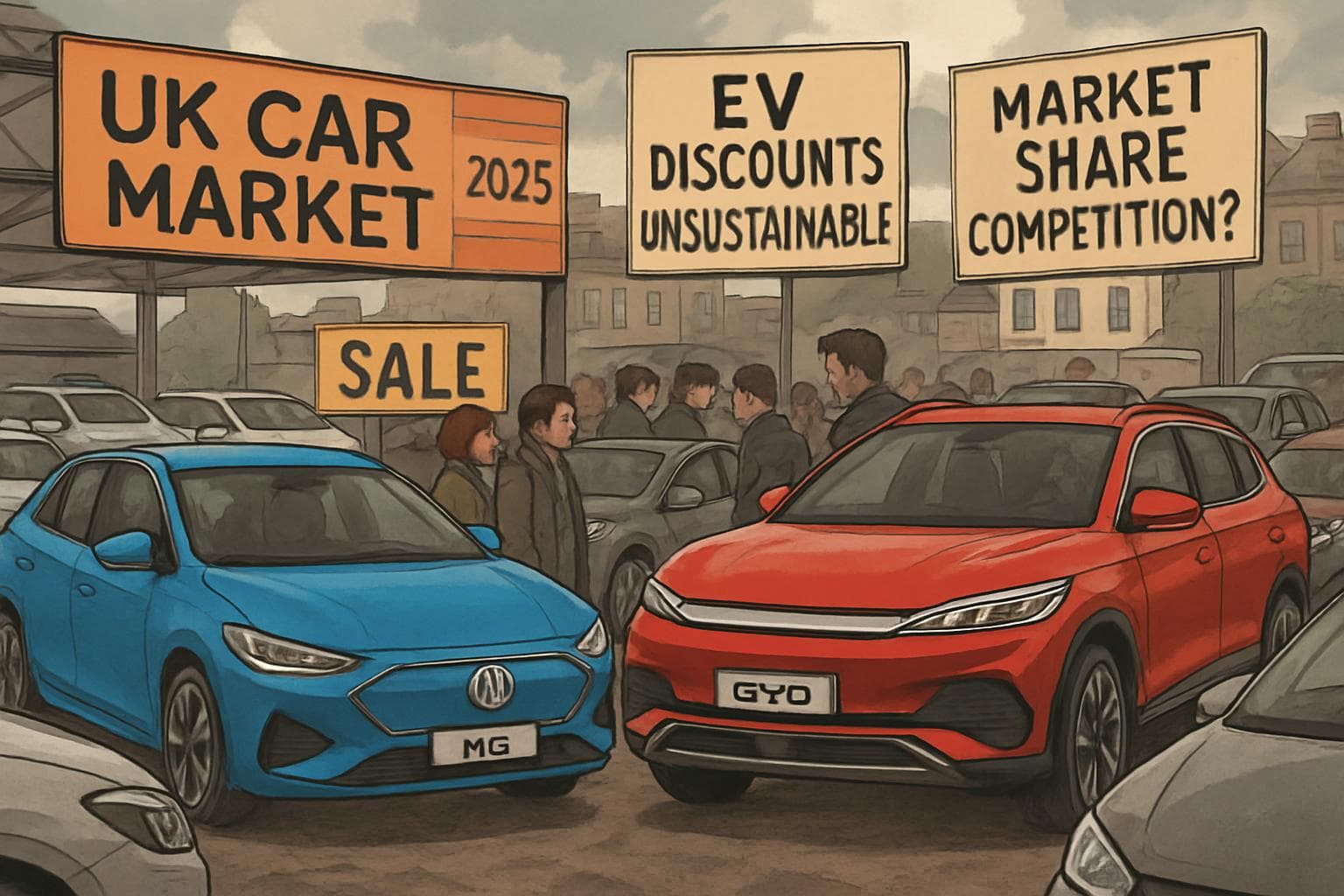
Chinese car manufacturers have significantly increased their presence in the UK, capturing 9.7% of the market in 2025. Brands like MG, BYD, and Chery have seen substantial growth, with BYD sales increasing sixfold to 51,000 units. This surge has been facilitated by the absence of tariffs on Chinese imports, unlike in the US and EU.
The influx of Chinese brands has intensified competition for European and Japanese manufacturers, complicating their efforts to comply with the ZEV Mandate. Despite the challenges, the increase in electric vehicle sales is seen as a positive development by industry leaders.
Calls for Policy Review
Given the economic and geopolitical headwinds, the SMMT is urging the UK government to expedite a review of the ZEV Mandate, originally planned for 2027. Hawes argues that the review should consider the increased costs of raw materials and energy, which have impacted the automotive industry.
Eurig Druce, managing director for Stellantis in the UK, echoed this sentiment, calling for a reassessment of the mandate to ensure it aligns with market realities.
WHAT THIS MIGHT MEAN
The UK automotive industry stands at a crossroads as it navigates the transition to electric vehicles. The current reliance on substantial discounts to drive EV sales is unsustainable, prompting calls for a policy review. If the government heeds these calls, it could lead to adjustments in the ZEV Mandate, potentially easing the financial burden on manufacturers.
The growing influence of Chinese car brands in the UK market may also prompt strategic shifts among European and Japanese manufacturers. As competition intensifies, these companies may need to innovate and adapt to maintain their market share.
Ultimately, the future of the UK's electric vehicle market will depend on balancing regulatory targets with economic realities, ensuring sustainable growth in the transition to zero-emission transportation.
Related Articles

Middle East Conflict Drives UK Energy Prices to New Highs

Canada and Australia Forge Strategic Partnership Amid Global Uncertainty

Tech Giants Pledge to Cover AI Data Center Energy Costs Amid Rising Electricity Concerns

UK Reinforces Military Presence in Cyprus Amid Middle East Tensions

UK-Iran Tensions: Starmer Defends Cautious Approach Amid Trump Criticism

Diplomatic Tensions Rise as Trump Criticizes Starmer's Iran Policy
UK Car Sales Surge Past Two Million as Electric Vehicle Discounts Face Scrutiny
In This Article
 Daniel Rivera| Published
 HIGHLIGHTS
- UK car sales surpassed two million in 2025, with nearly 500,000 electric vehicles sold, marking a 23.4% market share.
- Chinese car brands captured 9.7% of the UK market, nearly doubling their share from the previous year.
- The Society of Motor Manufacturers and Traders (SMMT) warns that current electric car discounts, averaging £11,000 per vehicle, are unsustainable.
- The Zero Emission Vehicles Mandate requires 28% of car sales to be electric, with potential fines for non-compliance.
- SMMT calls for an early review of the ZEV Mandate, originally scheduled for 2027, due to economic and geopolitical challenges.
The UK automotive market experienced a significant rebound in 2025, with car sales exceeding two million for the first time since the pandemic. This resurgence was driven in part by a notable increase in electric vehicle (EV) sales, which accounted for nearly 500,000 of the new registrations, according to the Society of Motor Manufacturers and Traders (SMMT). Despite this growth, industry leaders caution that the heavy discounts offered on electric cars are unsustainable.
Electric Vehicle Sales and Market Dynamics
Electric vehicles made up 23.4% of the UK car market in 2025, a substantial rise from the previous year. However, this figure still falls short of the government's Zero Emission Vehicles (ZEV) Mandate, which sets a target of 28% for electric car sales. The mandate imposes fines on manufacturers who do not meet these targets, though there are provisions for flexibility, such as purchasing emissions credits.
SMMT chief executive Mike Hawes highlighted the financial strain on manufacturers, who offered discounts averaging £11,000 per electric vehicle, totaling over £5 billion last year. "The question is, at what cost?" Hawes remarked, emphasizing the need for a market that better reflects actual consumer demand.
The Rise of Chinese Car Brands
Chinese car manufacturers have significantly increased their presence in the UK, capturing 9.7% of the market in 2025. Brands like MG, BYD, and Chery have seen substantial growth, with BYD sales increasing sixfold to 51,000 units. This surge has been facilitated by the absence of tariffs on Chinese imports, unlike in the US and EU.
The influx of Chinese brands has intensified competition for European and Japanese manufacturers, complicating their efforts to comply with the ZEV Mandate. Despite the challenges, the increase in electric vehicle sales is seen as a positive development by industry leaders.
Calls for Policy Review
Given the economic and geopolitical headwinds, the SMMT is urging the UK government to expedite a review of the ZEV Mandate, originally planned for 2027. Hawes argues that the review should consider the increased costs of raw materials and energy, which have impacted the automotive industry.
Eurig Druce, managing director for Stellantis in the UK, echoed this sentiment, calling for a reassessment of the mandate to ensure it aligns with market realities.
WHAT THIS MIGHT MEAN
The UK automotive industry stands at a crossroads as it navigates the transition to electric vehicles. The current reliance on substantial discounts to drive EV sales is unsustainable, prompting calls for a policy review. If the government heeds these calls, it could lead to adjustments in the ZEV Mandate, potentially easing the financial burden on manufacturers.
The growing influence of Chinese car brands in the UK market may also prompt strategic shifts among European and Japanese manufacturers. As competition intensifies, these companies may need to innovate and adapt to maintain their market share.
Ultimately, the future of the UK's electric vehicle market will depend on balancing regulatory targets with economic realities, ensuring sustainable growth in the transition to zero-emission transportation.
Related Articles
Middle East Conflict Drives UK Energy Prices to New Highs
Canada and Australia Forge Strategic Partnership Amid Global Uncertainty
Tech Giants Pledge to Cover AI Data Center Energy Costs Amid Rising Electricity Concerns
UK Reinforces Military Presence in Cyprus Amid Middle East Tensions
UK-Iran Tensions: Starmer Defends Cautious Approach Amid Trump Criticism
Diplomatic Tensions Rise as Trump Criticizes Starmer's Iran Policy