
UK Condemns Hong Kong's Arrest Warrants for Overseas Activists
In This Article
HIGHLIGHTS
- Hong Kong authorities have issued arrest warrants for 19 pro-democracy activists living abroad, citing violations of the national security law.
- The UK government condemned the move as "transnational repression," with Foreign Secretary David Lammy and Home Secretary Yvette Cooper issuing a joint statement.
- Rewards ranging from $25,000 to $125,000 are being offered for information leading to the arrest of these activists, including Nathan Law and Tony Chung.
- The Chinese embassy in the UK criticized the British response, labeling it as interference in China's internal affairs.
- Australia's Foreign Minister Penny Wong also objected to the warrants, emphasizing the importance of freedom of expression and assembly.
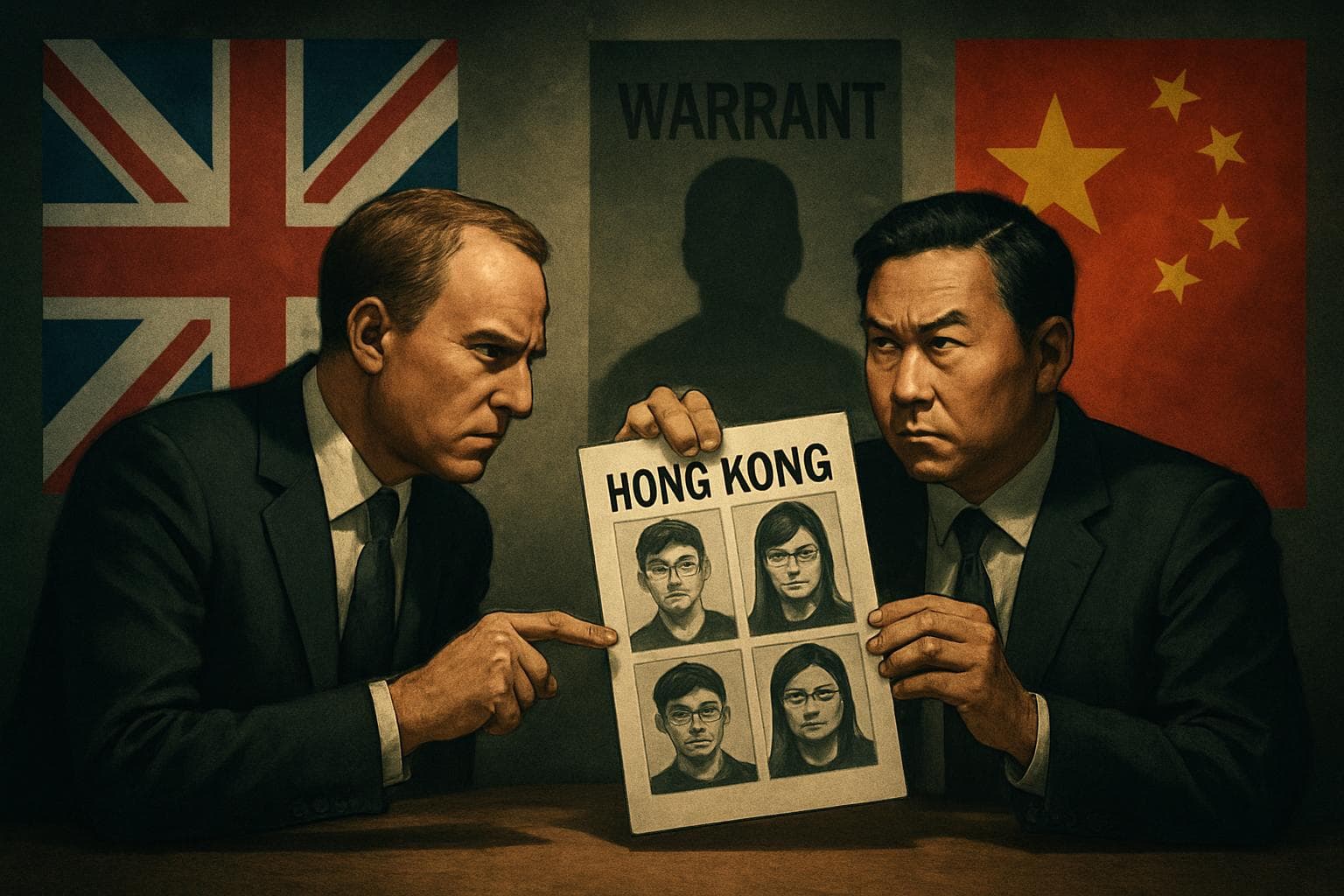
In a move that has drawn international criticism, Hong Kong authorities have issued arrest warrants for 19 pro-democracy activists residing overseas, accusing them of subversion under the stringent national security law. The UK government has strongly condemned this action, describing it as "another example of transnational repression."
Arrest Warrants and Rewards
The Hong Kong police have announced cash rewards ranging from $25,000 to $125,000 for information leading to the arrest of these activists. Among those targeted are Nathan Law, a former lawmaker, and Tony Chung, a pro-independence group leader. The activists are accused of participating in activities aimed at subverting state power, including organizing or running in the unofficial Hong Kong Parliament group.
International Reactions
The UK Foreign Secretary David Lammy and Home Secretary Yvette Cooper issued a joint statement denouncing the warrants, emphasizing the UK's commitment to human rights and the rule of law. "This government will continue to stand with the people of Hong Kong," they asserted, highlighting the UK's efforts to sever extradition ties with Hong Kong.
Australia's Foreign Minister Penny Wong also expressed strong objections, underscoring the importance of freedom of expression and assembly. "We have consistently expressed our strong objections to China and Hong Kong on the broad and extraterritorial application of Hong Kong’s national security legislation," she stated.
China's Response
In response to the international backlash, the Chinese embassy in the UK accused the British government of interfering in China's internal affairs. "China urges the UK to abandon its colonial mentality, stop interfering in Hong Kong affairs, and stop shielding criminals," the embassy declared.
The national security law, imposed by Beijing in 2020, has been criticized for stifling dissent and undermining the freedoms promised to Hong Kong under the "one country, two systems" framework established when the city was handed back to China in 1997.
WHAT THIS MIGHT MEAN
The issuance of these arrest warrants could further strain UK-China relations, especially given the UK's vocal support for Hong Kong's pro-democracy movement. The move also raises questions about the future of Hong Kong's autonomy and the international community's role in addressing human rights concerns. As tensions escalate, experts suggest that diplomatic dialogues may become increasingly challenging, with potential implications for trade and bilateral agreements. The situation underscores the delicate balance between national security and individual freedoms, a debate that continues to unfold on the global stage.
Related Articles

UK Faces Dilemmas Amid Iran Conflict and China Spying Allegations

UK Government to Reform Asylum Seeker Support and Employment Policies

UK Reinforces Military Presence in Cyprus Amid Middle East Tensions

Labour MP's Husband Arrested in UK-China Espionage Probe

UK-Iran Tensions: Starmer Defends Cautious Approach Amid Trump Criticism

Persistent Safety Concerns in Nottingham Maternity Services Amidst Calls for Systemic Reform
UK Condemns Hong Kong's Arrest Warrants for Overseas Activists
In This Article
 Ethan Brooks| Published
 HIGHLIGHTS
- Hong Kong authorities have issued arrest warrants for 19 pro-democracy activists living abroad, citing violations of the national security law.
- The UK government condemned the move as "transnational repression," with Foreign Secretary David Lammy and Home Secretary Yvette Cooper issuing a joint statement.
- Rewards ranging from $25,000 to $125,000 are being offered for information leading to the arrest of these activists, including Nathan Law and Tony Chung.
- The Chinese embassy in the UK criticized the British response, labeling it as interference in China's internal affairs.
- Australia's Foreign Minister Penny Wong also objected to the warrants, emphasizing the importance of freedom of expression and assembly.
In a move that has drawn international criticism, Hong Kong authorities have issued arrest warrants for 19 pro-democracy activists residing overseas, accusing them of subversion under the stringent national security law. The UK government has strongly condemned this action, describing it as "another example of transnational repression."
Arrest Warrants and Rewards
The Hong Kong police have announced cash rewards ranging from $25,000 to $125,000 for information leading to the arrest of these activists. Among those targeted are Nathan Law, a former lawmaker, and Tony Chung, a pro-independence group leader. The activists are accused of participating in activities aimed at subverting state power, including organizing or running in the unofficial Hong Kong Parliament group.
International Reactions
The UK Foreign Secretary David Lammy and Home Secretary Yvette Cooper issued a joint statement denouncing the warrants, emphasizing the UK's commitment to human rights and the rule of law. "This government will continue to stand with the people of Hong Kong," they asserted, highlighting the UK's efforts to sever extradition ties with Hong Kong.
Australia's Foreign Minister Penny Wong also expressed strong objections, underscoring the importance of freedom of expression and assembly. "We have consistently expressed our strong objections to China and Hong Kong on the broad and extraterritorial application of Hong Kong’s national security legislation," she stated.
China's Response
In response to the international backlash, the Chinese embassy in the UK accused the British government of interfering in China's internal affairs. "China urges the UK to abandon its colonial mentality, stop interfering in Hong Kong affairs, and stop shielding criminals," the embassy declared.
The national security law, imposed by Beijing in 2020, has been criticized for stifling dissent and undermining the freedoms promised to Hong Kong under the "one country, two systems" framework established when the city was handed back to China in 1997.
WHAT THIS MIGHT MEAN
The issuance of these arrest warrants could further strain UK-China relations, especially given the UK's vocal support for Hong Kong's pro-democracy movement. The move also raises questions about the future of Hong Kong's autonomy and the international community's role in addressing human rights concerns. As tensions escalate, experts suggest that diplomatic dialogues may become increasingly challenging, with potential implications for trade and bilateral agreements. The situation underscores the delicate balance between national security and individual freedoms, a debate that continues to unfold on the global stage.
Related Articles
UK Faces Dilemmas Amid Iran Conflict and China Spying Allegations
UK Government to Reform Asylum Seeker Support and Employment Policies
UK Reinforces Military Presence in Cyprus Amid Middle East Tensions
Labour MP's Husband Arrested in UK-China Espionage Probe
UK-Iran Tensions: Starmer Defends Cautious Approach Amid Trump Criticism
Persistent Safety Concerns in Nottingham Maternity Services Amidst Calls for Systemic Reform