
UK Economy Contracts for Second Consecutive Month Amid Manufacturing Slump
In This Article
HIGHLIGHTS
- The UK economy contracted by 0.1% in May, marking the second consecutive month of decline, according to the Office for National Statistics (ONS).
- Manufacturing and construction sectors experienced significant downturns, contributing to the overall economic contraction.
- Chancellor Rachel Reeves expressed disappointment with the figures, emphasizing the need to stimulate economic growth.
- Analysts warn that recent government policy reversals could necessitate tax increases in the upcoming autumn budget.
- Despite the contraction, the service sector showed growth, partially offsetting declines in other areas.
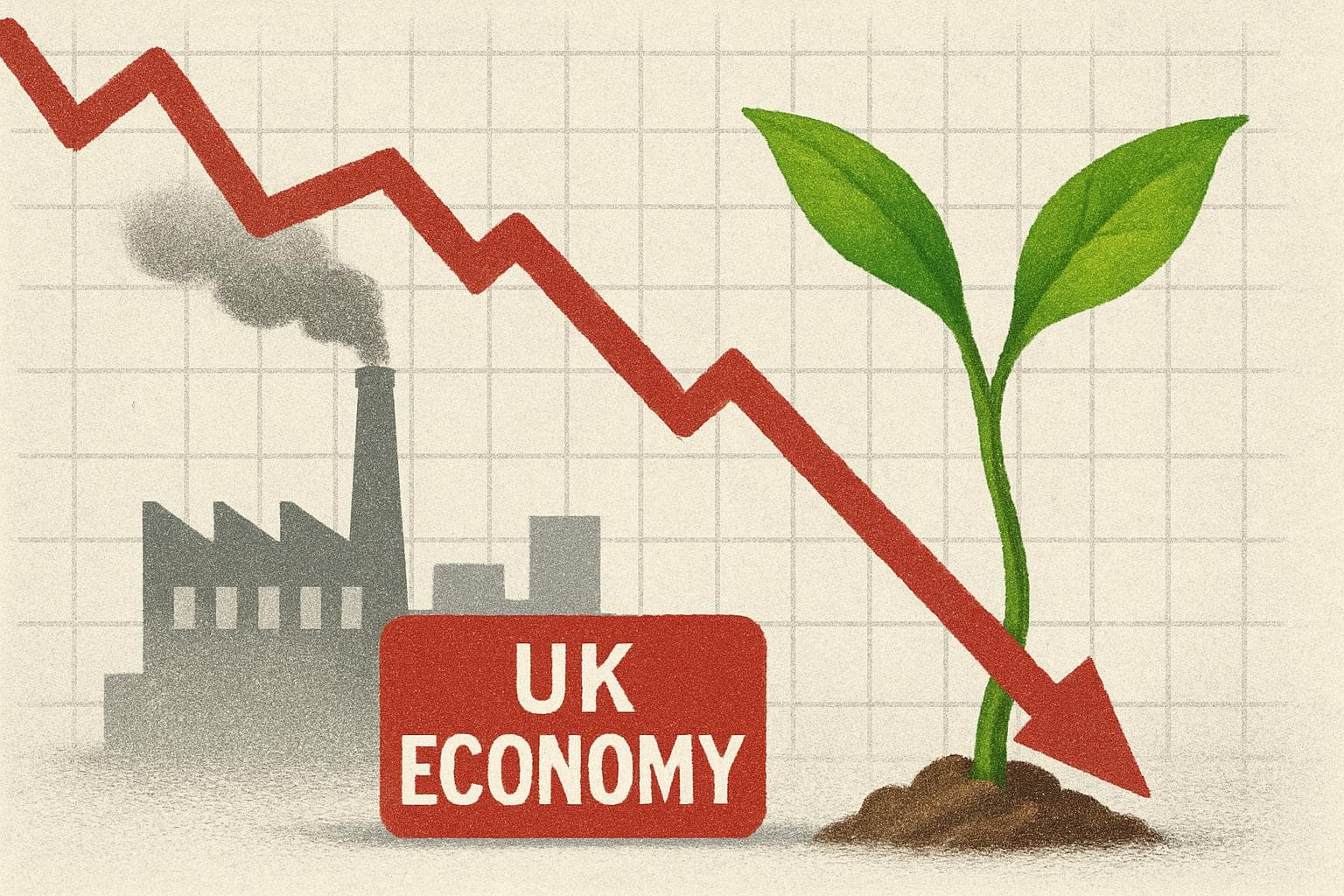
The UK economy faced an unexpected contraction in May, shrinking by 0.1% as reported by the Office for National Statistics (ONS). This marks the second month of economic decline, following a 0.3% drop in April, and has raised concerns over the country's economic health.
Manufacturing and Construction Declines
The contraction was largely driven by downturns in the manufacturing and construction sectors. The ONS highlighted that oil and gas extraction, car manufacturing, and pharmaceutical production were notably weak. Manufacturing had previously surged in the first quarter as businesses rushed to export before new US tariffs took effect, but this momentum has since waned.
Government Response and Economic Outlook
Chancellor Rachel Reeves acknowledged the disappointing figures, reiterating her commitment to reviving economic growth. "Getting more money in people’s pockets is my number one mission," Reeves stated. However, the recent government U-turn on welfare cuts has strained public finances, potentially leading to tax increases in the autumn budget.
Service Sector Resilience
Despite the overall contraction, the service sector showed resilience, with legal firms recovering from previous disruptions. Mick Crosthwaite, CEO of Hallmarq, noted that his export-driven business continues to thrive despite the challenging domestic environment. "We're not tied just to the UK economy," he remarked, highlighting the benefits of global market engagement.
Economic Challenges Ahead
Analysts, including Suren Thiru from the Institute of Chartered Accountants in England and Wales, have expressed concerns about the UK's economic trajectory. The combination of high inflation, interest rates, and fiscal challenges poses significant hurdles. Ben Jones of the CBI emphasized the need for the government to avoid new taxes on businesses and instead focus on removing barriers to growth.
WHAT THIS MIGHT MEAN
Looking ahead, the UK government faces a delicate balancing act in the upcoming autumn budget. With fiscal pressures mounting, Chancellor Reeves may need to consider tax increases or spending cuts to meet financial targets. This could further impact consumer and business confidence, potentially stalling economic recovery efforts.
The resilience of the service sector offers a glimmer of hope, but sustained growth will require strategic policy interventions and global market engagement. As the UK navigates these economic challenges, the government's ability to foster a stable and conducive environment for businesses will be crucial in determining the country's economic trajectory.
Related Articles
Trump's New Tariff Strategy Sparks Global Trade Uncertainty

US Supreme Court Ruling on Tariffs Sparks Uncertainty for UK and Global Trade

Canada and Australia Forge Strategic Partnership Amid Global Uncertainty

UK Government to Reform Asylum Seeker Support and Employment Policies
Middle East Conflict Drives UK Energy Prices to New Highs

UK Faces Dilemmas Amid Iran Conflict and China Spying Allegations
UK Economy Contracts for Second Consecutive Month Amid Manufacturing Slump
In This Article
 Daniel Rivera| Published
 HIGHLIGHTS
- The UK economy contracted by 0.1% in May, marking the second consecutive month of decline, according to the Office for National Statistics (ONS).
- Manufacturing and construction sectors experienced significant downturns, contributing to the overall economic contraction.
- Chancellor Rachel Reeves expressed disappointment with the figures, emphasizing the need to stimulate economic growth.
- Analysts warn that recent government policy reversals could necessitate tax increases in the upcoming autumn budget.
- Despite the contraction, the service sector showed growth, partially offsetting declines in other areas.
The UK economy faced an unexpected contraction in May, shrinking by 0.1% as reported by the Office for National Statistics (ONS). This marks the second month of economic decline, following a 0.3% drop in April, and has raised concerns over the country's economic health.
Manufacturing and Construction Declines
The contraction was largely driven by downturns in the manufacturing and construction sectors. The ONS highlighted that oil and gas extraction, car manufacturing, and pharmaceutical production were notably weak. Manufacturing had previously surged in the first quarter as businesses rushed to export before new US tariffs took effect, but this momentum has since waned.
Government Response and Economic Outlook
Chancellor Rachel Reeves acknowledged the disappointing figures, reiterating her commitment to reviving economic growth. "Getting more money in people’s pockets is my number one mission," Reeves stated. However, the recent government U-turn on welfare cuts has strained public finances, potentially leading to tax increases in the autumn budget.
Service Sector Resilience
Despite the overall contraction, the service sector showed resilience, with legal firms recovering from previous disruptions. Mick Crosthwaite, CEO of Hallmarq, noted that his export-driven business continues to thrive despite the challenging domestic environment. "We're not tied just to the UK economy," he remarked, highlighting the benefits of global market engagement.
Economic Challenges Ahead
Analysts, including Suren Thiru from the Institute of Chartered Accountants in England and Wales, have expressed concerns about the UK's economic trajectory. The combination of high inflation, interest rates, and fiscal challenges poses significant hurdles. Ben Jones of the CBI emphasized the need for the government to avoid new taxes on businesses and instead focus on removing barriers to growth.
WHAT THIS MIGHT MEAN
Looking ahead, the UK government faces a delicate balancing act in the upcoming autumn budget. With fiscal pressures mounting, Chancellor Reeves may need to consider tax increases or spending cuts to meet financial targets. This could further impact consumer and business confidence, potentially stalling economic recovery efforts.
The resilience of the service sector offers a glimmer of hope, but sustained growth will require strategic policy interventions and global market engagement. As the UK navigates these economic challenges, the government's ability to foster a stable and conducive environment for businesses will be crucial in determining the country's economic trajectory.
Related Articles
Trump's New Tariff Strategy Sparks Global Trade Uncertainty
US Supreme Court Ruling on Tariffs Sparks Uncertainty for UK and Global Trade
Canada and Australia Forge Strategic Partnership Amid Global Uncertainty
UK Government to Reform Asylum Seeker Support and Employment Policies
Middle East Conflict Drives UK Energy Prices to New Highs
UK Faces Dilemmas Amid Iran Conflict and China Spying Allegations