
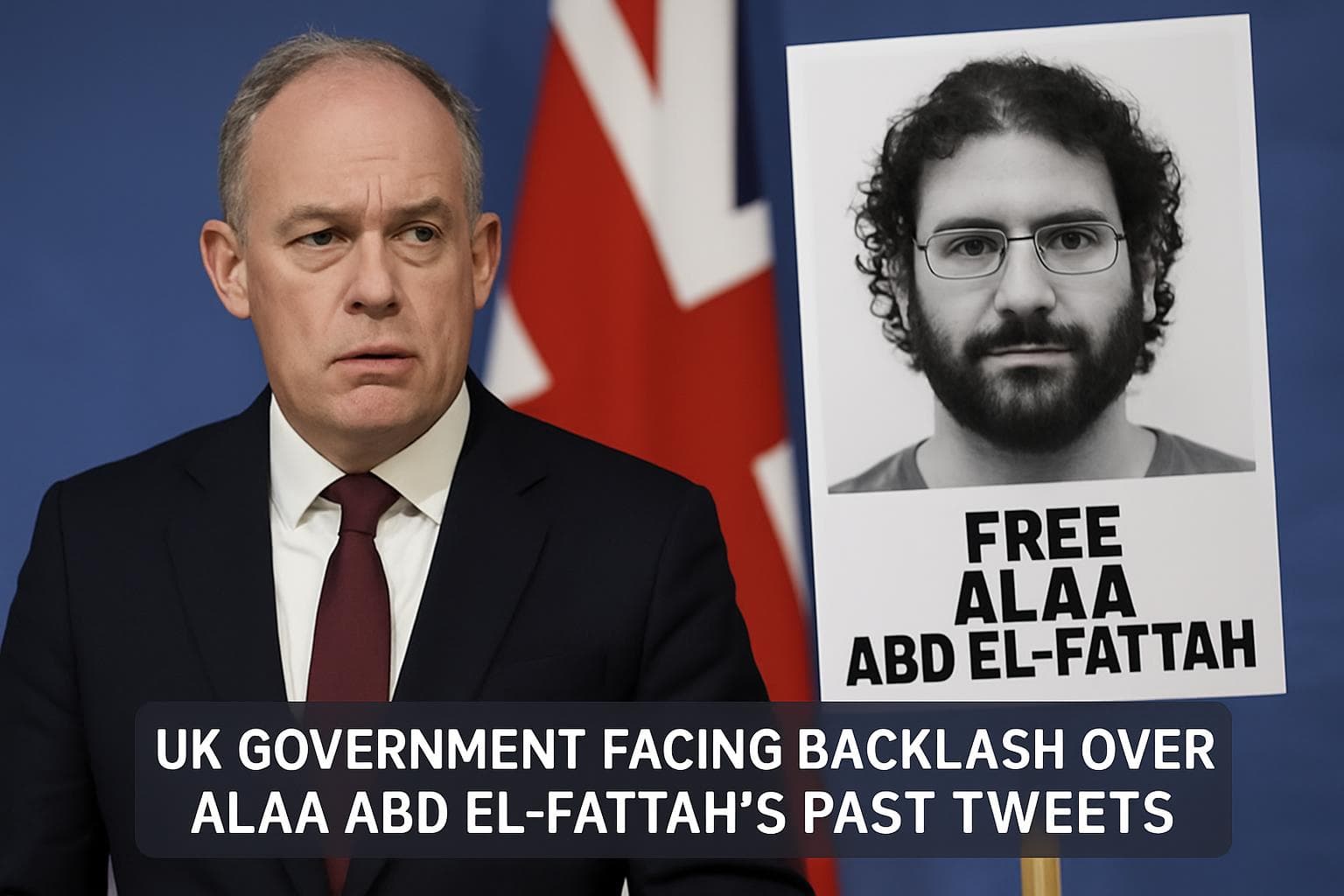
UK Government Faces Backlash Over Alaa Abd el-Fattah's Citizenship Amid Past Tweet Controversy
In This Article
HIGHLIGHTS
- Foreign Secretary Yvette Cooper announced a review into "information failures" regarding Alaa Abd el-Fattah's past tweets.
- Abd el-Fattah, a British-Egyptian activist, apologized for tweets from 2010-2012 that called for violence against Zionists and police.
- The controversy has sparked calls from Conservative and Reform UK parties to revoke his British citizenship.
- Keir Starmer and other officials were unaware of the tweets when advocating for Abd el-Fattah's release from Egyptian detention.
- The case raises broader questions about national identity and the vetting process for granting UK citizenship.
The UK government is under scrutiny following the emergence of controversial tweets by British-Egyptian activist Alaa Abd el-Fattah, prompting Foreign Secretary Yvette Cooper to initiate a review into what she described as "serious information failures." The tweets, dating back to 2010-2012, included calls for violence against Zionists and police, leading to a political storm and calls for Abd el-Fattah's British citizenship to be revoked.
Background and Apology
Abd el-Fattah, a prominent human rights campaigner, was released from Egyptian detention and arrived in the UK last week. However, his past social media posts have overshadowed his return. In a statement, Abd el-Fattah apologized for the tweets, acknowledging their hurtful nature and attributing them to youthful anger during regional crises. He expressed regret for the impact of his words and asked to be judged by his real-life advocacy for human rights and democracy.
Political Reactions and Government Review
The resurfacing of these tweets has led to criticism of Labour leader Keir Starmer, who had expressed delight at Abd el-Fattah's arrival. Starmer, along with other senior officials, claimed ignorance of the tweets when supporting Abd el-Fattah's release. In response, Cooper has tasked the Foreign Office with reviewing the vetting processes for high-profile cases, highlighting the inadequacy of existing due diligence procedures.
Calls for Citizenship Revocation
Conservative and Reform UK parties have called for Abd el-Fattah's citizenship to be revoked, citing the offensive nature of his past remarks. Despite these demands, government sources indicate that legal grounds for such action are lacking, as Abd el-Fattah's citizenship was granted through his mother's British nationality.
Broader Implications
The controversy has reignited debates on national identity and the criteria for British citizenship. It also underscores the challenges of balancing human rights advocacy with accountability for past actions. As the government reviews its procedures, the case of Abd el-Fattah serves as a reminder of the complexities involved in consular support and citizenship decisions.
WHAT THIS MIGHT MEAN
The review initiated by Foreign Secretary Yvette Cooper could lead to changes in how the UK government handles high-profile consular cases, potentially tightening due diligence processes. Politically, the controversy may influence public opinion on national identity and citizenship, with implications for future immigration and nationality policies. Experts suggest that while Abd el-Fattah's case highlights the need for accountability, it also underscores the importance of supporting individuals who have been unjustly detained abroad. As the situation unfolds, the government will need to navigate the delicate balance between upholding human rights and addressing public concerns about past actions.
Related Articles

Labour MP's Husband Arrested in UK-China Espionage Probe
UK Government to Reform Asylum Seeker Support and Employment Policies

UK Faces Dilemmas Amid Iran Conflict and China Spying Allegations

UK-Iran Tensions: Starmer Defends Cautious Approach Amid Trump Criticism
Starmer Condemns Reform UK's Plan to Repeal Equality Act as Un-British

Diplomatic Tensions Rise as Trump Criticizes Starmer's Iran Policy
UK Government Faces Backlash Over Alaa Abd el-Fattah's Citizenship Amid Past Tweet Controversy
In This Article
 Ethan Brooks| Published
 HIGHLIGHTS
- Foreign Secretary Yvette Cooper announced a review into "information failures" regarding Alaa Abd el-Fattah's past tweets.
- Abd el-Fattah, a British-Egyptian activist, apologized for tweets from 2010-2012 that called for violence against Zionists and police.
- The controversy has sparked calls from Conservative and Reform UK parties to revoke his British citizenship.
- Keir Starmer and other officials were unaware of the tweets when advocating for Abd el-Fattah's release from Egyptian detention.
- The case raises broader questions about national identity and the vetting process for granting UK citizenship.
The UK government is under scrutiny following the emergence of controversial tweets by British-Egyptian activist Alaa Abd el-Fattah, prompting Foreign Secretary Yvette Cooper to initiate a review into what she described as "serious information failures." The tweets, dating back to 2010-2012, included calls for violence against Zionists and police, leading to a political storm and calls for Abd el-Fattah's British citizenship to be revoked.
Background and Apology
Abd el-Fattah, a prominent human rights campaigner, was released from Egyptian detention and arrived in the UK last week. However, his past social media posts have overshadowed his return. In a statement, Abd el-Fattah apologized for the tweets, acknowledging their hurtful nature and attributing them to youthful anger during regional crises. He expressed regret for the impact of his words and asked to be judged by his real-life advocacy for human rights and democracy.
Political Reactions and Government Review
The resurfacing of these tweets has led to criticism of Labour leader Keir Starmer, who had expressed delight at Abd el-Fattah's arrival. Starmer, along with other senior officials, claimed ignorance of the tweets when supporting Abd el-Fattah's release. In response, Cooper has tasked the Foreign Office with reviewing the vetting processes for high-profile cases, highlighting the inadequacy of existing due diligence procedures.
Calls for Citizenship Revocation
Conservative and Reform UK parties have called for Abd el-Fattah's citizenship to be revoked, citing the offensive nature of his past remarks. Despite these demands, government sources indicate that legal grounds for such action are lacking, as Abd el-Fattah's citizenship was granted through his mother's British nationality.
Broader Implications
The controversy has reignited debates on national identity and the criteria for British citizenship. It also underscores the challenges of balancing human rights advocacy with accountability for past actions. As the government reviews its procedures, the case of Abd el-Fattah serves as a reminder of the complexities involved in consular support and citizenship decisions.
WHAT THIS MIGHT MEAN
The review initiated by Foreign Secretary Yvette Cooper could lead to changes in how the UK government handles high-profile consular cases, potentially tightening due diligence processes. Politically, the controversy may influence public opinion on national identity and citizenship, with implications for future immigration and nationality policies. Experts suggest that while Abd el-Fattah's case highlights the need for accountability, it also underscores the importance of supporting individuals who have been unjustly detained abroad. As the situation unfolds, the government will need to navigate the delicate balance between upholding human rights and addressing public concerns about past actions.
Related Articles
Labour MP's Husband Arrested in UK-China Espionage Probe
UK Government to Reform Asylum Seeker Support and Employment Policies
UK Faces Dilemmas Amid Iran Conflict and China Spying Allegations
UK-Iran Tensions: Starmer Defends Cautious Approach Amid Trump Criticism
Starmer Condemns Reform UK's Plan to Repeal Equality Act as Un-British
Diplomatic Tensions Rise as Trump Criticizes Starmer's Iran Policy