
UK Navigates Diplomatic Challenges Amid US Airstrikes on Iran
In This Article
HIGHLIGHTS
- The UK was informed but not involved in the US airstrikes on Iran, known as "Operation Midnight Hammer."
- Prime Minister Keir Starmer has maintained a diplomatic stance, advocating for de-escalation and a diplomatic solution.
- The US bypassed UK airbases, opting for a direct route from Missouri, avoiding legal complications for the UK.
- Concerns over potential Iranian retaliation have led the UK to strengthen security measures in the Middle East.
- The UK's position aligns with the US's goal of preventing a nuclear-armed Iran but not with the military methods employed.
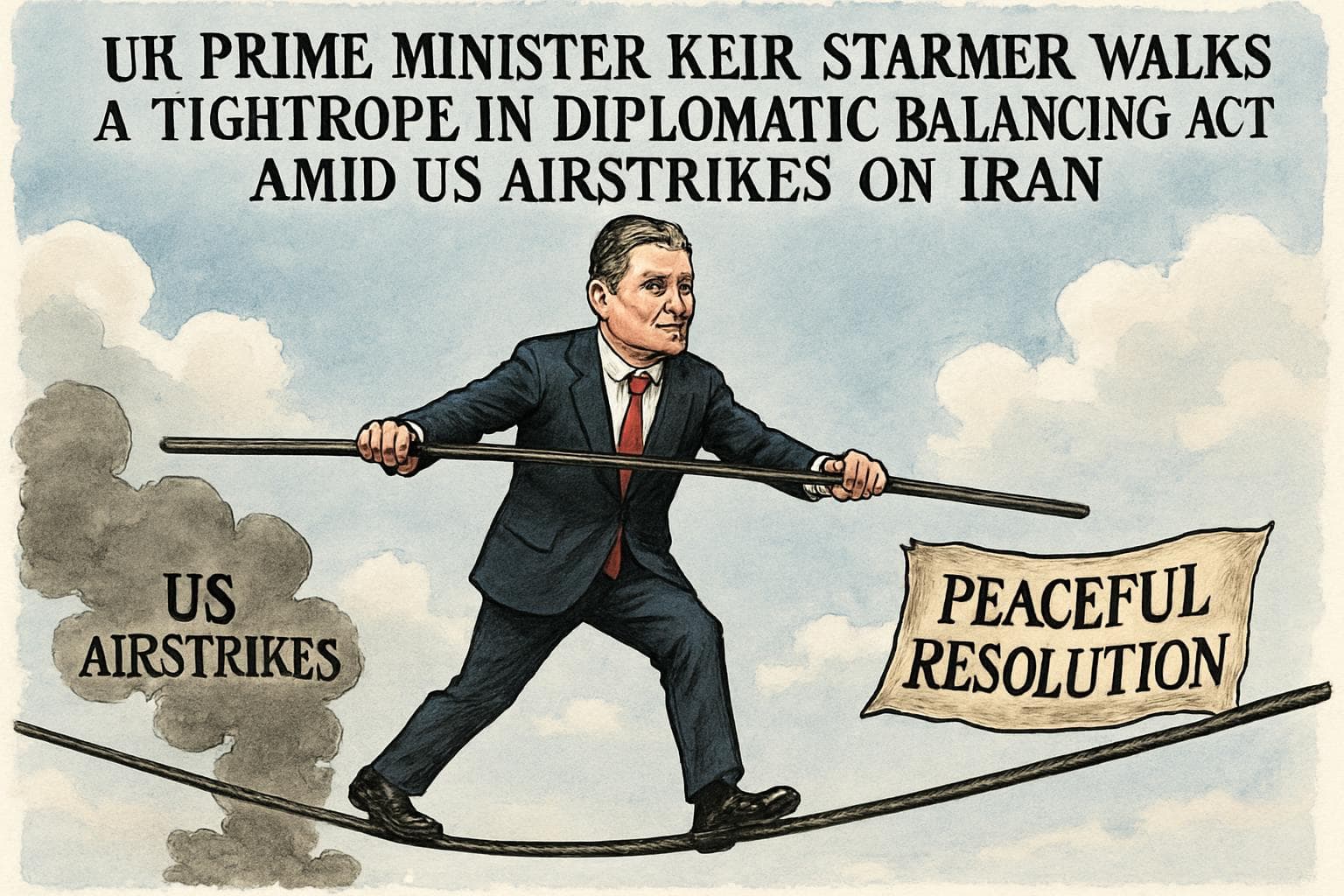
The recent US airstrikes on Iran have placed the UK in a precarious diplomatic position, as Prime Minister Keir Starmer seeks to balance national interests with international relations. Dubbed "Operation Midnight Hammer," the strikes were executed without UK involvement, despite prior notification from the US. This decision reflects the UK's cautious approach, emphasizing diplomacy over military engagement.
Diplomatic Tightrope
Sir Keir Starmer has consistently advocated for de-escalation in the Iran conflict, a stance that has been tested by the recent US military actions. While the UK was informed of the strikes, it was not asked to participate, sparing it from immediate legal and political dilemmas. The decision to bypass UK airbases, such as Diego Garcia, highlights the complexities of international law and the UK's cautious stance on military involvement.
Legal and Strategic Considerations
The absence of a request for UK assistance is believed to stem from potential legal challenges. Former UK national security chief Peter Ricketts suggested that the US avoided involving the UK to prevent legal scrutiny. The UK's Attorney General, Lord Hermer, had previously expressed concerns about the legality of UK participation in such military actions.
Security Concerns and Diplomatic Efforts
In response to potential Iranian retaliation, the UK has bolstered security measures for its forces in the Middle East. British diplomats are also preparing to assist nationals wishing to leave volatile regions. Meanwhile, Foreign Secretary David Lammy has engaged in diplomatic talks with European and Middle Eastern counterparts, urging a peaceful resolution to the conflict.
US-UK Relations and Future Implications
The UK's stance reflects a broader alignment with the US's goal of preventing a nuclear-armed Iran, albeit through diplomatic means. The recent airstrikes have strained the "special relationship" between the two nations, with the UK advocating for dialogue over military intervention.
WHAT THIS MIGHT MEAN
The UK's diplomatic approach may face further tests if Iran retaliates or if the US requests military support. Such developments could force the UK to reassess its legal and strategic positions. Experts suggest that maintaining a diplomatic course could preserve the UK's international standing while avoiding entanglement in prolonged conflict. As the situation evolves, the UK's ability to navigate these challenges will be crucial in shaping its foreign policy and international alliances.
Images from the Web
Related Articles
UK Reinforces Military Presence in Cyprus Amid Middle East Tensions
UK-Iran Tensions: Starmer Defends Cautious Approach Amid Trump Criticism

UK Faces Dilemmas Amid Iran Conflict and China Spying Allegations
Canada and Australia Forge Strategic Partnership Amid Global Uncertainty

Middle East Conflict Drives UK Energy Prices to New Highs
UK Government to Reform Asylum Seeker Support and Employment Policies
UK Navigates Diplomatic Challenges Amid US Airstrikes on Iran
In This Article
 Ethan Brooks| Published
 HIGHLIGHTS
- The UK was informed but not involved in the US airstrikes on Iran, known as "Operation Midnight Hammer."
- Prime Minister Keir Starmer has maintained a diplomatic stance, advocating for de-escalation and a diplomatic solution.
- The US bypassed UK airbases, opting for a direct route from Missouri, avoiding legal complications for the UK.
- Concerns over potential Iranian retaliation have led the UK to strengthen security measures in the Middle East.
- The UK's position aligns with the US's goal of preventing a nuclear-armed Iran but not with the military methods employed.
The recent US airstrikes on Iran have placed the UK in a precarious diplomatic position, as Prime Minister Keir Starmer seeks to balance national interests with international relations. Dubbed "Operation Midnight Hammer," the strikes were executed without UK involvement, despite prior notification from the US. This decision reflects the UK's cautious approach, emphasizing diplomacy over military engagement.
Diplomatic Tightrope
Sir Keir Starmer has consistently advocated for de-escalation in the Iran conflict, a stance that has been tested by the recent US military actions. While the UK was informed of the strikes, it was not asked to participate, sparing it from immediate legal and political dilemmas. The decision to bypass UK airbases, such as Diego Garcia, highlights the complexities of international law and the UK's cautious stance on military involvement.
Legal and Strategic Considerations
The absence of a request for UK assistance is believed to stem from potential legal challenges. Former UK national security chief Peter Ricketts suggested that the US avoided involving the UK to prevent legal scrutiny. The UK's Attorney General, Lord Hermer, had previously expressed concerns about the legality of UK participation in such military actions.
Security Concerns and Diplomatic Efforts
In response to potential Iranian retaliation, the UK has bolstered security measures for its forces in the Middle East. British diplomats are also preparing to assist nationals wishing to leave volatile regions. Meanwhile, Foreign Secretary David Lammy has engaged in diplomatic talks with European and Middle Eastern counterparts, urging a peaceful resolution to the conflict.
US-UK Relations and Future Implications
The UK's stance reflects a broader alignment with the US's goal of preventing a nuclear-armed Iran, albeit through diplomatic means. The recent airstrikes have strained the "special relationship" between the two nations, with the UK advocating for dialogue over military intervention.
WHAT THIS MIGHT MEAN
The UK's diplomatic approach may face further tests if Iran retaliates or if the US requests military support. Such developments could force the UK to reassess its legal and strategic positions. Experts suggest that maintaining a diplomatic course could preserve the UK's international standing while avoiding entanglement in prolonged conflict. As the situation evolves, the UK's ability to navigate these challenges will be crucial in shaping its foreign policy and international alliances.
Images from the Web
Related Articles
UK Reinforces Military Presence in Cyprus Amid Middle East Tensions
UK-Iran Tensions: Starmer Defends Cautious Approach Amid Trump Criticism
UK Faces Dilemmas Amid Iran Conflict and China Spying Allegations
Canada and Australia Forge Strategic Partnership Amid Global Uncertainty
Middle East Conflict Drives UK Energy Prices to New Highs
UK Government to Reform Asylum Seeker Support and Employment Policies