
UK Faces Immigration and Economic Challenges Amid Record Channel Crossings
In This Article
HIGHLIGHTS
- Over 50,000 migrants have crossed the English Channel to the UK since Labour's election victory, with 474 arriving in a single day.
- The UK government faces criticism for its handling of immigration, with calls for more humane policies from over 200 organizations.
- The Treasury is considering tightening inheritance tax rules, sparking debate over financial fairness.
- Universal credit claimants have reached a record eight million, raising concerns about economic sustainability.
- Proposals to move asylum seekers from hotels to camps have been met with mixed reactions.
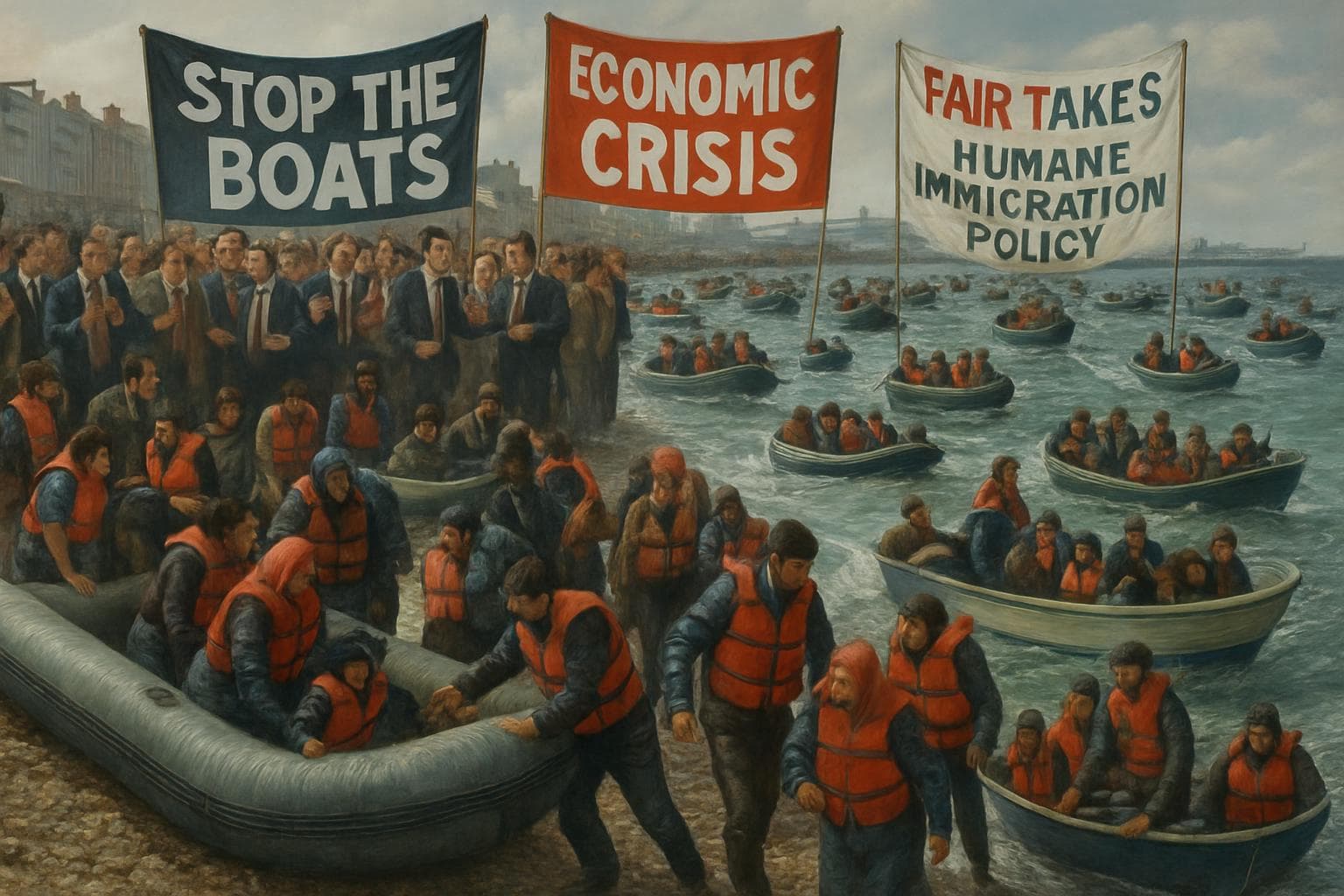
The UK is grappling with a surge in Channel crossings and economic pressures as more than 50,000 migrants have arrived since the Labour Party's election victory last July. This influx, described as occurring at "record speed," has intensified debates over immigration policy and economic stability.
Record Channel Crossings
Home Office data reveals that 474 migrants arrived in the UK by small boats in a single day, bringing the total to 50,271 since Labour's win. Former Home Secretary Jacqui Smith acknowledged the situation as "unacceptable," while Kemi Badenoch, a prominent Conservative figure, claimed she could reduce crossings to zero, though without detailing her strategy.
Calls for Humane Immigration Policies
The government's approach to immigration has drawn criticism from over 200 organizations, including Amnesty International and Oxfam. These groups have signed an open letter urging political leaders to end the "pernicious and insidious currents" of racism and hatred fueling anti-migrant protests. The letter highlights the need for more compassionate policies amid rising tensions.
Inheritance Tax and Economic Concerns
In parallel, the Treasury is reportedly considering changes to inheritance tax rules, aiming to raise funds by tightening regulations on gifting assets before death. This move has sparked a debate on financial fairness, with Shadow Chancellor Sir Mel Stride emphasizing the importance of not penalizing those wishing to pass on their hard-earned wealth.
Rising Universal Credit Claims
Economic pressures are further highlighted by a record eight million people now claiming universal credit, an increase of one million under the Labour government. The Taxpayers Alliance has expressed alarm over this rise, warning of a looming "fiscal cliff edge." The government attributes this to an "unsustainable benefits bill" inherited from the previous administration.
Asylum Seeker Accommodation Debate
The proposal to relocate asylum seekers from hotels to camps has sparked controversy. While some see it as a necessary step to manage the asylum application backlog, others argue it could exacerbate homelessness and social tensions. Ministers have pledged to work with local councils to support those granted refugee status.
WHAT THIS MIGHT MEAN
The UK government faces mounting pressure to address both the humanitarian and economic aspects of its immigration policy. As debates continue, the potential tightening of inheritance tax rules could have significant implications for wealth distribution and public sentiment. Meanwhile, the rise in universal credit claimants underscores the need for sustainable economic policies. The government's next steps will be crucial in balancing these complex challenges while maintaining social cohesion and economic stability.
Related Articles

UK Government to Reform Asylum Seeker Support and Employment Policies

UK Faces Dilemmas Amid Iran Conflict and China Spying Allegations

UK-Iran Tensions: Starmer Defends Cautious Approach Amid Trump Criticism

UK Reinforces Military Presence in Cyprus Amid Middle East Tensions

Labour MP's Husband Arrested in UK-China Espionage Probe
Persistent Safety Concerns in Nottingham Maternity Services Amidst Calls for Systemic Reform
UK Faces Immigration and Economic Challenges Amid Record Channel Crossings
In This Article
 Ethan Brooks| Published
 HIGHLIGHTS
- Over 50,000 migrants have crossed the English Channel to the UK since Labour's election victory, with 474 arriving in a single day.
- The UK government faces criticism for its handling of immigration, with calls for more humane policies from over 200 organizations.
- The Treasury is considering tightening inheritance tax rules, sparking debate over financial fairness.
- Universal credit claimants have reached a record eight million, raising concerns about economic sustainability.
- Proposals to move asylum seekers from hotels to camps have been met with mixed reactions.
The UK is grappling with a surge in Channel crossings and economic pressures as more than 50,000 migrants have arrived since the Labour Party's election victory last July. This influx, described as occurring at "record speed," has intensified debates over immigration policy and economic stability.
Record Channel Crossings
Home Office data reveals that 474 migrants arrived in the UK by small boats in a single day, bringing the total to 50,271 since Labour's win. Former Home Secretary Jacqui Smith acknowledged the situation as "unacceptable," while Kemi Badenoch, a prominent Conservative figure, claimed she could reduce crossings to zero, though without detailing her strategy.
Calls for Humane Immigration Policies
The government's approach to immigration has drawn criticism from over 200 organizations, including Amnesty International and Oxfam. These groups have signed an open letter urging political leaders to end the "pernicious and insidious currents" of racism and hatred fueling anti-migrant protests. The letter highlights the need for more compassionate policies amid rising tensions.
Inheritance Tax and Economic Concerns
In parallel, the Treasury is reportedly considering changes to inheritance tax rules, aiming to raise funds by tightening regulations on gifting assets before death. This move has sparked a debate on financial fairness, with Shadow Chancellor Sir Mel Stride emphasizing the importance of not penalizing those wishing to pass on their hard-earned wealth.
Rising Universal Credit Claims
Economic pressures are further highlighted by a record eight million people now claiming universal credit, an increase of one million under the Labour government. The Taxpayers Alliance has expressed alarm over this rise, warning of a looming "fiscal cliff edge." The government attributes this to an "unsustainable benefits bill" inherited from the previous administration.
Asylum Seeker Accommodation Debate
The proposal to relocate asylum seekers from hotels to camps has sparked controversy. While some see it as a necessary step to manage the asylum application backlog, others argue it could exacerbate homelessness and social tensions. Ministers have pledged to work with local councils to support those granted refugee status.
WHAT THIS MIGHT MEAN
The UK government faces mounting pressure to address both the humanitarian and economic aspects of its immigration policy. As debates continue, the potential tightening of inheritance tax rules could have significant implications for wealth distribution and public sentiment. Meanwhile, the rise in universal credit claimants underscores the need for sustainable economic policies. The government's next steps will be crucial in balancing these complex challenges while maintaining social cohesion and economic stability.
Related Articles
UK Government to Reform Asylum Seeker Support and Employment Policies
UK Faces Dilemmas Amid Iran Conflict and China Spying Allegations
UK-Iran Tensions: Starmer Defends Cautious Approach Amid Trump Criticism
UK Reinforces Military Presence in Cyprus Amid Middle East Tensions
Labour MP's Husband Arrested in UK-China Espionage Probe
Persistent Safety Concerns in Nottingham Maternity Services Amidst Calls for Systemic Reform