
Surge in Flu Cases Spurs Urgent Vaccination Efforts Amidst Appointment Shortages Across the UK
In This Article
HIGHLIGHTS
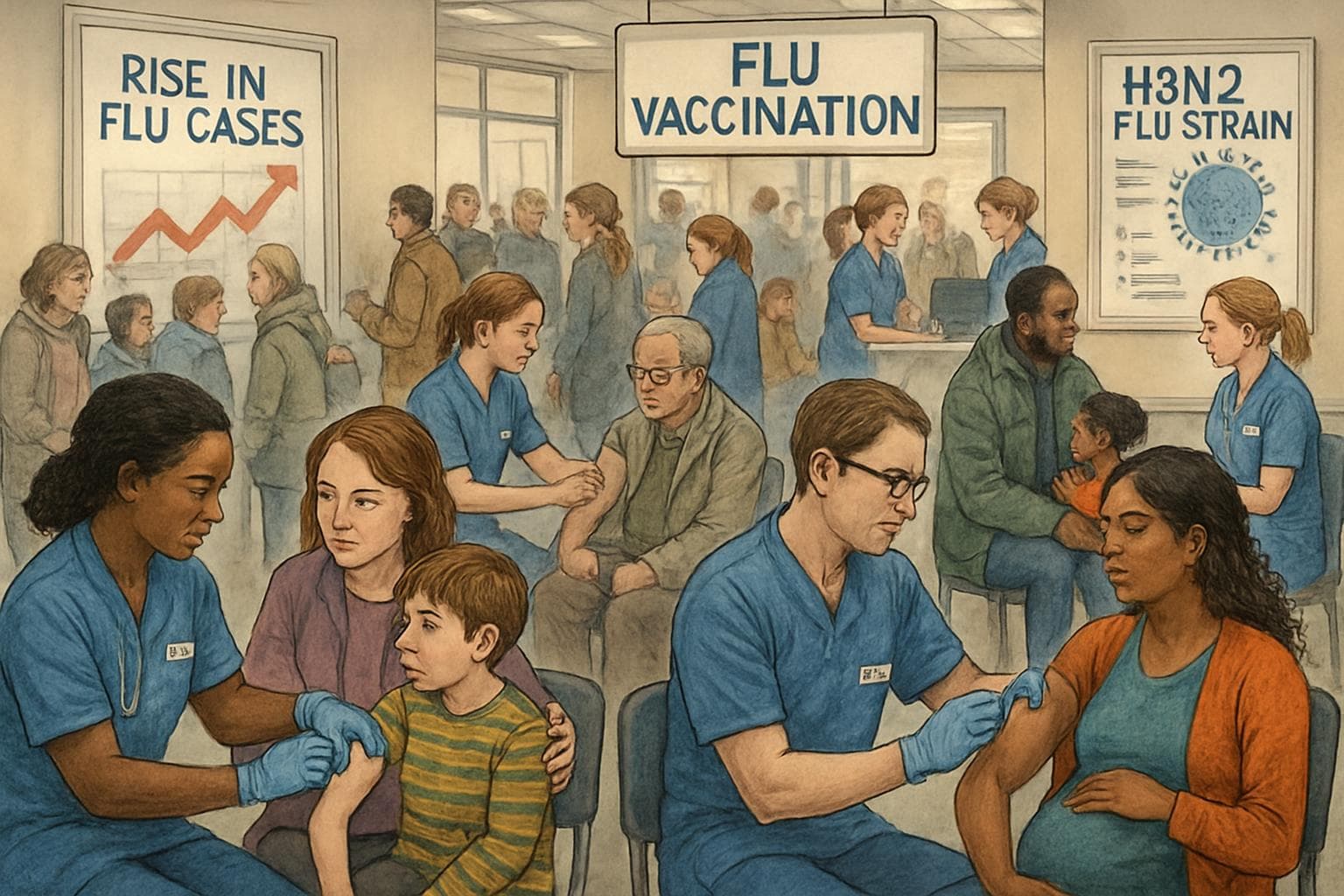
- Flu vaccination clinics are being organized in Hull and the Isle of Man as flu cases surge, with a focus on children and vulnerable groups.
- The UK is experiencing a shortage of flu jab appointments due to high demand, with major pharmacy chains reporting limited availability.
- The current flu season in the UK started earlier than usual, driven by the H3N2 strain, prompting concerns of a significant flu surge.
- Public health officials emphasize the importance of vaccination and good hygiene practices to curb the spread of respiratory illnesses.
- Vaccination rates remain low among certain at-risk groups, with only 35.6% of pregnant women and 37.4% of under-65s with health conditions vaccinated.
As flu cases rise sharply across the UK, public health officials are ramping up efforts to vaccinate vulnerable populations, including children, pregnant women, and the elderly. In Hull, "last chance" flu jab clinics are being held to protect young people before the festive season. The Deep Business Centre and Priory Road Children's Centre are hosting catch-up clinics on December 17 and January 5, respectively, offering both appointments and walk-in options.
Alison Patey, Hull City Council's director of public health, stressed the importance of vaccination, noting that while it may not completely prevent flu, it significantly reduces the risk of severe illness. "These clinics are an opportunity to ensure children are vaccinated before schools break up or as they return," she said.
Meanwhile, on the Isle of Man, the Public Health Directorate reports a rise in flu-like illnesses, urging residents to get vaccinated and practice good hygiene. Professor Ross Keat emphasized the need for timely vaccination, stating, "It takes about two weeks for full protection to develop."
Across England, the demand for flu jabs has led to a shortage of appointments, with major pharmacy chains like Boots and Superdrug reporting limited availability. The NHS has issued urgent calls for vaccinations to help manage what they describe as a "flu-nami," with hospitals treating record numbers of flu patients.
The UK Health Security Agency (UKHSA) reports low vaccination rates among certain at-risk groups, with only 35.6% of pregnant women and 37.4% of under-65s with health conditions vaccinated. The World Health Organization (WHO) has noted that a new strain of H3N2 is driving infections, accounting for up to 90% of confirmed cases in Europe.
Despite the challenges, public health leaders continue to advocate for vaccination as a critical tool in reducing the risk of serious illness and curbing the spread of the virus.
WHAT THIS MIGHT MEAN
Looking ahead, the UK faces potential challenges in managing the flu season amidst vaccine shortages and rising cases. If the demand for flu jabs continues to outpace supply, it could strain healthcare resources and increase the risk of severe outbreaks. Public health officials may need to explore alternative strategies, such as prioritizing high-risk groups and enhancing public awareness campaigns to encourage vaccination and hygiene practices.
The emergence of the H3N2 strain, coupled with waning immunity, underscores the importance of ongoing surveillance and vaccine development to address evolving flu threats. Experts suggest that improving vaccine coverage among at-risk populations could mitigate the impact of future flu seasons and reduce the burden on healthcare systems.
Related Articles
Persistent Safety Concerns in Nottingham Maternity Services Amidst Calls for Systemic Reform

UK Government to Reform Asylum Seeker Support and Employment Policies

Saharan Dust to Illuminate UK Skies with Vivid Sunrises and Sunsets

Canada and Australia Forge Strategic Partnership Amid Global Uncertainty

Middle East Conflict Drives UK Energy Prices to New Highs

UK Faces Dilemmas Amid Iran Conflict and China Spying Allegations
Surge in Flu Cases Spurs Urgent Vaccination Efforts Amidst Appointment Shortages Across the UK
In This Article
 Maya Singh| Published
 HIGHLIGHTS
- Flu vaccination clinics are being organized in Hull and the Isle of Man as flu cases surge, with a focus on children and vulnerable groups.
- The UK is experiencing a shortage of flu jab appointments due to high demand, with major pharmacy chains reporting limited availability.
- The current flu season in the UK started earlier than usual, driven by the H3N2 strain, prompting concerns of a significant flu surge.
- Public health officials emphasize the importance of vaccination and good hygiene practices to curb the spread of respiratory illnesses.
- Vaccination rates remain low among certain at-risk groups, with only 35.6% of pregnant women and 37.4% of under-65s with health conditions vaccinated.
As flu cases rise sharply across the UK, public health officials are ramping up efforts to vaccinate vulnerable populations, including children, pregnant women, and the elderly. In Hull, "last chance" flu jab clinics are being held to protect young people before the festive season. The Deep Business Centre and Priory Road Children's Centre are hosting catch-up clinics on December 17 and January 5, respectively, offering both appointments and walk-in options.
Alison Patey, Hull City Council's director of public health, stressed the importance of vaccination, noting that while it may not completely prevent flu, it significantly reduces the risk of severe illness. "These clinics are an opportunity to ensure children are vaccinated before schools break up or as they return," she said.
Meanwhile, on the Isle of Man, the Public Health Directorate reports a rise in flu-like illnesses, urging residents to get vaccinated and practice good hygiene. Professor Ross Keat emphasized the need for timely vaccination, stating, "It takes about two weeks for full protection to develop."
Across England, the demand for flu jabs has led to a shortage of appointments, with major pharmacy chains like Boots and Superdrug reporting limited availability. The NHS has issued urgent calls for vaccinations to help manage what they describe as a "flu-nami," with hospitals treating record numbers of flu patients.
The UK Health Security Agency (UKHSA) reports low vaccination rates among certain at-risk groups, with only 35.6% of pregnant women and 37.4% of under-65s with health conditions vaccinated. The World Health Organization (WHO) has noted that a new strain of H3N2 is driving infections, accounting for up to 90% of confirmed cases in Europe.
Despite the challenges, public health leaders continue to advocate for vaccination as a critical tool in reducing the risk of serious illness and curbing the spread of the virus.
WHAT THIS MIGHT MEAN
Looking ahead, the UK faces potential challenges in managing the flu season amidst vaccine shortages and rising cases. If the demand for flu jabs continues to outpace supply, it could strain healthcare resources and increase the risk of severe outbreaks. Public health officials may need to explore alternative strategies, such as prioritizing high-risk groups and enhancing public awareness campaigns to encourage vaccination and hygiene practices.
The emergence of the H3N2 strain, coupled with waning immunity, underscores the importance of ongoing surveillance and vaccine development to address evolving flu threats. Experts suggest that improving vaccine coverage among at-risk populations could mitigate the impact of future flu seasons and reduce the burden on healthcare systems.
Related Articles
Persistent Safety Concerns in Nottingham Maternity Services Amidst Calls for Systemic Reform
UK Government to Reform Asylum Seeker Support and Employment Policies
Saharan Dust to Illuminate UK Skies with Vivid Sunrises and Sunsets
Canada and Australia Forge Strategic Partnership Amid Global Uncertainty
Middle East Conflict Drives UK Energy Prices to New Highs
UK Faces Dilemmas Amid Iran Conflict and China Spying Allegations