
UK Government Issues New Emissions Guidance for North Sea Oilfields
In This Article
HIGHLIGHTS
- The UK government has issued new guidance requiring oil and gas projects to consider downstream emissions in environmental impact assessments.
- The guidance affects the controversial Rosebank and Jackdaw fields, with decisions on their future expected by the end of summer.
- Energy Minister Michael Shanks emphasized the guidance as a step towards a cleaner energy future for the North Sea.
- Climate groups argue that new developments will not significantly reduce the UK's reliance on imported fossil fuels.
- The UK is projected to be nearly entirely dependent on foreign gas by 2050, regardless of new field approvals.
The UK government has unveiled new guidance for assessing environmental impacts of oil and gas projects, marking a significant shift in how future applications will be evaluated. This move comes amid ongoing debates over the controversial Rosebank and Jackdaw oilfields in the North Sea.
New Environmental Impact Assessments
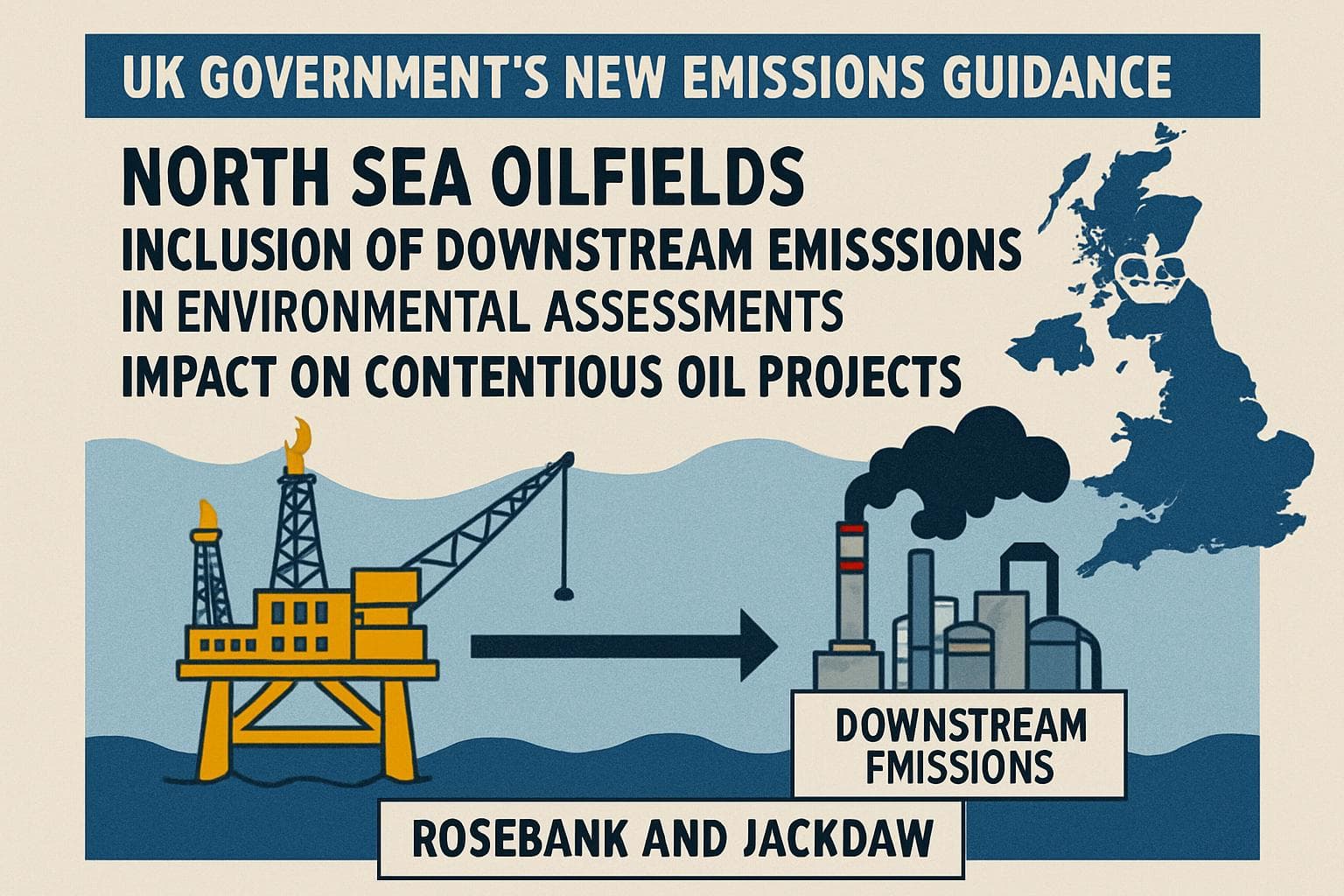
Under the new guidelines, operators must now include downstream emissions—those released when fossil fuels are burned—in their environmental impact assessments. This change follows a landmark Supreme Court ruling that emphasized the need for comprehensive evaluations of carbon emissions. Previously, assessments only considered emissions from the extraction process.
Impact on Rosebank and Jackdaw Fields
The guidance directly impacts the Rosebank and Jackdaw fields, with Energy Minister Michael Shanks stating that it provides clarity for the North Sea oil and gas industry. "This new guidance marks a step forward in ensuring the full implications of oil and gas extraction are considered," Shanks said. However, no extraction can occur until fresh approvals are granted, expected by the end of summer.
Industry and Environmental Reactions
The oil and gas industry views the guidance as a critical factor in determining the future of UK production. Meanwhile, climate groups argue that new developments will not significantly reduce the UK's reliance on imported fossil fuels. Tessa Khan, executive director of Uplift, emphasized the need for the government to stand up to oil and gas firms and provide a credible climate test.
Future Energy Dependency
New figures suggest that the UK will be almost entirely dependent on foreign gas by 2050, regardless of whether the Rosebank and Jackdaw fields are approved. This projection underscores the ongoing debate about the role of domestic fossil fuel production in the UK's energy strategy.
WHAT THIS MIGHT MEAN
The new guidance could lead to stricter scrutiny of future oil and gas projects, potentially slowing down approvals and impacting the industry's operations. If the Rosebank and Jackdaw fields are approved under the new criteria, it may set a precedent for how environmental impacts are assessed in the UK. Politically, the government faces pressure from both industry stakeholders and environmental groups, which could influence future energy policies. As the UK navigates its energy transition, balancing economic interests with environmental responsibilities will remain a critical challenge.
Related Articles

UK Government Eases Deer Culling to Protect Woodlands and Farmland

Middle East Conflict Drives UK Energy Prices to New Highs

Government Announces £4 Billion Overhaul of SEND Support in England

Trump's New Tariff Strategy Sparks Global Trade Uncertainty

UK Government Announces Major Overhaul of SEND System with £3.4 Billion Investment

Prince Andrew's Ties to Epstein Under Scrutiny Amid Calls for Inquiry
UK Government Issues New Emissions Guidance for North Sea Oilfields
In This Article
 Leila Hassan| Published
 HIGHLIGHTS
- The UK government has issued new guidance requiring oil and gas projects to consider downstream emissions in environmental impact assessments.
- The guidance affects the controversial Rosebank and Jackdaw fields, with decisions on their future expected by the end of summer.
- Energy Minister Michael Shanks emphasized the guidance as a step towards a cleaner energy future for the North Sea.
- Climate groups argue that new developments will not significantly reduce the UK's reliance on imported fossil fuels.
- The UK is projected to be nearly entirely dependent on foreign gas by 2050, regardless of new field approvals.
The UK government has unveiled new guidance for assessing environmental impacts of oil and gas projects, marking a significant shift in how future applications will be evaluated. This move comes amid ongoing debates over the controversial Rosebank and Jackdaw oilfields in the North Sea.
New Environmental Impact Assessments
Under the new guidelines, operators must now include downstream emissions—those released when fossil fuels are burned—in their environmental impact assessments. This change follows a landmark Supreme Court ruling that emphasized the need for comprehensive evaluations of carbon emissions. Previously, assessments only considered emissions from the extraction process.
Impact on Rosebank and Jackdaw Fields
The guidance directly impacts the Rosebank and Jackdaw fields, with Energy Minister Michael Shanks stating that it provides clarity for the North Sea oil and gas industry. "This new guidance marks a step forward in ensuring the full implications of oil and gas extraction are considered," Shanks said. However, no extraction can occur until fresh approvals are granted, expected by the end of summer.
Industry and Environmental Reactions
The oil and gas industry views the guidance as a critical factor in determining the future of UK production. Meanwhile, climate groups argue that new developments will not significantly reduce the UK's reliance on imported fossil fuels. Tessa Khan, executive director of Uplift, emphasized the need for the government to stand up to oil and gas firms and provide a credible climate test.
Future Energy Dependency
New figures suggest that the UK will be almost entirely dependent on foreign gas by 2050, regardless of whether the Rosebank and Jackdaw fields are approved. This projection underscores the ongoing debate about the role of domestic fossil fuel production in the UK's energy strategy.
WHAT THIS MIGHT MEAN
The new guidance could lead to stricter scrutiny of future oil and gas projects, potentially slowing down approvals and impacting the industry's operations. If the Rosebank and Jackdaw fields are approved under the new criteria, it may set a precedent for how environmental impacts are assessed in the UK. Politically, the government faces pressure from both industry stakeholders and environmental groups, which could influence future energy policies. As the UK navigates its energy transition, balancing economic interests with environmental responsibilities will remain a critical challenge.
Related Articles
UK Government Eases Deer Culling to Protect Woodlands and Farmland
Middle East Conflict Drives UK Energy Prices to New Highs
Government Announces £4 Billion Overhaul of SEND Support in England
Trump's New Tariff Strategy Sparks Global Trade Uncertainty
UK Government Announces Major Overhaul of SEND System with £3.4 Billion Investment
Prince Andrew's Ties to Epstein Under Scrutiny Amid Calls for Inquiry