
UK Jobs Market Faces Challenges Amid Cooling Vacancies and Wage Growth
In This Article
HIGHLIGHTS
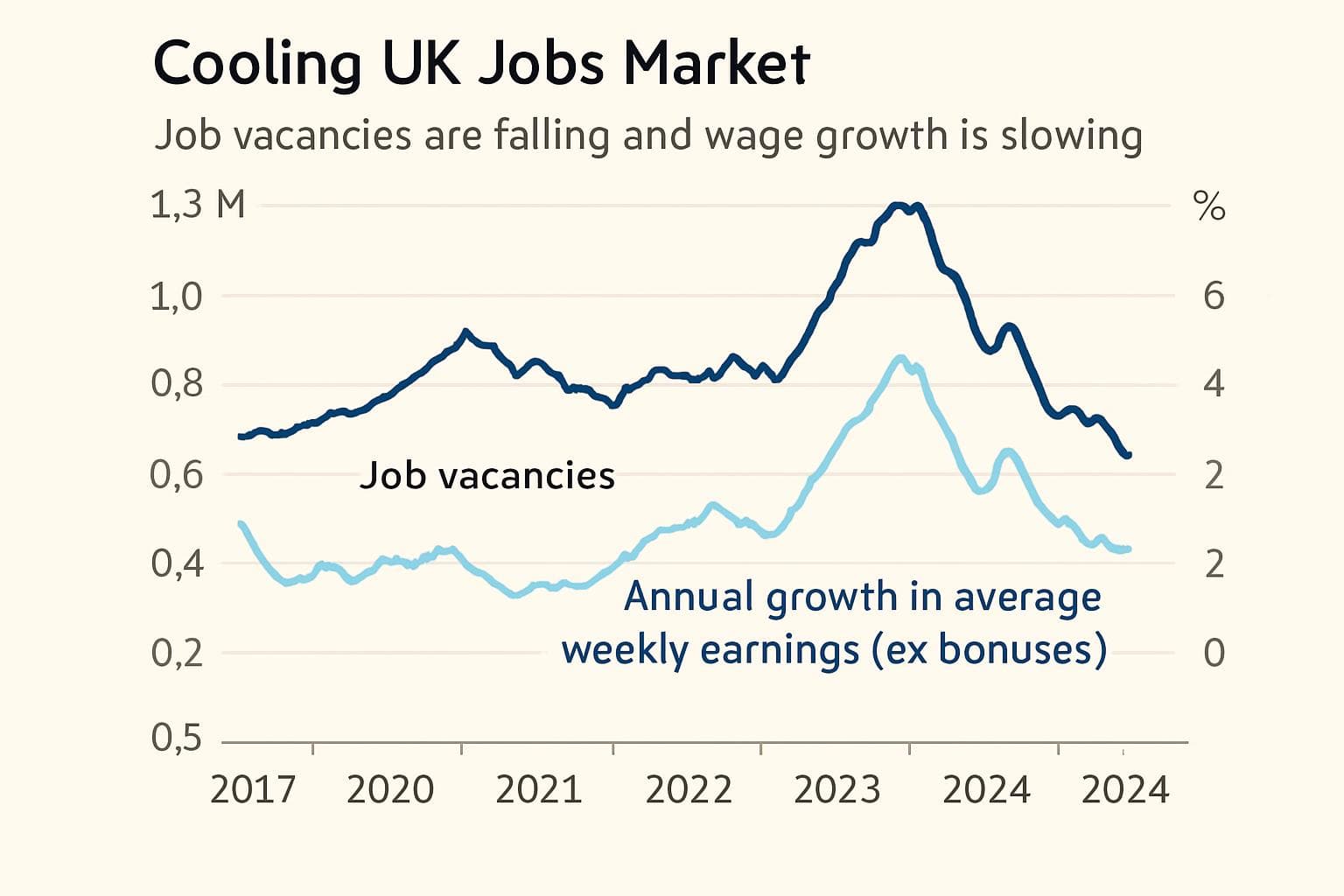
- The UK jobs market is cooling, with job vacancies falling by 5.8% to 718,000 from May to July, according to the ONS.
- The unemployment rate remains at 4.7%, a four-year high, despite a modest drop in payroll numbers by 8,000 between June and July.
- Wage growth, including bonuses, has slowed to 4.6%, while regular pay growth remains at 5%.
- The rise in National Insurance contributions and the National Living Wage are impacting hiring and profitability, particularly in retail and hospitality.
- Chancellor Rachel Reeves acknowledges the challenges but emphasizes the government's commitment to job creation.
The UK jobs market is experiencing a gradual cooling, as evidenced by a decline in job vacancies and a slowdown in wage growth. According to the Office for National Statistics (ONS), job openings fell by 5.8% to 718,000 between May and July, marking the lowest level since the early months of the COVID-19 pandemic. This decline is largely attributed to reduced hiring in sectors such as hospitality and retail.
Despite the fall in vacancies, the unemployment rate has remained steady at 4.7%, a figure that has not changed since April. The number of people on payrolls decreased by 8,000 between June and July, signaling a cautious approach by employers amid economic uncertainties. Former Bank of England policymaker Andrew Sentence described the situation as a "very gradual cooling" of the jobs market.
Wage growth, including bonuses, has also shown signs of slowing, dropping to 4.6% in the three months to June. However, regular pay growth remains at 5%, indicating that employers are cutting back on bonuses rather than base salaries. The rise in National Insurance contributions and the National Living Wage in April has added pressure on businesses, particularly in sectors heavily reliant on part-time and flexible contracts.
Chancellor Rachel Reeves has acknowledged the challenges facing the jobs market but remains optimistic about the government's efforts to boost employment. "Everybody who can work should be in work," she stated, emphasizing the government's commitment to job creation. However, critics argue that the rise in employer taxes and regulatory burdens is hindering business growth.
The Bank of England's recent decision to cut interest rates to 4% reflects concerns over the economic outlook, but further rate cuts are unlikely in the near term. Suren Thiru, economics director at the ICAEW, warned that higher labor costs could lead to a moderate increase in unemployment in the coming months.
WHAT THIS MIGHT MEAN
Looking ahead, the UK jobs market may face further challenges as businesses grapple with rising costs and economic uncertainties. The potential for additional tax increases in the autumn budget could exacerbate hiring difficulties, particularly in vulnerable sectors like retail and hospitality.
The Bank of England's cautious approach to interest rate cuts suggests that policymakers are wary of rekindling inflationary pressures. As inflation is forecasted to peak at 4% by September, the real value of wages may continue to erode, impacting consumer spending and overall economic growth.
Experts suggest that the government's focus should be on creating a more favorable business environment to stimulate hiring and investment. Balancing fiscal policies with the need to support economic recovery will be crucial in navigating the challenges ahead.
Related Articles

Trump's New Tariff Strategy Sparks Global Trade Uncertainty

US Supreme Court Ruling on Tariffs Sparks Uncertainty for UK and Global Trade
Middle East Conflict Drives UK Energy Prices to New Highs

Canada and Australia Forge Strategic Partnership Amid Global Uncertainty

UK Government to Reform Asylum Seeker Support and Employment Policies

UK Faces Dilemmas Amid Iran Conflict and China Spying Allegations
UK Jobs Market Faces Challenges Amid Cooling Vacancies and Wage Growth
In This Article
 Daniel Rivera| Published
 HIGHLIGHTS
- The UK jobs market is cooling, with job vacancies falling by 5.8% to 718,000 from May to July, according to the ONS.
- The unemployment rate remains at 4.7%, a four-year high, despite a modest drop in payroll numbers by 8,000 between June and July.
- Wage growth, including bonuses, has slowed to 4.6%, while regular pay growth remains at 5%.
- The rise in National Insurance contributions and the National Living Wage are impacting hiring and profitability, particularly in retail and hospitality.
- Chancellor Rachel Reeves acknowledges the challenges but emphasizes the government's commitment to job creation.
The UK jobs market is experiencing a gradual cooling, as evidenced by a decline in job vacancies and a slowdown in wage growth. According to the Office for National Statistics (ONS), job openings fell by 5.8% to 718,000 between May and July, marking the lowest level since the early months of the COVID-19 pandemic. This decline is largely attributed to reduced hiring in sectors such as hospitality and retail.
Despite the fall in vacancies, the unemployment rate has remained steady at 4.7%, a figure that has not changed since April. The number of people on payrolls decreased by 8,000 between June and July, signaling a cautious approach by employers amid economic uncertainties. Former Bank of England policymaker Andrew Sentence described the situation as a "very gradual cooling" of the jobs market.
Wage growth, including bonuses, has also shown signs of slowing, dropping to 4.6% in the three months to June. However, regular pay growth remains at 5%, indicating that employers are cutting back on bonuses rather than base salaries. The rise in National Insurance contributions and the National Living Wage in April has added pressure on businesses, particularly in sectors heavily reliant on part-time and flexible contracts.
Chancellor Rachel Reeves has acknowledged the challenges facing the jobs market but remains optimistic about the government's efforts to boost employment. "Everybody who can work should be in work," she stated, emphasizing the government's commitment to job creation. However, critics argue that the rise in employer taxes and regulatory burdens is hindering business growth.
The Bank of England's recent decision to cut interest rates to 4% reflects concerns over the economic outlook, but further rate cuts are unlikely in the near term. Suren Thiru, economics director at the ICAEW, warned that higher labor costs could lead to a moderate increase in unemployment in the coming months.
WHAT THIS MIGHT MEAN
Looking ahead, the UK jobs market may face further challenges as businesses grapple with rising costs and economic uncertainties. The potential for additional tax increases in the autumn budget could exacerbate hiring difficulties, particularly in vulnerable sectors like retail and hospitality.
The Bank of England's cautious approach to interest rate cuts suggests that policymakers are wary of rekindling inflationary pressures. As inflation is forecasted to peak at 4% by September, the real value of wages may continue to erode, impacting consumer spending and overall economic growth.
Experts suggest that the government's focus should be on creating a more favorable business environment to stimulate hiring and investment. Balancing fiscal policies with the need to support economic recovery will be crucial in navigating the challenges ahead.
Related Articles
Trump's New Tariff Strategy Sparks Global Trade Uncertainty
US Supreme Court Ruling on Tariffs Sparks Uncertainty for UK and Global Trade
Middle East Conflict Drives UK Energy Prices to New Highs
Canada and Australia Forge Strategic Partnership Amid Global Uncertainty
UK Government to Reform Asylum Seeker Support and Employment Policies
UK Faces Dilemmas Amid Iran Conflict and China Spying Allegations