
UK to Launch 'British FBI' in Major Police Reform
In This Article
HIGHLIGHTS
- The UK government is establishing a National Police Service (NPS), dubbed the "British FBI," to centralize investigations of serious crimes like terrorism and fraud.
- Home Secretary Shabana Mahmood announced the NPS will utilize advanced technology and world-class talent to enhance crime-fighting capabilities across England and Wales.
- The NPS will consolidate existing agencies, including the National Crime Agency, and introduce a mandatory "licence to practise" for police officers.
- Critics, including the Police Federation, express concerns over the impact on local policing and the practicality of mandatory licensing.
- The reforms aim to modernize policing, but privacy concerns arise with the proposed use of facial recognition technology.
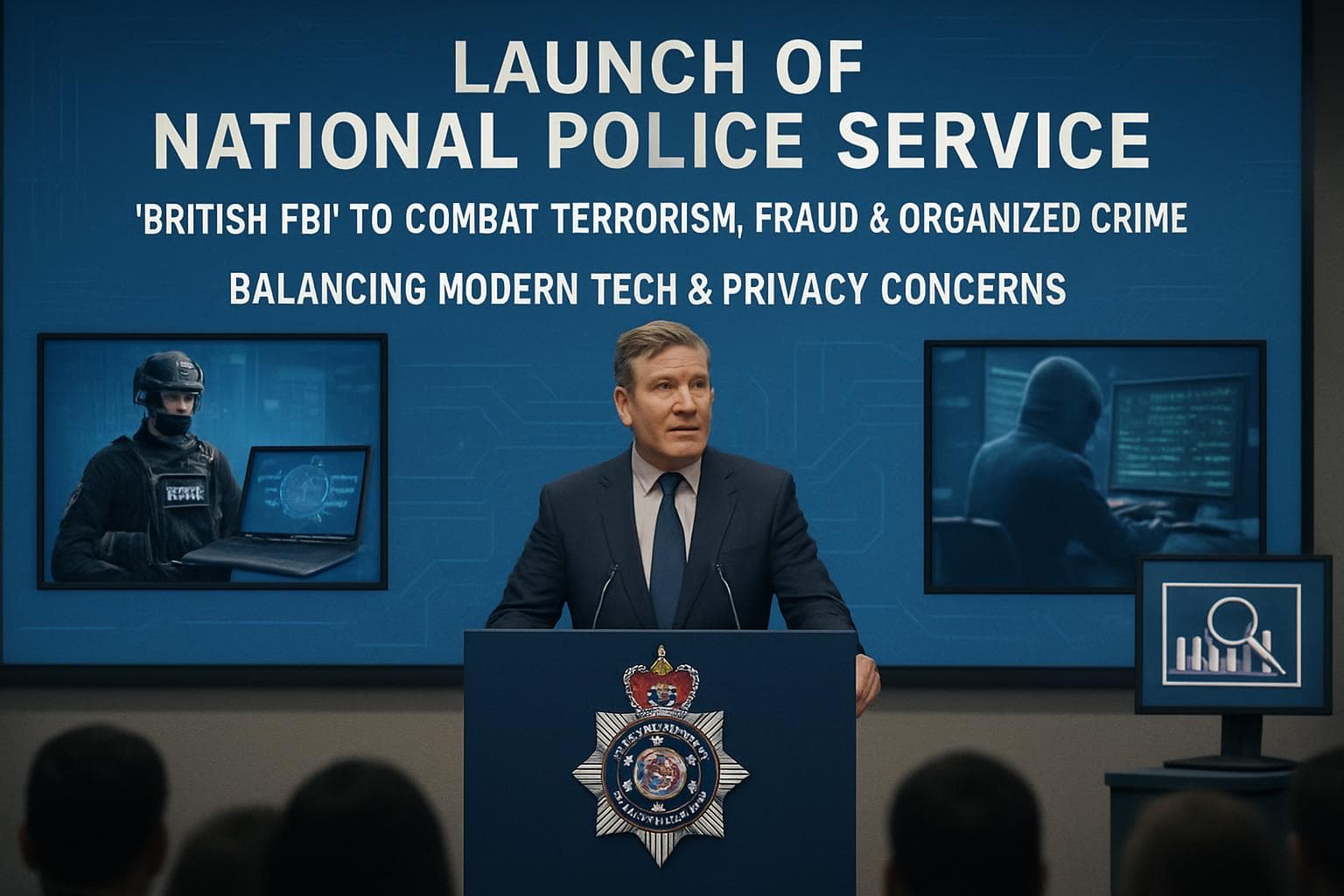
The UK government is set to unveil a transformative National Police Service (NPS), often referred to as the "British FBI," to tackle serious crimes such as terrorism, fraud, and organized crime across England and Wales. Announced by Home Secretary Shabana Mahmood, the NPS aims to deploy cutting-edge technology and elite talent to enhance national security and public safety.
Centralizing Crime-Fighting Efforts
The NPS will consolidate the efforts of existing bodies like the National Crime Agency and regional organized crime units, streamlining operations under a single national entity. This move is designed to allow local police forces to focus more on community-level crimes, such as shoplifting and anti-social behavior. "The current policing model was built for a different century," Mahmood stated, emphasizing the need for a modern approach to combat evolving criminal threats.
Introducing Mandatory Licensing for Officers
In a bid to professionalize the police force, the government will introduce a mandatory "licence to practise" for all officers. This initiative aims to ensure that police personnel remain adept with the latest problem-solving and technological skills necessary for effective law enforcement. However, the Police Federation has criticized the plan, arguing that it adds to the already heavy burdens on officers without addressing fundamental issues like pay and training.
Balancing Technology and Privacy
The NPS will also acquire new technologies, including facial recognition systems, to aid in crime prevention and investigation. While the Home Office claims these technologies have significantly reduced crime rates, privacy advocates have raised concerns about potential biases and the impact on civil liberties. The government insists that these tools will be used responsibly and transparently.
Maintaining Local Policing Connections
Despite the centralization of major crime investigations, the government assures that local policing will remain integral to the NPS's success. A joint statement from the Metropolitan Police and the National Police Chiefs’ Council highlighted the importance of maintaining strong community ties, noting that neighborhood officers are crucial in disrupting organized crime and countering terrorism.
WHAT THIS MIGHT MEAN
The establishment of the National Police Service marks a significant shift in the UK's approach to law enforcement, with potential implications for both national and local policing dynamics. While the centralization of resources and expertise could enhance the country's ability to tackle complex crimes, it is crucial to ensure that local police forces remain adequately supported to address community-specific issues.
The introduction of a "licence to practise" for officers could lead to a more skilled and professional police force, but it also risks exacerbating existing challenges related to workload and morale. The success of these reforms will depend on careful implementation and ongoing dialogue with stakeholders to balance national security needs with community policing priorities.
As the NPS rolls out, the use of facial recognition technology will likely remain a contentious issue, requiring robust oversight to address privacy concerns and maintain public trust. The government's ability to navigate these challenges will be critical in shaping the future of policing in the UK.
Related Articles

Police Federation Chief Arrested Amid Fraud Investigation

UK Government to Reform Asylum Seeker Support and Employment Policies

Saharan Dust to Illuminate UK Skies with Vivid Sunrises and Sunsets

Labour MP's Husband Arrested in UK-China Espionage Probe

Canada and Australia Forge Strategic Partnership Amid Global Uncertainty

Sisters Tragically Drown at Eryri National Park's Watkin Path
UK to Launch 'British FBI' in Major Police Reform
In This Article
 Sofia Romano| Published
 HIGHLIGHTS
- The UK government is establishing a National Police Service (NPS), dubbed the "British FBI," to centralize investigations of serious crimes like terrorism and fraud.
- Home Secretary Shabana Mahmood announced the NPS will utilize advanced technology and world-class talent to enhance crime-fighting capabilities across England and Wales.
- The NPS will consolidate existing agencies, including the National Crime Agency, and introduce a mandatory "licence to practise" for police officers.
- Critics, including the Police Federation, express concerns over the impact on local policing and the practicality of mandatory licensing.
- The reforms aim to modernize policing, but privacy concerns arise with the proposed use of facial recognition technology.
The UK government is set to unveil a transformative National Police Service (NPS), often referred to as the "British FBI," to tackle serious crimes such as terrorism, fraud, and organized crime across England and Wales. Announced by Home Secretary Shabana Mahmood, the NPS aims to deploy cutting-edge technology and elite talent to enhance national security and public safety.
Centralizing Crime-Fighting Efforts
The NPS will consolidate the efforts of existing bodies like the National Crime Agency and regional organized crime units, streamlining operations under a single national entity. This move is designed to allow local police forces to focus more on community-level crimes, such as shoplifting and anti-social behavior. "The current policing model was built for a different century," Mahmood stated, emphasizing the need for a modern approach to combat evolving criminal threats.
Introducing Mandatory Licensing for Officers
In a bid to professionalize the police force, the government will introduce a mandatory "licence to practise" for all officers. This initiative aims to ensure that police personnel remain adept with the latest problem-solving and technological skills necessary for effective law enforcement. However, the Police Federation has criticized the plan, arguing that it adds to the already heavy burdens on officers without addressing fundamental issues like pay and training.
Balancing Technology and Privacy
The NPS will also acquire new technologies, including facial recognition systems, to aid in crime prevention and investigation. While the Home Office claims these technologies have significantly reduced crime rates, privacy advocates have raised concerns about potential biases and the impact on civil liberties. The government insists that these tools will be used responsibly and transparently.
Maintaining Local Policing Connections
Despite the centralization of major crime investigations, the government assures that local policing will remain integral to the NPS's success. A joint statement from the Metropolitan Police and the National Police Chiefs’ Council highlighted the importance of maintaining strong community ties, noting that neighborhood officers are crucial in disrupting organized crime and countering terrorism.
WHAT THIS MIGHT MEAN
The establishment of the National Police Service marks a significant shift in the UK's approach to law enforcement, with potential implications for both national and local policing dynamics. While the centralization of resources and expertise could enhance the country's ability to tackle complex crimes, it is crucial to ensure that local police forces remain adequately supported to address community-specific issues.
The introduction of a "licence to practise" for officers could lead to a more skilled and professional police force, but it also risks exacerbating existing challenges related to workload and morale. The success of these reforms will depend on careful implementation and ongoing dialogue with stakeholders to balance national security needs with community policing priorities.
As the NPS rolls out, the use of facial recognition technology will likely remain a contentious issue, requiring robust oversight to address privacy concerns and maintain public trust. The government's ability to navigate these challenges will be critical in shaping the future of policing in the UK.
Related Articles
Police Federation Chief Arrested Amid Fraud Investigation
UK Government to Reform Asylum Seeker Support and Employment Policies
Saharan Dust to Illuminate UK Skies with Vivid Sunrises and Sunsets
Labour MP's Husband Arrested in UK-China Espionage Probe
Canada and Australia Forge Strategic Partnership Amid Global Uncertainty
Sisters Tragically Drown at Eryri National Park's Watkin Path