
UK Musicians Call for Urgent Action Against Ticket Touts to Protect Fans
In This Article
HIGHLIGHTS
- Over 40 prominent musicians, including Dua Lipa and Coldplay, have urged UK leaders to cap ticket resale prices to protect fans from ticket touts.
- The UK government is considering a price cap of up to 30% on ticket resales, with results from a public consultation expected soon.
- Secondary ticketing platforms like Viagogo and StubHub are under scrutiny for allowing exorbitant ticket markups, sometimes exceeding 50%.
- Artists argue that a price cap would democratize access to live events and restore faith in the ticketing system.
- The issue has gained urgency as investigations reveal overseas sellers exploiting the UK market, reselling tickets at inflated prices.
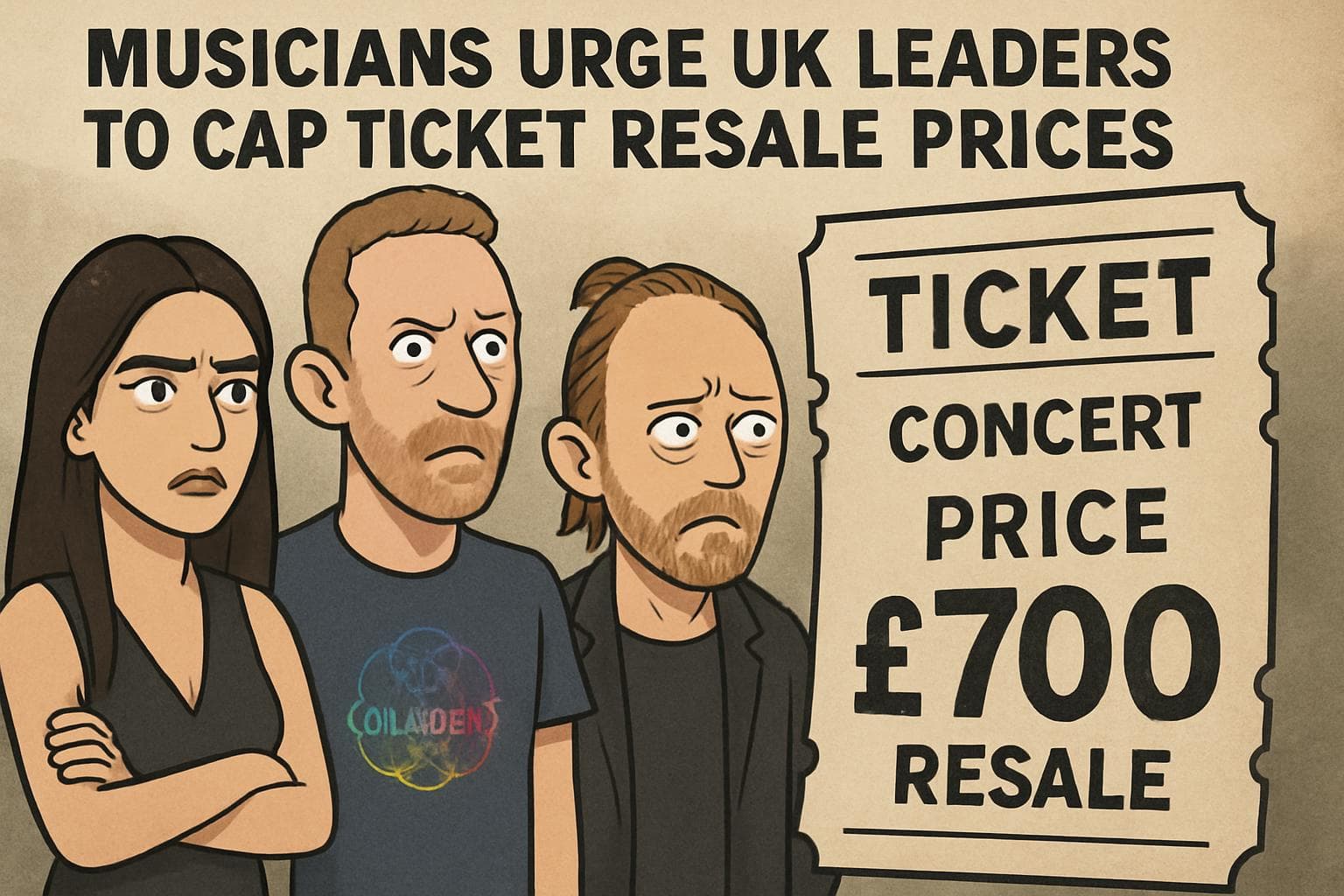
In a concerted effort to combat the rising issue of ticket touting, over 40 influential musicians, including Dua Lipa, Coldplay, and Radiohead, have called on UK political leaders to implement a cap on ticket resale prices. The artists are urging Sir Keir Starmer to fulfill his election promise to tackle the exploitative practices of secondary ticketing platforms such as Viagogo and StubHub.
The call to action comes as the UK government deliberates on a potential price cap of up to 30% on ticket resales. This follows a public consultation initiated in January, aimed at addressing the concerns of fans who face inflated prices when trying to purchase tickets for popular events. Despite the consultation closing seven months ago, there has been no clear indication of when legislation might be introduced.
The Impact of Ticket Touting
New research by consumer group Which? has highlighted the extent of the issue, revealing that tickets for major events like Oasis at Wembley Stadium have been listed for as much as £4,442. The Competition and Market Authority (CMA) has found that tickets on the resale market are typically marked up by over 50%, with some cases reaching extreme levels, such as a ticket for the All Points East festival being listed for £114,666.
Artists argue that a price cap would not only protect fans but also democratize access to live events, restoring faith in the ticketing system. Dan Smith from Bastille emphasized the widespread support among artists for such measures, noting that countries like Ireland and Australia have already implemented similar caps.
Government Response and Industry Pushback
A spokesperson for the Department for Culture stated that the government is committed to clamping down on touts and will soon outline its plans. However, secondary ticketing companies have lobbied against the proposed cap, claiming it could lead to increased fraud.
Investigations have revealed that overseas sellers are exploiting the UK market by bulk-buying tickets and reselling them at inflated prices. This practice, often facilitated by bots and specialist software, has led to legal actions and calls for stricter regulations.
WHAT THIS MIGHT MEAN
As the UK government prepares to announce its plans, the music industry and fans alike are watching closely. If a price cap is implemented, it could significantly alter the landscape of ticket sales, potentially reducing the influence of secondary ticketing platforms. However, the pushback from these companies suggests that legal challenges could arise, potentially delaying the implementation of new regulations.
Experts suggest that a successful cap could set a precedent for other countries grappling with similar issues, potentially leading to a more equitable ticketing system globally. However, the effectiveness of such measures will largely depend on the government's ability to enforce the cap and address loopholes exploited by touts.
Related Articles

Canada and Australia Forge Strategic Partnership Amid Global Uncertainty
Trump's New Tariff Strategy Sparks Global Trade Uncertainty

UK Government to Reform Asylum Seeker Support and Employment Policies
Middle East Conflict Drives UK Energy Prices to New Highs

UK Faces Dilemmas Amid Iran Conflict and China Spying Allegations

UK Reinforces Military Presence in Cyprus Amid Middle East Tensions
UK Musicians Call for Urgent Action Against Ticket Touts to Protect Fans
In This Article
 Marcus Blake| Published
 HIGHLIGHTS
- Over 40 prominent musicians, including Dua Lipa and Coldplay, have urged UK leaders to cap ticket resale prices to protect fans from ticket touts.
- The UK government is considering a price cap of up to 30% on ticket resales, with results from a public consultation expected soon.
- Secondary ticketing platforms like Viagogo and StubHub are under scrutiny for allowing exorbitant ticket markups, sometimes exceeding 50%.
- Artists argue that a price cap would democratize access to live events and restore faith in the ticketing system.
- The issue has gained urgency as investigations reveal overseas sellers exploiting the UK market, reselling tickets at inflated prices.
In a concerted effort to combat the rising issue of ticket touting, over 40 influential musicians, including Dua Lipa, Coldplay, and Radiohead, have called on UK political leaders to implement a cap on ticket resale prices. The artists are urging Sir Keir Starmer to fulfill his election promise to tackle the exploitative practices of secondary ticketing platforms such as Viagogo and StubHub.
The call to action comes as the UK government deliberates on a potential price cap of up to 30% on ticket resales. This follows a public consultation initiated in January, aimed at addressing the concerns of fans who face inflated prices when trying to purchase tickets for popular events. Despite the consultation closing seven months ago, there has been no clear indication of when legislation might be introduced.
The Impact of Ticket Touting
New research by consumer group Which? has highlighted the extent of the issue, revealing that tickets for major events like Oasis at Wembley Stadium have been listed for as much as £4,442. The Competition and Market Authority (CMA) has found that tickets on the resale market are typically marked up by over 50%, with some cases reaching extreme levels, such as a ticket for the All Points East festival being listed for £114,666.
Artists argue that a price cap would not only protect fans but also democratize access to live events, restoring faith in the ticketing system. Dan Smith from Bastille emphasized the widespread support among artists for such measures, noting that countries like Ireland and Australia have already implemented similar caps.
Government Response and Industry Pushback
A spokesperson for the Department for Culture stated that the government is committed to clamping down on touts and will soon outline its plans. However, secondary ticketing companies have lobbied against the proposed cap, claiming it could lead to increased fraud.
Investigations have revealed that overseas sellers are exploiting the UK market by bulk-buying tickets and reselling them at inflated prices. This practice, often facilitated by bots and specialist software, has led to legal actions and calls for stricter regulations.
WHAT THIS MIGHT MEAN
As the UK government prepares to announce its plans, the music industry and fans alike are watching closely. If a price cap is implemented, it could significantly alter the landscape of ticket sales, potentially reducing the influence of secondary ticketing platforms. However, the pushback from these companies suggests that legal challenges could arise, potentially delaying the implementation of new regulations.
Experts suggest that a successful cap could set a precedent for other countries grappling with similar issues, potentially leading to a more equitable ticketing system globally. However, the effectiveness of such measures will largely depend on the government's ability to enforce the cap and address loopholes exploited by touts.
Related Articles
Canada and Australia Forge Strategic Partnership Amid Global Uncertainty
Trump's New Tariff Strategy Sparks Global Trade Uncertainty
UK Government to Reform Asylum Seeker Support and Employment Policies
Middle East Conflict Drives UK Energy Prices to New Highs
UK Faces Dilemmas Amid Iran Conflict and China Spying Allegations
UK Reinforces Military Presence in Cyprus Amid Middle East Tensions