
Historic Shift as UK Parliament Approves Assisted Dying Bill
In This Article
HIGHLIGHTS
- The UK Parliament has passed a bill allowing assisted dying for terminally ill patients, marking a significant societal shift.
- The bill, supported by Prime Minister Keir Starmer, passed with a narrow majority of 23 votes and now moves to the House of Lords.
- If approved, the law will permit assisted dying for those with less than six months to live, pending approval from a medical and legal panel.
- The debate highlighted concerns over potential coercion and the ethical implications of state involvement in end-of-life decisions.
- Public opinion strongly supports the change, with a YouGov poll indicating over 70% approval for assisted dying proposals.
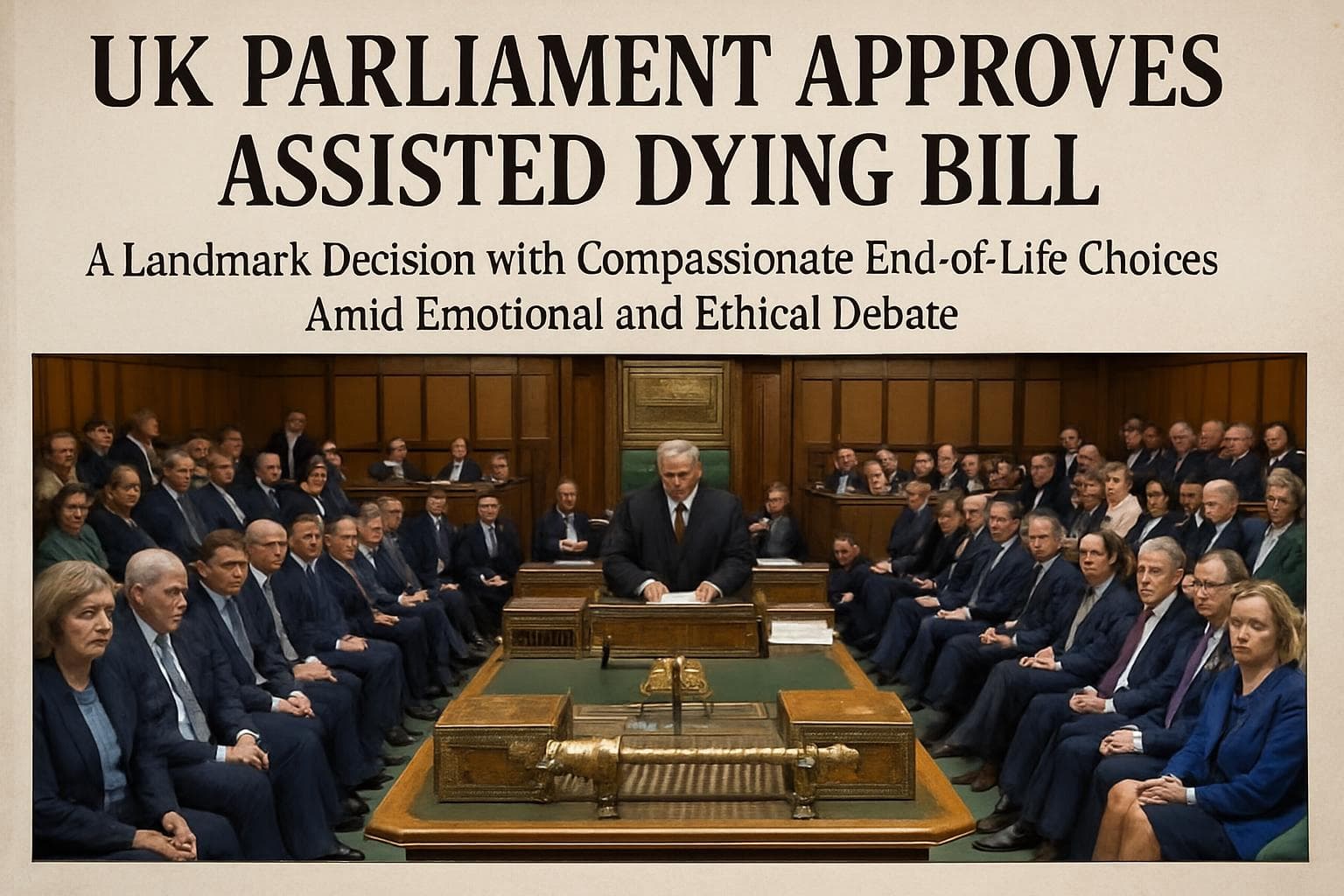
In a landmark decision, the UK Parliament has voted in favor of a bill that would legalize assisted dying for terminally ill patients in England and Wales. The bill, which passed by a narrow margin of 314 to 291 votes, is seen as a profound societal change akin to the decriminalization of homosexuality and the introduction of gay marriage.
A New Era for End-of-Life Choices
The bill, championed by Labour MP Kim Leadbeater and backed by Prime Minister Keir Starmer, grants individuals with less than six months to live the right to an assisted death. This decision comes after years of debate and previous rejections in 1997 and 2015. The proposed law requires approval from two doctors and a panel including a psychiatrist, social worker, and senior lawyer, ensuring rigorous safeguards are in place.
Emotional Debate and Ethical Concerns
The parliamentary debate was marked by emotional appeals from both supporters and opponents. Advocates argue the bill offers a compassionate choice for those facing terminal illness, while critics warn of potential coercion and the ethical implications of state-sanctioned end-of-life decisions. Disability activists and religious leaders, including the Bishop of London, voiced concerns about the risks to vulnerable individuals and the adequacy of existing palliative care services.
Public Support and Next Steps
Public opinion has consistently favored the change, with a recent YouGov poll showing over 70% support for assisted dying proposals. The bill now moves to the House of Lords, where it is expected to face scrutiny but not significant opposition. Proponents are optimistic that royal assent will be granted by the end of the year, paving the way for the law to take effect within four years.
WHAT THIS MIGHT MEAN
As the bill progresses to the House of Lords, the focus will likely shift to refining its provisions and addressing concerns raised during the Commons debate. Legal experts anticipate amendments to strengthen safeguards against coercion and ensure robust oversight. If the bill becomes law, it could set a precedent for other countries grappling with similar ethical dilemmas. The ongoing discourse may also prompt a broader examination of palliative care services and the support available to terminally ill patients and their families.
Related Articles

Labour MP's Husband Arrested in UK-China Espionage Probe

Diplomatic Tensions Rise as Trump Criticizes Starmer's Iran Policy

Sisters Tragically Drown at Eryri National Park's Watkin Path

UK Faces Dilemmas Amid Iran Conflict and China Spying Allegations

UK-Iran Tensions: Starmer Defends Cautious Approach Amid Trump Criticism

Prince Andrew's Arrest Intensifies Scrutiny on Royal Succession and Prince William's Future Role
Historic Shift as UK Parliament Approves Assisted Dying Bill
In This Article
 Ethan Brooks| Published
 HIGHLIGHTS
- The UK Parliament has passed a bill allowing assisted dying for terminally ill patients, marking a significant societal shift.
- The bill, supported by Prime Minister Keir Starmer, passed with a narrow majority of 23 votes and now moves to the House of Lords.
- If approved, the law will permit assisted dying for those with less than six months to live, pending approval from a medical and legal panel.
- The debate highlighted concerns over potential coercion and the ethical implications of state involvement in end-of-life decisions.
- Public opinion strongly supports the change, with a YouGov poll indicating over 70% approval for assisted dying proposals.
In a landmark decision, the UK Parliament has voted in favor of a bill that would legalize assisted dying for terminally ill patients in England and Wales. The bill, which passed by a narrow margin of 314 to 291 votes, is seen as a profound societal change akin to the decriminalization of homosexuality and the introduction of gay marriage.
A New Era for End-of-Life Choices
The bill, championed by Labour MP Kim Leadbeater and backed by Prime Minister Keir Starmer, grants individuals with less than six months to live the right to an assisted death. This decision comes after years of debate and previous rejections in 1997 and 2015. The proposed law requires approval from two doctors and a panel including a psychiatrist, social worker, and senior lawyer, ensuring rigorous safeguards are in place.
Emotional Debate and Ethical Concerns
The parliamentary debate was marked by emotional appeals from both supporters and opponents. Advocates argue the bill offers a compassionate choice for those facing terminal illness, while critics warn of potential coercion and the ethical implications of state-sanctioned end-of-life decisions. Disability activists and religious leaders, including the Bishop of London, voiced concerns about the risks to vulnerable individuals and the adequacy of existing palliative care services.
Public Support and Next Steps
Public opinion has consistently favored the change, with a recent YouGov poll showing over 70% support for assisted dying proposals. The bill now moves to the House of Lords, where it is expected to face scrutiny but not significant opposition. Proponents are optimistic that royal assent will be granted by the end of the year, paving the way for the law to take effect within four years.
WHAT THIS MIGHT MEAN
As the bill progresses to the House of Lords, the focus will likely shift to refining its provisions and addressing concerns raised during the Commons debate. Legal experts anticipate amendments to strengthen safeguards against coercion and ensure robust oversight. If the bill becomes law, it could set a precedent for other countries grappling with similar ethical dilemmas. The ongoing discourse may also prompt a broader examination of palliative care services and the support available to terminally ill patients and their families.
Related Articles
Labour MP's Husband Arrested in UK-China Espionage Probe
Diplomatic Tensions Rise as Trump Criticizes Starmer's Iran Policy
Sisters Tragically Drown at Eryri National Park's Watkin Path
UK Faces Dilemmas Amid Iran Conflict and China Spying Allegations
UK-Iran Tensions: Starmer Defends Cautious Approach Amid Trump Criticism
Prince Andrew's Arrest Intensifies Scrutiny on Royal Succession and Prince William's Future Role