
UK's PFAS Action Plan Faces Criticism Amid Environmental Concerns
In This Article
HIGHLIGHTS
- The UK government has launched a national plan to tackle PFAS, also known as "forever chemicals," due to their environmental and health risks.
- The plan aims to increase testing by 50% in Scotland and Wales and includes monitoring of coastal areas in England.
- Environmentalists criticize the plan as insufficient compared to more stringent actions in Europe, calling it "crushingly disappointing."
- The government intends to align with EU regulations by 2029, focusing on reducing non-essential uses of PFAS.
- Critics argue for immediate regulation at the source, citing the chemicals' persistence and bioaccumulative nature.
The UK government has unveiled a comprehensive plan to address the growing concerns surrounding per- and poly-fluoroalkyl substances (PFAS), commonly known as "forever chemicals." These substances, prized for their water and oil-resistant properties, are prevalent in everyday products but pose significant environmental and health risks due to their persistence and bioaccumulative nature.
Government's Strategy and Goals
Environment Minister Emma Hardy announced the plan, emphasizing the need to protect public health and the environment. "It's crucial that we protect both public health and the environment for future generations," Hardy stated. The strategy involves increasing testing for PFAS by 50% in Scotland and Wales, alongside monitoring coastal areas in England to identify contamination hotspots. The government aims to align with EU regulations by 2029, focusing on reducing non-essential uses of these chemicals.
Environmentalists' Concerns
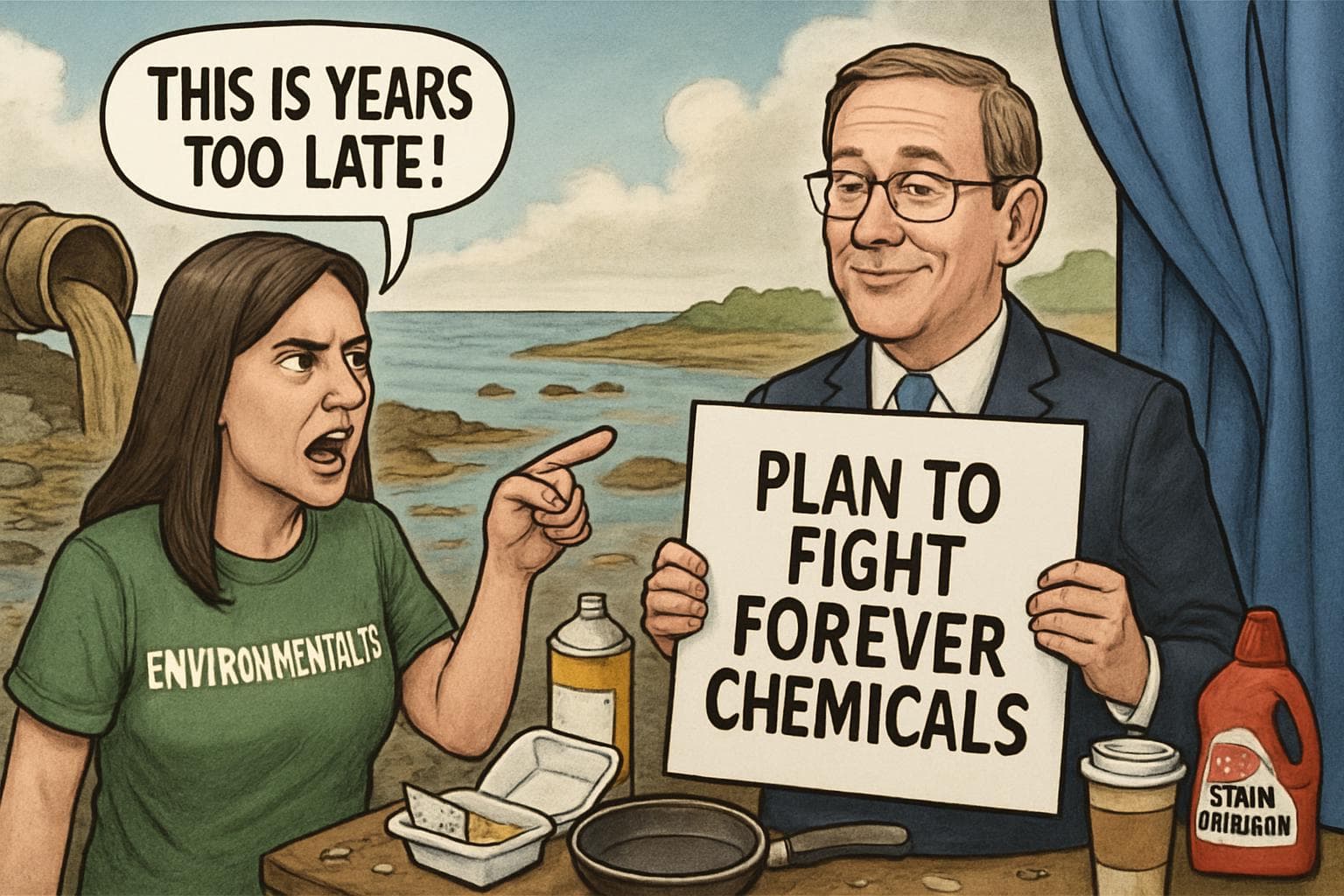
Despite the government's efforts, environmental campaigners have expressed disappointment, labeling the plan as "crushingly disappointing." Critics argue that the measures fall short of the decisive actions taken by countries like Denmark and France, which have already banned PFAS in some consumer products. Chloe Alexander from Wildlife and Countryside Link described the framework as one that "ducks the hard decisions."
The Call for Immediate Action
Experts and environmentalists are urging the UK to adopt a precautionary principle, advocating for immediate regulation at the source. Dr. Shubhi Sharma from Chem Trust criticized the government's approach as a delaying tactic, stating, "This is not the action plan we were expecting – action has been deferred to an indefinite date in the future."
Scientific and Public Health Perspectives
Research indicates that PFAS are present in the blood of nearly every person on the planet, with evidence linking them to various health issues, including cancer. Dr. Mohamed Abdallah from the University of Birmingham acknowledged the government's holistic approach but stressed the need for timely action to mitigate the significant risks posed by these toxic substances.
WHAT THIS MIGHT MEAN
Looking ahead, the UK's PFAS action plan could face further scrutiny from both environmental groups and the public if tangible results are not achieved promptly. The government's commitment to aligning with EU regulations by 2029 may lead to stricter controls on PFAS, but the timeline could be seen as too slow by critics. As awareness of the chemicals' dangers grows, there may be increased pressure for immediate regulatory action, potentially prompting the government to accelerate its efforts. The ongoing debate highlights the complex balance between scientific research, public safety, and environmental protection in addressing chemical pollution.
Related Articles

Saharan Dust to Illuminate UK Skies with Vivid Sunrises and Sunsets

Government Announces £4 Billion Overhaul of SEND Support in England

UK Government Announces Major Overhaul of SEND System with £3.4 Billion Investment

Government Unveils Ambitious Plan to Halve Attainment Gap in England's Schools

UK Government's SEND Reforms: A Critical Turning Point for Special Education

UK Government to Reform Asylum Seeker Support and Employment Policies
UK's PFAS Action Plan Faces Criticism Amid Environmental Concerns
In This Article
 Leila Hassan| Published
 HIGHLIGHTS
- The UK government has launched a national plan to tackle PFAS, also known as "forever chemicals," due to their environmental and health risks.
- The plan aims to increase testing by 50% in Scotland and Wales and includes monitoring of coastal areas in England.
- Environmentalists criticize the plan as insufficient compared to more stringent actions in Europe, calling it "crushingly disappointing."
- The government intends to align with EU regulations by 2029, focusing on reducing non-essential uses of PFAS.
- Critics argue for immediate regulation at the source, citing the chemicals' persistence and bioaccumulative nature.
The UK government has unveiled a comprehensive plan to address the growing concerns surrounding per- and poly-fluoroalkyl substances (PFAS), commonly known as "forever chemicals." These substances, prized for their water and oil-resistant properties, are prevalent in everyday products but pose significant environmental and health risks due to their persistence and bioaccumulative nature.
Government's Strategy and Goals
Environment Minister Emma Hardy announced the plan, emphasizing the need to protect public health and the environment. "It's crucial that we protect both public health and the environment for future generations," Hardy stated. The strategy involves increasing testing for PFAS by 50% in Scotland and Wales, alongside monitoring coastal areas in England to identify contamination hotspots. The government aims to align with EU regulations by 2029, focusing on reducing non-essential uses of these chemicals.
Environmentalists' Concerns
Despite the government's efforts, environmental campaigners have expressed disappointment, labeling the plan as "crushingly disappointing." Critics argue that the measures fall short of the decisive actions taken by countries like Denmark and France, which have already banned PFAS in some consumer products. Chloe Alexander from Wildlife and Countryside Link described the framework as one that "ducks the hard decisions."
The Call for Immediate Action
Experts and environmentalists are urging the UK to adopt a precautionary principle, advocating for immediate regulation at the source. Dr. Shubhi Sharma from Chem Trust criticized the government's approach as a delaying tactic, stating, "This is not the action plan we were expecting – action has been deferred to an indefinite date in the future."
Scientific and Public Health Perspectives
Research indicates that PFAS are present in the blood of nearly every person on the planet, with evidence linking them to various health issues, including cancer. Dr. Mohamed Abdallah from the University of Birmingham acknowledged the government's holistic approach but stressed the need for timely action to mitigate the significant risks posed by these toxic substances.
WHAT THIS MIGHT MEAN
Looking ahead, the UK's PFAS action plan could face further scrutiny from both environmental groups and the public if tangible results are not achieved promptly. The government's commitment to aligning with EU regulations by 2029 may lead to stricter controls on PFAS, but the timeline could be seen as too slow by critics. As awareness of the chemicals' dangers grows, there may be increased pressure for immediate regulatory action, potentially prompting the government to accelerate its efforts. The ongoing debate highlights the complex balance between scientific research, public safety, and environmental protection in addressing chemical pollution.
Related Articles
Saharan Dust to Illuminate UK Skies with Vivid Sunrises and Sunsets
Government Announces £4 Billion Overhaul of SEND Support in England
UK Government Announces Major Overhaul of SEND System with £3.4 Billion Investment
Government Unveils Ambitious Plan to Halve Attainment Gap in England's Schools
UK Government's SEND Reforms: A Critical Turning Point for Special Education
UK Government to Reform Asylum Seeker Support and Employment Policies