
UK Government Pledges £3bn for Special Educational Needs Reforms Amid Rising Demand
In This Article
HIGHLIGHTS
- Devon County Council plans to transform its special educational needs (Send) services, focusing on early intervention and inclusivity in local schools.
- The UK government has pledged £3bn to create up to 60,000 Send places in mainstream schools, partly funded by canceling some free school projects.
- Legal actions by parents over Send provisions have surged, with 25,002 appeals heard by tribunals in the 2024-25 period.
- The Department for Education aims to shift Send spending from local authorities by 2028, with reforms detailed in an upcoming white paper.
- Critics highlight past government spending on failed free schools, urging a focus on rebuilding existing schools and creating necessary Send places.
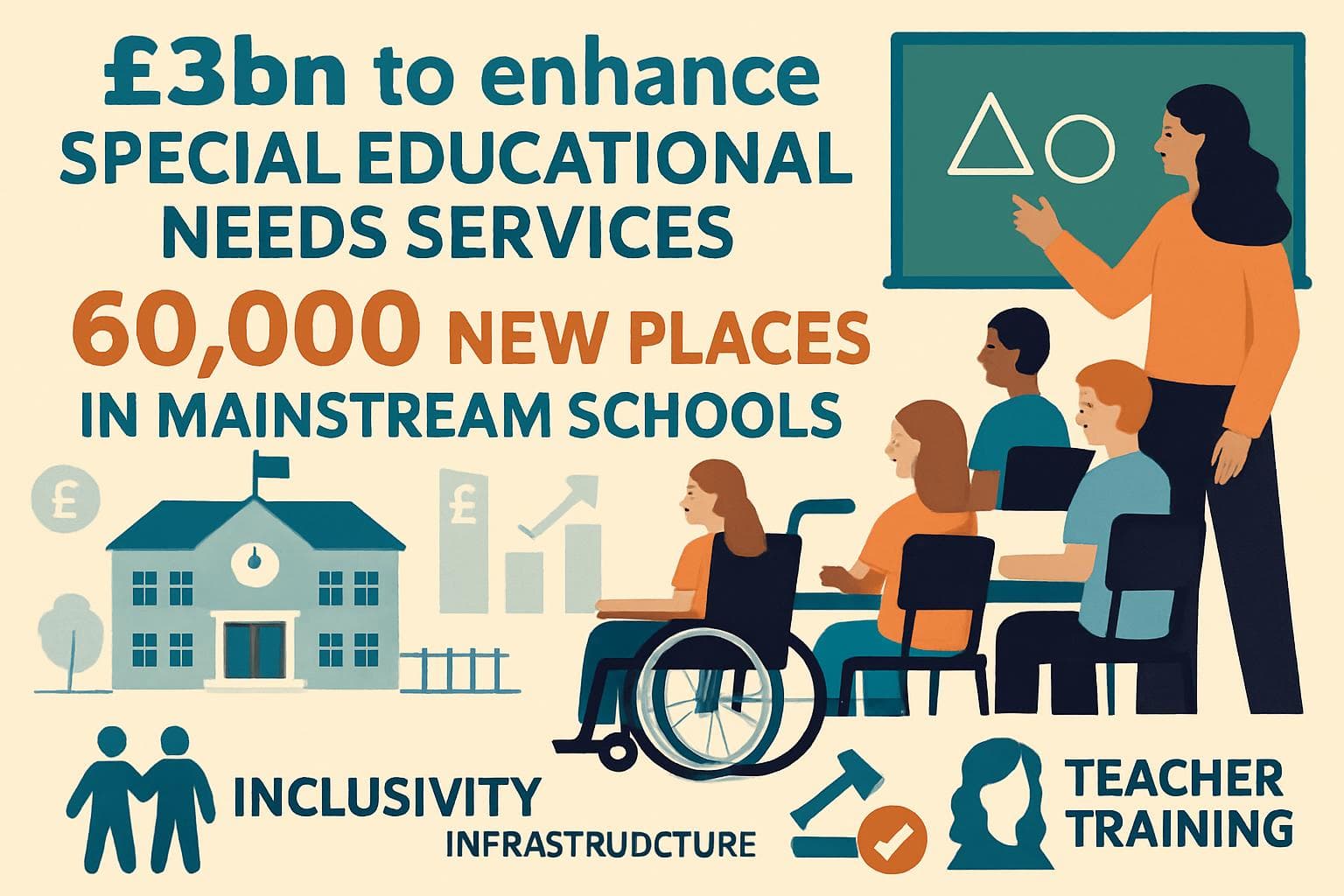
The UK government has announced a significant investment of £3bn to enhance special educational needs and disabilities (Send) services across England. This initiative aims to create up to 60,000 new places within mainstream schools, addressing the growing demand for inclusive education. The plan, unveiled by Education Secretary Bridget Phillipson, will be partly funded by halting the construction of certain free schools, saving an estimated £600m.
Transforming Send Services
Devon County Council is at the forefront of this transformation, seeking to revamp its Send services by emphasizing early intervention and inclusivity in local schools. The council, which faces a £160m debt in Send services, has requested additional government funding to support these changes. Julian Brazil, the Liberal Democrat leader of the council, expressed a commitment to working with the government to deliver these crucial reforms.
Government's Strategic Shift
The Department for Education (DfE) is preparing a white paper to outline comprehensive reforms, aiming to shift Send spending away from local authorities by 2028. The reforms will focus on ensuring that children with special needs can attend local schools, reducing the need for costly independent placements. The DfE's strategy includes adapting existing school buildings to accommodate specialist spaces, thereby minimizing the distance children must travel for education.
Legal Challenges and Financial Implications
The urgency for reform is underscored by a sharp increase in legal actions by parents dissatisfied with current Send provisions. The Ministry of Justice reported 25,002 tribunal appeals in the 2024-25 period, marking an 18% rise from the previous year. Critics have also pointed to the £325m spent on free schools that failed or disappeared, urging a redirection of funds towards rebuilding existing schools and creating necessary Send places.
Community and Educational Impact
Local authorities and educational leaders have welcomed the government's investment but stress the need for strategic allocation of funds. Councillor Amanda Hopgood from the Local Government Association emphasized the importance of placing Send facilities within local communities to avoid unnecessary transportation costs. Meanwhile, headteachers' unions highlight the necessity of investing in specialist training for teachers to complement the infrastructure improvements.
WHAT THIS MIGHT MEAN
As the UK government moves forward with its £3bn investment in Send services, the success of these reforms will largely depend on effective implementation and collaboration with local authorities. The upcoming white paper is expected to provide a detailed roadmap for these changes, potentially setting a new standard for inclusive education in England. However, the challenge remains in balancing infrastructure development with the need for skilled educators to support these initiatives. If executed well, these reforms could significantly enhance educational outcomes for children with special needs, fostering a more inclusive and equitable school system.
Images from the Web

Related Articles

UK Government Announces Major Overhaul of SEND System with £3.4 Billion Investment
Government Unveils Ambitious Plan to Halve Attainment Gap in England's Schools

UK SEND Education Reforms: New Funding, Infrastructure Proposals, and Potential Backlash
UK Government's SEND Reforms Spark Debate Over Funding and Accessibility

Government Announces £4 Billion Overhaul of SEND Support in England

UK Government's SEND Reforms: A Critical Turning Point for Special Education
UK Government Pledges £3bn for Special Educational Needs Reforms Amid Rising Demand
In This Article
 Aya Nakamura| Published
 HIGHLIGHTS
- Devon County Council plans to transform its special educational needs (Send) services, focusing on early intervention and inclusivity in local schools.
- The UK government has pledged £3bn to create up to 60,000 Send places in mainstream schools, partly funded by canceling some free school projects.
- Legal actions by parents over Send provisions have surged, with 25,002 appeals heard by tribunals in the 2024-25 period.
- The Department for Education aims to shift Send spending from local authorities by 2028, with reforms detailed in an upcoming white paper.
- Critics highlight past government spending on failed free schools, urging a focus on rebuilding existing schools and creating necessary Send places.
The UK government has announced a significant investment of £3bn to enhance special educational needs and disabilities (Send) services across England. This initiative aims to create up to 60,000 new places within mainstream schools, addressing the growing demand for inclusive education. The plan, unveiled by Education Secretary Bridget Phillipson, will be partly funded by halting the construction of certain free schools, saving an estimated £600m.
Transforming Send Services
Devon County Council is at the forefront of this transformation, seeking to revamp its Send services by emphasizing early intervention and inclusivity in local schools. The council, which faces a £160m debt in Send services, has requested additional government funding to support these changes. Julian Brazil, the Liberal Democrat leader of the council, expressed a commitment to working with the government to deliver these crucial reforms.
Government's Strategic Shift
The Department for Education (DfE) is preparing a white paper to outline comprehensive reforms, aiming to shift Send spending away from local authorities by 2028. The reforms will focus on ensuring that children with special needs can attend local schools, reducing the need for costly independent placements. The DfE's strategy includes adapting existing school buildings to accommodate specialist spaces, thereby minimizing the distance children must travel for education.
Legal Challenges and Financial Implications
The urgency for reform is underscored by a sharp increase in legal actions by parents dissatisfied with current Send provisions. The Ministry of Justice reported 25,002 tribunal appeals in the 2024-25 period, marking an 18% rise from the previous year. Critics have also pointed to the £325m spent on free schools that failed or disappeared, urging a redirection of funds towards rebuilding existing schools and creating necessary Send places.
Community and Educational Impact
Local authorities and educational leaders have welcomed the government's investment but stress the need for strategic allocation of funds. Councillor Amanda Hopgood from the Local Government Association emphasized the importance of placing Send facilities within local communities to avoid unnecessary transportation costs. Meanwhile, headteachers' unions highlight the necessity of investing in specialist training for teachers to complement the infrastructure improvements.
WHAT THIS MIGHT MEAN
As the UK government moves forward with its £3bn investment in Send services, the success of these reforms will largely depend on effective implementation and collaboration with local authorities. The upcoming white paper is expected to provide a detailed roadmap for these changes, potentially setting a new standard for inclusive education in England. However, the challenge remains in balancing infrastructure development with the need for skilled educators to support these initiatives. If executed well, these reforms could significantly enhance educational outcomes for children with special needs, fostering a more inclusive and equitable school system.
Images from the Web
Related Articles
UK Government Announces Major Overhaul of SEND System with £3.4 Billion Investment
Government Unveils Ambitious Plan to Halve Attainment Gap in England's Schools
UK SEND Education Reforms: New Funding, Infrastructure Proposals, and Potential Backlash
UK Government's SEND Reforms Spark Debate Over Funding and Accessibility
Government Announces £4 Billion Overhaul of SEND Support in England
UK Government's SEND Reforms: A Critical Turning Point for Special Education