
UK's Potential Recognition of Palestinian Statehood: A Shift in Foreign Policy
In This Article
HIGHLIGHTS
- UK Prime Minister Keir Starmer is considering recognizing Palestinian statehood by September, contingent on Israel meeting specific conditions.
- Conditions include a ceasefire, no annexation in the West Bank, and a commitment to a two-state solution.
- The move marks a significant shift in UK foreign policy and has been influenced by international and domestic pressures.
- Critics argue the conditions are unrealistic given the current Israeli government's stance and Hamas's potential non-compliance.
- Recognition would be largely symbolic but could lead to full diplomatic relations between the UK and Palestine.
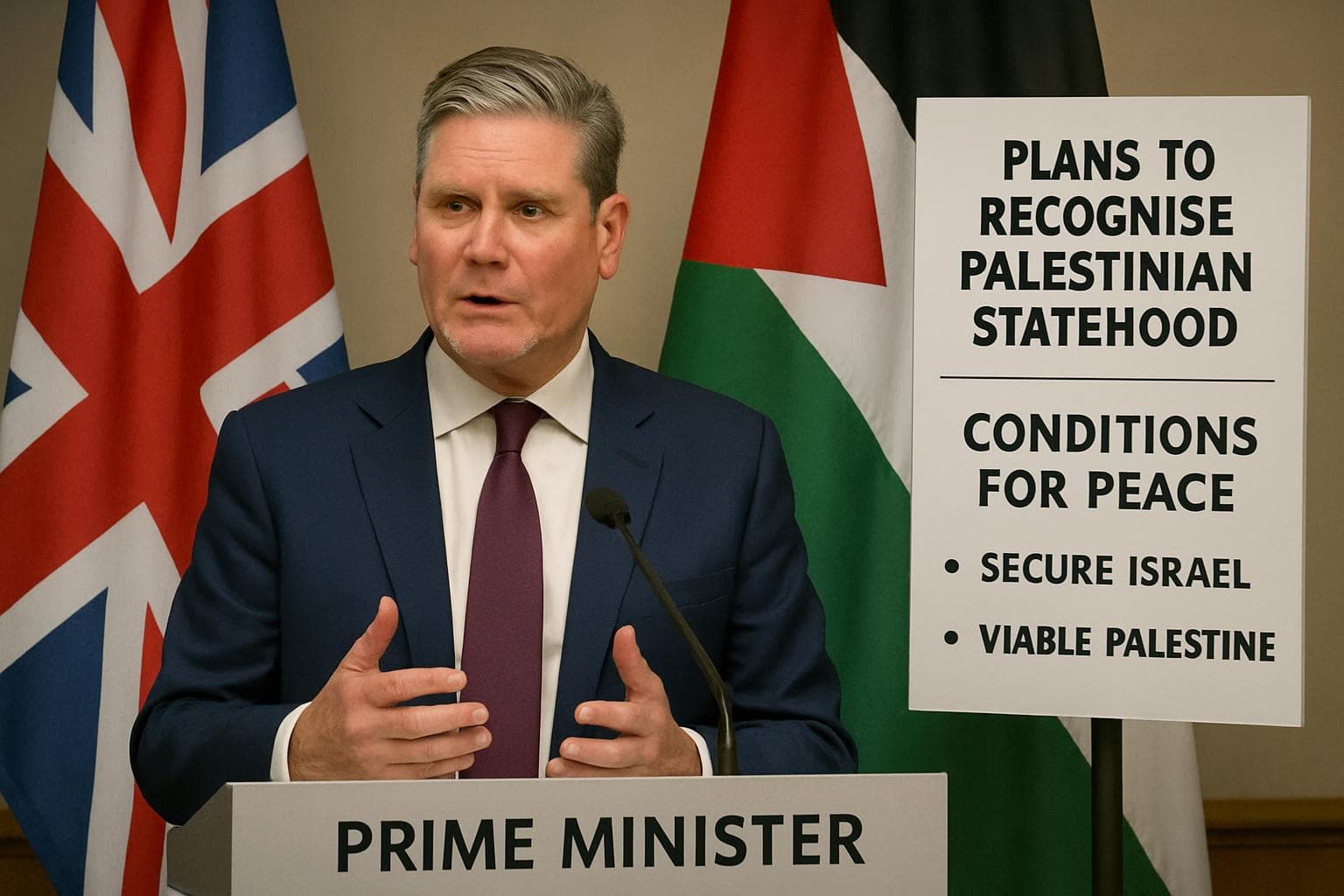
In a significant shift in UK foreign policy, Prime Minister Keir Starmer has announced plans to recognize Palestinian statehood by September, provided Israel meets a set of stringent conditions. This move comes amid mounting international and domestic pressures, including recent announcements by France and tacit approval from the United States.
Conditions for Recognition
Starmer's proposal hinges on Israel achieving a ceasefire, refraining from annexing the West Bank, and committing to a long-term peace process aimed at a two-state solution. Additionally, the UK government has set conditions for Hamas, demanding the release of hostages, a ceasefire agreement, and disarmament, with no role in Gaza's governance.
The announcement has sparked debate, with critics questioning the feasibility of these conditions. The Israeli government, reliant on far-right ministers opposed to a two-state solution, is unlikely to comply. Similarly, Hamas's acceptance of disarmament remains doubtful.
Political and Public Pressure
The decision follows increased pressure from within the Labour Party and the public. Over half of Labour backbench MPs have advocated for immediate recognition, and senior cabinet ministers, including Angela Rayner and Yvette Cooper, support the move. A poll commissioned by Ecotricity indicates public backing for action.
Internationally, French President Emmanuel Macron's recent commitment to recognize Palestine at the UN General Assembly has influenced the timing of Starmer's announcement. The US President's neutral stance further emboldens the UK's position.
Symbolic and Diplomatic Implications
While largely symbolic, recognition would formally acknowledge Palestinian self-determination and could lead to full diplomatic relations, including the exchange of ambassadors. Currently, around 140 UN member states recognize Palestine, but no G7 country has done so until France's recent announcement.
Critics, including some Labour MPs, argue that making recognition conditional on Israel's actions undermines Palestinian self-determination. The Conservative Party has dismissed the move as a gesture to appease Labour backbenchers, doubting its potential to secure lasting peace.
WHAT THIS MIGHT MEAN
As the September deadline approaches, the UK government faces a complex diplomatic landscape. If Israel and Hamas fail to meet the conditions, Starmer will need to decide whether to proceed with recognition, potentially straining UK-Israel relations. Conversely, meeting the conditions could pave the way for renewed peace talks, though this remains unlikely given the current political climate.
The UK's decision could influence other nations, particularly within the G7, to reconsider their stance on Palestinian statehood. However, the symbolic nature of recognition without practical steps towards peace may limit its impact. As the situation evolves, the UK must navigate both domestic expectations and international diplomatic relations carefully.
Related Articles

UK Faces Dilemmas Amid Iran Conflict and China Spying Allegations

UK Government to Reform Asylum Seeker Support and Employment Policies

Labour MP's Husband Arrested in UK-China Espionage Probe

UK-Iran Tensions: Starmer Defends Cautious Approach Amid Trump Criticism
UK Reinforces Military Presence in Cyprus Amid Middle East Tensions
Iran Postpones Khamenei Funeral Amid Escalating US-Israeli Strikes
UK's Potential Recognition of Palestinian Statehood: A Shift in Foreign Policy
In This Article
 Ethan Brooks| Published
 HIGHLIGHTS
- UK Prime Minister Keir Starmer is considering recognizing Palestinian statehood by September, contingent on Israel meeting specific conditions.
- Conditions include a ceasefire, no annexation in the West Bank, and a commitment to a two-state solution.
- The move marks a significant shift in UK foreign policy and has been influenced by international and domestic pressures.
- Critics argue the conditions are unrealistic given the current Israeli government's stance and Hamas's potential non-compliance.
- Recognition would be largely symbolic but could lead to full diplomatic relations between the UK and Palestine.
In a significant shift in UK foreign policy, Prime Minister Keir Starmer has announced plans to recognize Palestinian statehood by September, provided Israel meets a set of stringent conditions. This move comes amid mounting international and domestic pressures, including recent announcements by France and tacit approval from the United States.
Conditions for Recognition
Starmer's proposal hinges on Israel achieving a ceasefire, refraining from annexing the West Bank, and committing to a long-term peace process aimed at a two-state solution. Additionally, the UK government has set conditions for Hamas, demanding the release of hostages, a ceasefire agreement, and disarmament, with no role in Gaza's governance.
The announcement has sparked debate, with critics questioning the feasibility of these conditions. The Israeli government, reliant on far-right ministers opposed to a two-state solution, is unlikely to comply. Similarly, Hamas's acceptance of disarmament remains doubtful.
Political and Public Pressure
The decision follows increased pressure from within the Labour Party and the public. Over half of Labour backbench MPs have advocated for immediate recognition, and senior cabinet ministers, including Angela Rayner and Yvette Cooper, support the move. A poll commissioned by Ecotricity indicates public backing for action.
Internationally, French President Emmanuel Macron's recent commitment to recognize Palestine at the UN General Assembly has influenced the timing of Starmer's announcement. The US President's neutral stance further emboldens the UK's position.
Symbolic and Diplomatic Implications
While largely symbolic, recognition would formally acknowledge Palestinian self-determination and could lead to full diplomatic relations, including the exchange of ambassadors. Currently, around 140 UN member states recognize Palestine, but no G7 country has done so until France's recent announcement.
Critics, including some Labour MPs, argue that making recognition conditional on Israel's actions undermines Palestinian self-determination. The Conservative Party has dismissed the move as a gesture to appease Labour backbenchers, doubting its potential to secure lasting peace.
WHAT THIS MIGHT MEAN
As the September deadline approaches, the UK government faces a complex diplomatic landscape. If Israel and Hamas fail to meet the conditions, Starmer will need to decide whether to proceed with recognition, potentially straining UK-Israel relations. Conversely, meeting the conditions could pave the way for renewed peace talks, though this remains unlikely given the current political climate.
The UK's decision could influence other nations, particularly within the G7, to reconsider their stance on Palestinian statehood. However, the symbolic nature of recognition without practical steps towards peace may limit its impact. As the situation evolves, the UK must navigate both domestic expectations and international diplomatic relations carefully.
Related Articles
UK Faces Dilemmas Amid Iran Conflict and China Spying Allegations
UK Government to Reform Asylum Seeker Support and Employment Policies
Labour MP's Husband Arrested in UK-China Espionage Probe
UK-Iran Tensions: Starmer Defends Cautious Approach Amid Trump Criticism
UK Reinforces Military Presence in Cyprus Amid Middle East Tensions
Iran Postpones Khamenei Funeral Amid Escalating US-Israeli Strikes