
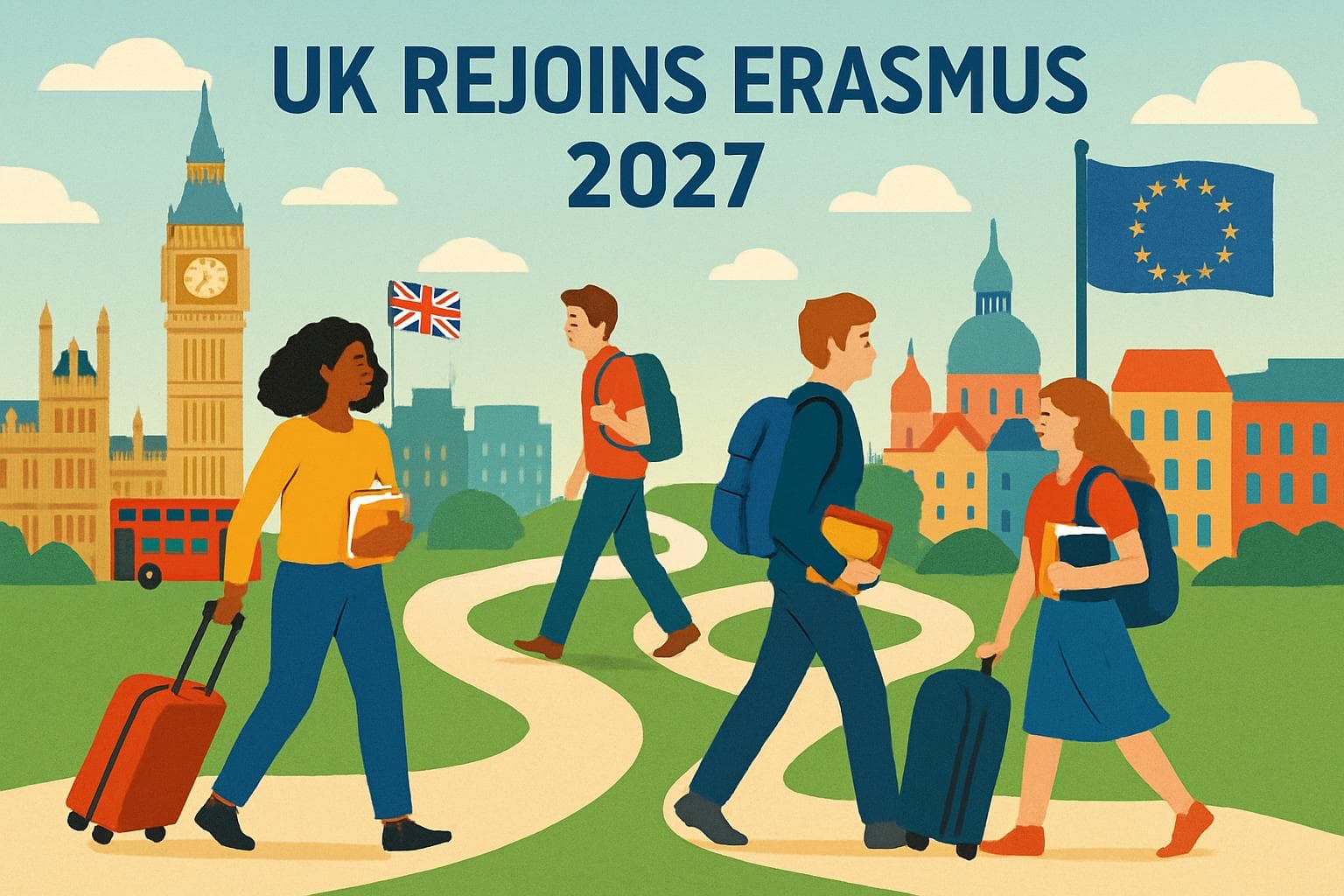
UK to Rejoin Erasmus Student Exchange Programme in 2027
In This Article
HIGHLIGHTS
- The UK is set to rejoin the Erasmus student exchange programme in 2027, five years after leaving due to Brexit.
- The Erasmus scheme, now called Erasmus+, offers educational and cultural opportunities across Europe, covering travel, living, and course fees.
- The Turing scheme, which replaced Erasmus, has a global reach and focuses on disadvantaged students, funding nearly 3,000 placements in Scotland for 2024-25.
- The UK government negotiated a £570m fee for rejoining Erasmus, a 30% discount from the expected cost, citing historical benefits.
- Political reactions are mixed, with Liberal Democrats supporting the move and Conservatives criticizing the financial implications.
The United Kingdom is poised to re-enter the Erasmus student exchange programme in 2027, marking a significant shift in its educational policy post-Brexit. This decision comes five years after the UK withdrew from the scheme, a move that was met with widespread criticism from educational institutions and students alike.
A Return to European Educational Ties
Erasmus+, as the programme is now known, provides a wide array of opportunities for students, apprentices, and educators to study, train, or volunteer across Europe. The scheme covers essential costs such as travel, living expenses, and course fees, making international education more accessible. The UK’s re-entry into Erasmus is expected to open doors for thousands of students and professionals, enhancing cultural and educational exchanges.
The Turing Scheme: A Global Alternative
In the interim, the UK has relied on the Turing scheme, which was introduced as a replacement for Erasmus. Unlike its predecessor, Turing has a global reach, sending students to countries beyond Europe, including Canada, Japan, and the United States. The scheme has been particularly beneficial for disadvantaged students, funding nearly 3,000 placements in Scotland alone for the 2024-25 academic year.
Financial and Political Considerations
The UK government has negotiated a £570 million fee for the first year of rejoining Erasmus, a 30% discount from the anticipated cost. This discount reflects the historical benefits the UK has received from the programme. However, the financial implications have sparked political debate. While the Liberal Democrats have praised the decision as a step towards mending Brexit-induced educational rifts, some Conservatives have criticized the cost, with shadow education secretary Laura Trott labeling it "nuts."
Looking Ahead: Opportunities and Challenges
As the UK prepares to rejoin Erasmus, a new national agency will be established to manage the programme. Applications are expected to open in mid-2026, with full participation resuming in 2027-28. The government aims to assess the scheme's impact on young people, particularly those from disadvantaged backgrounds, during this period.
WHAT THIS MIGHT MEAN
The UK’s rejoining of Erasmus could significantly enhance educational and cultural ties with Europe, potentially reversing some of the isolationist trends seen post-Brexit. This move may also encourage more UK students to pursue international experiences, enriching their academic and personal development. However, the financial commitment required could remain a contentious issue, particularly if economic conditions tighten. As the programme unfolds, its success will likely depend on effective administration and the ability to demonstrate tangible benefits for participants and the broader UK economy.
Images from the Web



Related Articles

Canada Calls for De-escalation Amid US-Israel Strikes on Iran

Conservatives Propose Interest Rate Cap on Student Loans Amid Growing Debt Concerns

China Sets Lowest GDP Growth Target in Decades Amid Economic Challenges

Canada and Australia Forge Strategic Partnership Amid Global Uncertainty

Breakthrough Drug Offers Hope for Children with Severe Epilepsy

Cuba Faces Widespread Blackout Amid Deepening Fuel Crisis
UK to Rejoin Erasmus Student Exchange Programme in 2027
In This Article
 Aya Nakamura| Published
 HIGHLIGHTS
- The UK is set to rejoin the Erasmus student exchange programme in 2027, five years after leaving due to Brexit.
- The Erasmus scheme, now called Erasmus+, offers educational and cultural opportunities across Europe, covering travel, living, and course fees.
- The Turing scheme, which replaced Erasmus, has a global reach and focuses on disadvantaged students, funding nearly 3,000 placements in Scotland for 2024-25.
- The UK government negotiated a £570m fee for rejoining Erasmus, a 30% discount from the expected cost, citing historical benefits.
- Political reactions are mixed, with Liberal Democrats supporting the move and Conservatives criticizing the financial implications.
The United Kingdom is poised to re-enter the Erasmus student exchange programme in 2027, marking a significant shift in its educational policy post-Brexit. This decision comes five years after the UK withdrew from the scheme, a move that was met with widespread criticism from educational institutions and students alike.
A Return to European Educational Ties
Erasmus+, as the programme is now known, provides a wide array of opportunities for students, apprentices, and educators to study, train, or volunteer across Europe. The scheme covers essential costs such as travel, living expenses, and course fees, making international education more accessible. The UK’s re-entry into Erasmus is expected to open doors for thousands of students and professionals, enhancing cultural and educational exchanges.
The Turing Scheme: A Global Alternative
In the interim, the UK has relied on the Turing scheme, which was introduced as a replacement for Erasmus. Unlike its predecessor, Turing has a global reach, sending students to countries beyond Europe, including Canada, Japan, and the United States. The scheme has been particularly beneficial for disadvantaged students, funding nearly 3,000 placements in Scotland alone for the 2024-25 academic year.
Financial and Political Considerations
The UK government has negotiated a £570 million fee for the first year of rejoining Erasmus, a 30% discount from the anticipated cost. This discount reflects the historical benefits the UK has received from the programme. However, the financial implications have sparked political debate. While the Liberal Democrats have praised the decision as a step towards mending Brexit-induced educational rifts, some Conservatives have criticized the cost, with shadow education secretary Laura Trott labeling it "nuts."
Looking Ahead: Opportunities and Challenges
As the UK prepares to rejoin Erasmus, a new national agency will be established to manage the programme. Applications are expected to open in mid-2026, with full participation resuming in 2027-28. The government aims to assess the scheme's impact on young people, particularly those from disadvantaged backgrounds, during this period.
WHAT THIS MIGHT MEAN
The UK’s rejoining of Erasmus could significantly enhance educational and cultural ties with Europe, potentially reversing some of the isolationist trends seen post-Brexit. This move may also encourage more UK students to pursue international experiences, enriching their academic and personal development. However, the financial commitment required could remain a contentious issue, particularly if economic conditions tighten. As the programme unfolds, its success will likely depend on effective administration and the ability to demonstrate tangible benefits for participants and the broader UK economy.
Images from the Web
Related Articles
Canada Calls for De-escalation Amid US-Israel Strikes on Iran
Conservatives Propose Interest Rate Cap on Student Loans Amid Growing Debt Concerns
China Sets Lowest GDP Growth Target in Decades Amid Economic Challenges
Canada and Australia Forge Strategic Partnership Amid Global Uncertainty
Breakthrough Drug Offers Hope for Children with Severe Epilepsy
Cuba Faces Widespread Blackout Amid Deepening Fuel Crisis