
Government Plans Restriction Zones for Serious Offenders to Enhance Victim Safety
In This Article
HIGHLIGHTS
- The UK government plans to introduce restriction zones for serious sexual and violent offenders, confining them to specific areas.
- This initiative aims to enhance victim safety by allowing victims to travel freely without fear of encountering their offenders.
- The Ministry of Justice will use electronic tagging and increased monitoring to enforce these zones, potentially increasing pressure on the probation service.
- The legislation, expected to be introduced in Parliament soon, will require primary legislation and aims to shift the burden of restriction from victims to offenders.
- Victims and campaigners have welcomed the move, highlighting its potential to provide peace of mind and freedom for survivors.
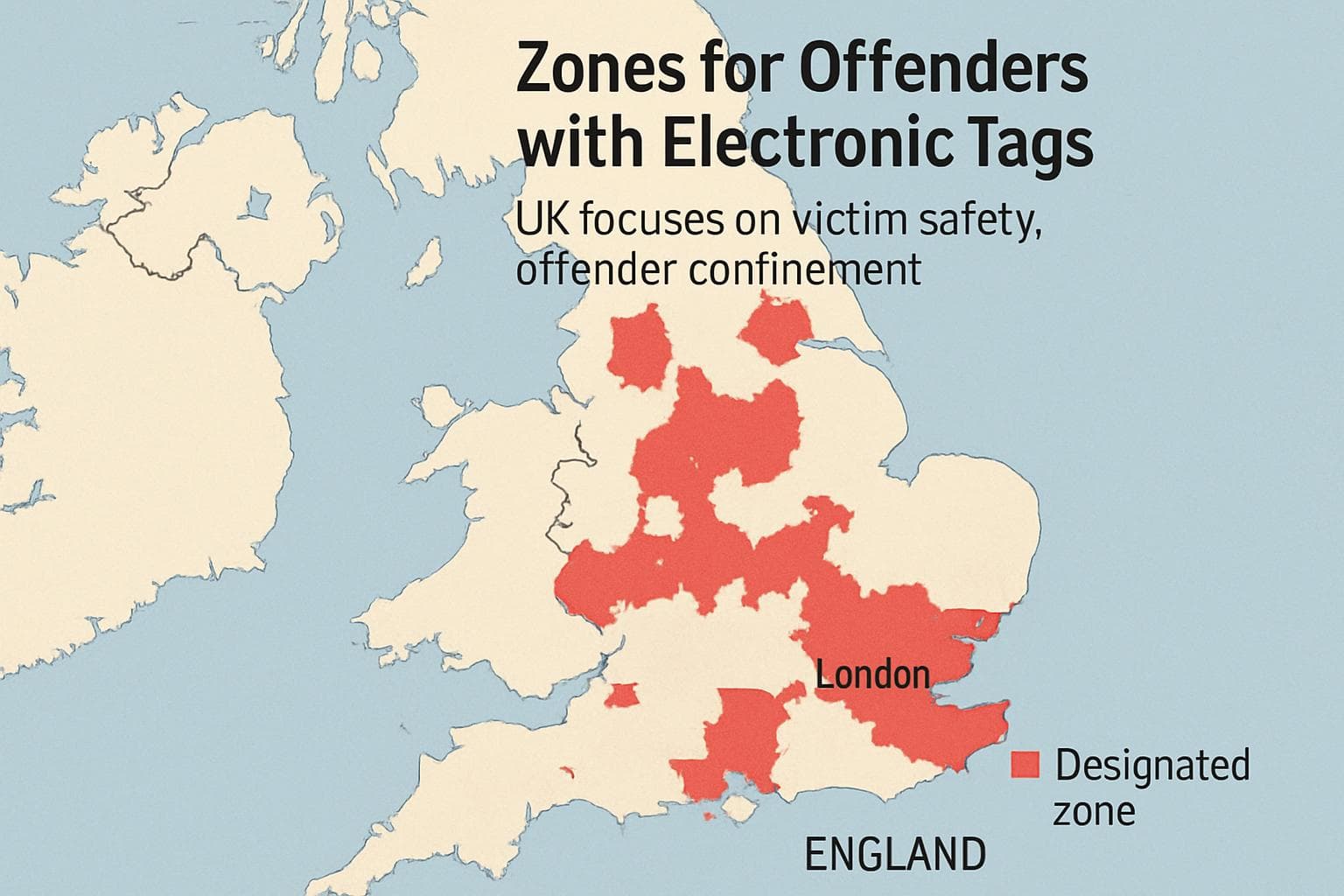
In a significant move to bolster victim safety, the UK government is set to introduce restriction zones for serious sexual and violent offenders in England and Wales. This new approach, announced by the Ministry of Justice, aims to confine offenders to specific geographical areas upon their release from prison, thereby allowing victims greater freedom to travel without fear of encountering their perpetrators.
A Shift in Responsibility
Traditionally, exclusion zones have been used to keep offenders away from their victims' homes. However, this new legislation seeks to reverse that dynamic by placing the onus on offenders to remain within designated areas. This change is designed to provide victims with the peace of mind they deserve, as highlighted by Victims Minister Alex Davies-Jones, who emphasized the importance of allowing survivors to rebuild their lives without fear.
Enhanced Monitoring and Technology
The Ministry of Justice plans to employ electronic tagging and increased monitoring to ensure compliance with the restriction zones. While this approach promises to enhance victim safety, it also raises concerns about the additional pressure it may place on the already stretched probation service. To address this, the government has announced the recruitment of at least 1,300 new trainee probation officers next year, although training these officers could take up to two years.
Support from Victims and Campaigners
The initiative has been welcomed by victims and advocacy groups, who have long called for such measures. Diana Parkes and Hetti Barkworth-Nanton, co-founders of the Joanna Simpson Foundation, praised the move as a "powerful step forward" in shifting the burden of restriction from victims to offenders. Rhianon Bragg, a victim of stalking and hostage-taking, expressed relief at the announcement, noting that previous exclusion zones left her feeling trapped.
Legislative Path Forward
The proposed restriction zones will require primary legislation, which the government plans to introduce in Parliament soon. This legislation is part of a broader effort to reform the probation system and enhance safeguards for victims, as emphasized by Alex Davies-Jones. The Ministry of Justice believes that these changes will not only improve victim safety but also prove more cost-effective by focusing monitoring efforts on offenders.
WHAT THIS MIGHT MEAN
The introduction of restriction zones for serious offenders marks a pivotal shift in the UK's approach to victim safety and offender management. If successfully implemented, this legislation could serve as a model for other jurisdictions grappling with similar challenges. However, the effectiveness of these zones will largely depend on the government's ability to adequately resource and support the probation service, ensuring that monitoring and enforcement are robust.
As the legislation progresses through Parliament, it will be crucial for policymakers to address concerns from probation officers and ensure that the necessary infrastructure is in place. Additionally, the government must remain vigilant in evaluating the impact of these zones on both victims and offenders, making adjustments as needed to optimize their effectiveness.
Ultimately, this initiative represents a significant step towards prioritizing victim safety and shifting the responsibility of restriction onto offenders, potentially transforming the landscape of criminal justice in England and Wales.
Related Articles

UK Police Intensify Investigation into Andrew Mountbatten-Windsor Amid Misconduct Allegations

Prince Andrew's Arrest Intensifies Scrutiny on Royal Succession and Prince William's Future Role

Middle East Conflict Drives UK Energy Prices to New Highs

Government Announces £4 Billion Overhaul of SEND Support in England

UK Government Announces Major Overhaul of SEND System with £3.4 Billion Investment

Prince Andrew's Ties to Epstein Under Scrutiny Amid Calls for Inquiry
Government Plans Restriction Zones for Serious Offenders to Enhance Victim Safety
In This Article
 Sofia Romano| Published
 HIGHLIGHTS
- The UK government plans to introduce restriction zones for serious sexual and violent offenders, confining them to specific areas.
- This initiative aims to enhance victim safety by allowing victims to travel freely without fear of encountering their offenders.
- The Ministry of Justice will use electronic tagging and increased monitoring to enforce these zones, potentially increasing pressure on the probation service.
- The legislation, expected to be introduced in Parliament soon, will require primary legislation and aims to shift the burden of restriction from victims to offenders.
- Victims and campaigners have welcomed the move, highlighting its potential to provide peace of mind and freedom for survivors.
In a significant move to bolster victim safety, the UK government is set to introduce restriction zones for serious sexual and violent offenders in England and Wales. This new approach, announced by the Ministry of Justice, aims to confine offenders to specific geographical areas upon their release from prison, thereby allowing victims greater freedom to travel without fear of encountering their perpetrators.
A Shift in Responsibility
Traditionally, exclusion zones have been used to keep offenders away from their victims' homes. However, this new legislation seeks to reverse that dynamic by placing the onus on offenders to remain within designated areas. This change is designed to provide victims with the peace of mind they deserve, as highlighted by Victims Minister Alex Davies-Jones, who emphasized the importance of allowing survivors to rebuild their lives without fear.
Enhanced Monitoring and Technology
The Ministry of Justice plans to employ electronic tagging and increased monitoring to ensure compliance with the restriction zones. While this approach promises to enhance victim safety, it also raises concerns about the additional pressure it may place on the already stretched probation service. To address this, the government has announced the recruitment of at least 1,300 new trainee probation officers next year, although training these officers could take up to two years.
Support from Victims and Campaigners
The initiative has been welcomed by victims and advocacy groups, who have long called for such measures. Diana Parkes and Hetti Barkworth-Nanton, co-founders of the Joanna Simpson Foundation, praised the move as a "powerful step forward" in shifting the burden of restriction from victims to offenders. Rhianon Bragg, a victim of stalking and hostage-taking, expressed relief at the announcement, noting that previous exclusion zones left her feeling trapped.
Legislative Path Forward
The proposed restriction zones will require primary legislation, which the government plans to introduce in Parliament soon. This legislation is part of a broader effort to reform the probation system and enhance safeguards for victims, as emphasized by Alex Davies-Jones. The Ministry of Justice believes that these changes will not only improve victim safety but also prove more cost-effective by focusing monitoring efforts on offenders.
WHAT THIS MIGHT MEAN
The introduction of restriction zones for serious offenders marks a pivotal shift in the UK's approach to victim safety and offender management. If successfully implemented, this legislation could serve as a model for other jurisdictions grappling with similar challenges. However, the effectiveness of these zones will largely depend on the government's ability to adequately resource and support the probation service, ensuring that monitoring and enforcement are robust.
As the legislation progresses through Parliament, it will be crucial for policymakers to address concerns from probation officers and ensure that the necessary infrastructure is in place. Additionally, the government must remain vigilant in evaluating the impact of these zones on both victims and offenders, making adjustments as needed to optimize their effectiveness.
Ultimately, this initiative represents a significant step towards prioritizing victim safety and shifting the responsibility of restriction onto offenders, potentially transforming the landscape of criminal justice in England and Wales.
Related Articles
UK Police Intensify Investigation into Andrew Mountbatten-Windsor Amid Misconduct Allegations
Prince Andrew's Arrest Intensifies Scrutiny on Royal Succession and Prince William's Future Role
Middle East Conflict Drives UK Energy Prices to New Highs
Government Announces £4 Billion Overhaul of SEND Support in England
UK Government Announces Major Overhaul of SEND System with £3.4 Billion Investment
Prince Andrew's Ties to Epstein Under Scrutiny Amid Calls for Inquiry