
UK's Offshore Wind Projects Set Record in Clean Energy Push
In This Article
HIGHLIGHTS
- The UK has awarded contracts for 8.4GW of offshore wind capacity, enough to power 12 million homes, as part of its clean electricity goals.
- The Berwick Bank project in the North Sea is set to become the world's largest offshore wind farm.
- The auction results are crucial for the UK's 2030 target of 95% clean electricity, with offshore wind being a key component.
- The secured contract prices are 40% lower than new gas plant costs, aiming to reduce consumer bills and enhance energy sovereignty.
- Analysts warn that connecting these projects to the grid by 2030 remains a significant challenge.
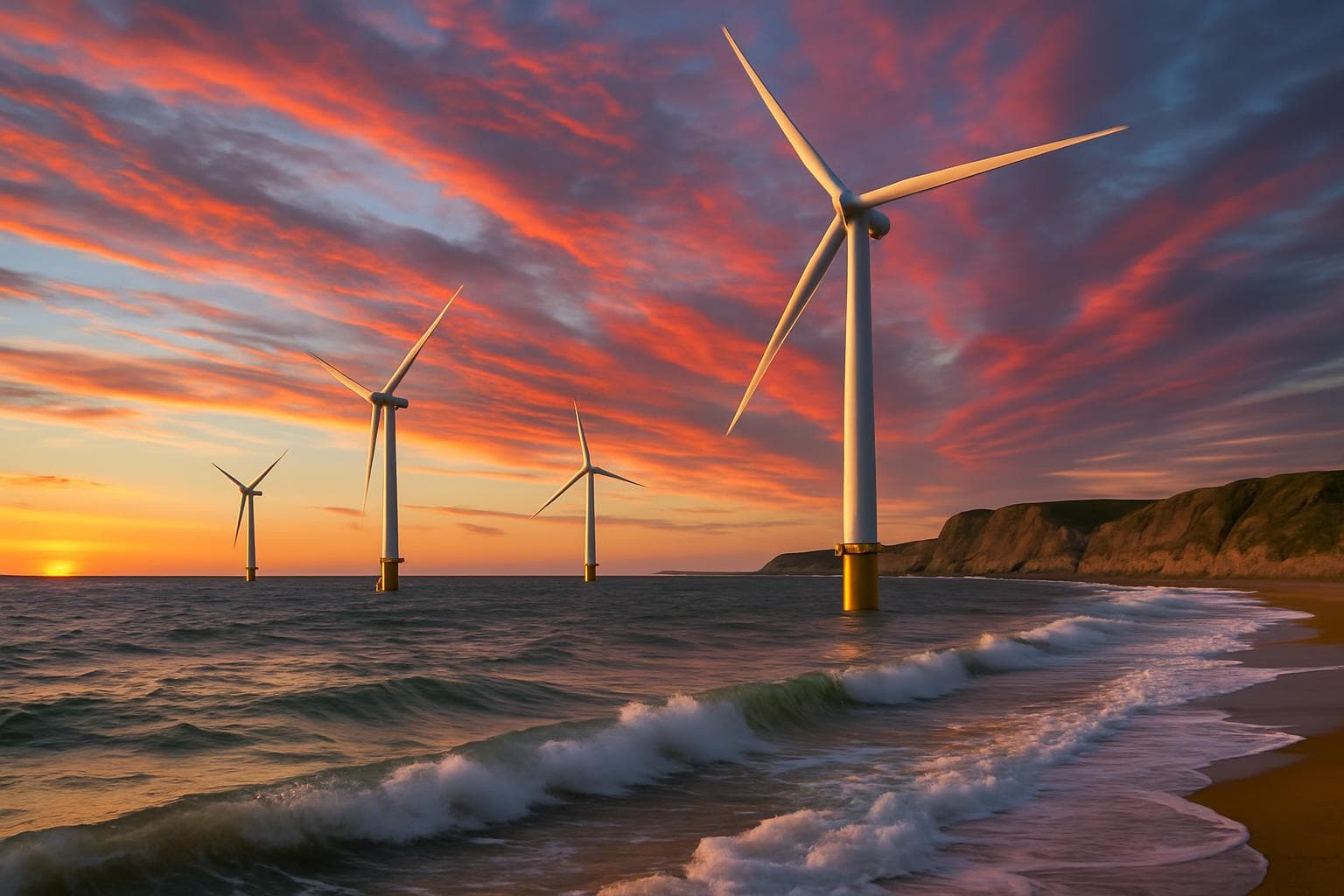
The United Kingdom has taken a significant step towards its ambitious clean electricity goals by awarding contracts for a record 8.4 gigawatts (GW) of offshore wind capacity. This development, part of a strategic auction, aims to power approximately 12 million homes and bolster the nation's renewable energy targets.
Historic Auction Results
In what has been described as the most competitive auction for renewable subsidies in Great Britain, energy companies secured contracts that guarantee the price for each unit of clean electricity they generate. The auction, which awarded contracts to 12 new offshore projects, is a pivotal move towards achieving the UK government's target of 95% clean electricity by 2030. The Berwick Bank project in the North Sea stands out as the largest planned offshore wind farm globally, highlighting the scale of the UK's commitment to renewable energy.
Economic and Environmental Impact
The secured contract prices, ranging between £89.49 and £91.20 per megawatt-hour (MWh) in 2024 prices, are significantly lower than the cost of building new gas plants. This price reduction is expected to lower consumer bills and enhance the UK's energy sovereignty. Ed Miliband, the energy secretary, emphasized the importance of this achievement, stating, "This is a historic win for those who want Britain to stand on our own two feet, controlling our own energy."
Challenges and Future Prospects
Despite the record-breaking auction, experts caution that connecting these projects to the electricity grid by 2030 remains a formidable challenge. Nick Civetta from Aurora Energy Research noted the difficulty of bringing this capacity online within the decade. Additionally, the offshore wind industry faces rising costs due to inflation and higher interest rates, which could impact future developments.
Strategic Importance
The auction's success is seen as a litmus test for the resilience of the UK's offshore wind sector, which has faced challenges over the past two years. Alon Carmel, an offshore wind expert at PA Consulting, remarked on the auction's significance in determining whether the sector can regain momentum towards the 2030 targets.
WHAT THIS MIGHT MEAN
The successful auction marks a crucial milestone in the UK's journey towards a clean electricity system. However, the path ahead involves significant logistical challenges, particularly in connecting the new wind capacity to the national grid. If these hurdles are overcome, the UK could solidify its position as a leader in renewable energy, potentially influencing global energy policies. Conversely, delays or setbacks could hinder progress towards the 2030 targets, necessitating policy adjustments and increased investment in grid infrastructure. As the UK navigates these challenges, the outcome will likely have broader implications for its energy strategy and climate commitments.
Related Articles

Middle East Conflict Drives UK Energy Prices to New Highs

Trump Raises Import Tariffs to 15% After Supreme Court Setback

US Supreme Court Ruling on Tariffs Sparks Uncertainty for UK and Global Trade

Breakthrough Drug Offers Hope for Children with Severe Epilepsy

Government Announces £4 Billion Overhaul of SEND Support in England

UK Government Announces Major Overhaul of SEND System with £3.4 Billion Investment
UK's Offshore Wind Projects Set Record in Clean Energy Push
In This Article
 Daniel Rivera| Published
 HIGHLIGHTS
- The UK has awarded contracts for 8.4GW of offshore wind capacity, enough to power 12 million homes, as part of its clean electricity goals.
- The Berwick Bank project in the North Sea is set to become the world's largest offshore wind farm.
- The auction results are crucial for the UK's 2030 target of 95% clean electricity, with offshore wind being a key component.
- The secured contract prices are 40% lower than new gas plant costs, aiming to reduce consumer bills and enhance energy sovereignty.
- Analysts warn that connecting these projects to the grid by 2030 remains a significant challenge.
The United Kingdom has taken a significant step towards its ambitious clean electricity goals by awarding contracts for a record 8.4 gigawatts (GW) of offshore wind capacity. This development, part of a strategic auction, aims to power approximately 12 million homes and bolster the nation's renewable energy targets.
Historic Auction Results
In what has been described as the most competitive auction for renewable subsidies in Great Britain, energy companies secured contracts that guarantee the price for each unit of clean electricity they generate. The auction, which awarded contracts to 12 new offshore projects, is a pivotal move towards achieving the UK government's target of 95% clean electricity by 2030. The Berwick Bank project in the North Sea stands out as the largest planned offshore wind farm globally, highlighting the scale of the UK's commitment to renewable energy.
Economic and Environmental Impact
The secured contract prices, ranging between £89.49 and £91.20 per megawatt-hour (MWh) in 2024 prices, are significantly lower than the cost of building new gas plants. This price reduction is expected to lower consumer bills and enhance the UK's energy sovereignty. Ed Miliband, the energy secretary, emphasized the importance of this achievement, stating, "This is a historic win for those who want Britain to stand on our own two feet, controlling our own energy."
Challenges and Future Prospects
Despite the record-breaking auction, experts caution that connecting these projects to the electricity grid by 2030 remains a formidable challenge. Nick Civetta from Aurora Energy Research noted the difficulty of bringing this capacity online within the decade. Additionally, the offshore wind industry faces rising costs due to inflation and higher interest rates, which could impact future developments.
Strategic Importance
The auction's success is seen as a litmus test for the resilience of the UK's offshore wind sector, which has faced challenges over the past two years. Alon Carmel, an offshore wind expert at PA Consulting, remarked on the auction's significance in determining whether the sector can regain momentum towards the 2030 targets.
WHAT THIS MIGHT MEAN
The successful auction marks a crucial milestone in the UK's journey towards a clean electricity system. However, the path ahead involves significant logistical challenges, particularly in connecting the new wind capacity to the national grid. If these hurdles are overcome, the UK could solidify its position as a leader in renewable energy, potentially influencing global energy policies. Conversely, delays or setbacks could hinder progress towards the 2030 targets, necessitating policy adjustments and increased investment in grid infrastructure. As the UK navigates these challenges, the outcome will likely have broader implications for its energy strategy and climate commitments.
Related Articles
Middle East Conflict Drives UK Energy Prices to New Highs
Trump Raises Import Tariffs to 15% After Supreme Court Setback
US Supreme Court Ruling on Tariffs Sparks Uncertainty for UK and Global Trade
Breakthrough Drug Offers Hope for Children with Severe Epilepsy
Government Announces £4 Billion Overhaul of SEND Support in England
UK Government Announces Major Overhaul of SEND System with £3.4 Billion Investment