
UK Launches Clinical Trial to Evaluate Puberty Blockers in Youth
In This Article
HIGHLIGHTS
- The UK has announced a new clinical trial to assess the impact of puberty blockers on children with gender incongruence, following a ban on their use outside research settings.
- The Pathways Trial will involve around 220 children under 16, with participants randomly assigned to start treatment immediately or after a 12-month delay.
- Ethical concerns have been raised about the trial's design, particularly regarding the randomised delay for some participants.
- The trial is part of a broader Pathways programme, which includes a second study using MRI imaging to assess cognitive and brain development.
- Results from these studies are expected in four years, aiming to provide clearer evidence on the safety and efficacy of puberty blockers.
In a significant move to address the ongoing debate over the use of puberty blockers in young people with gender incongruence, the UK has initiated a new clinical trial. This follows a government-imposed ban on the drugs outside of research settings, prompted by concerns over insufficient clinical evidence regarding their safety for under-18s.
Background and Objectives
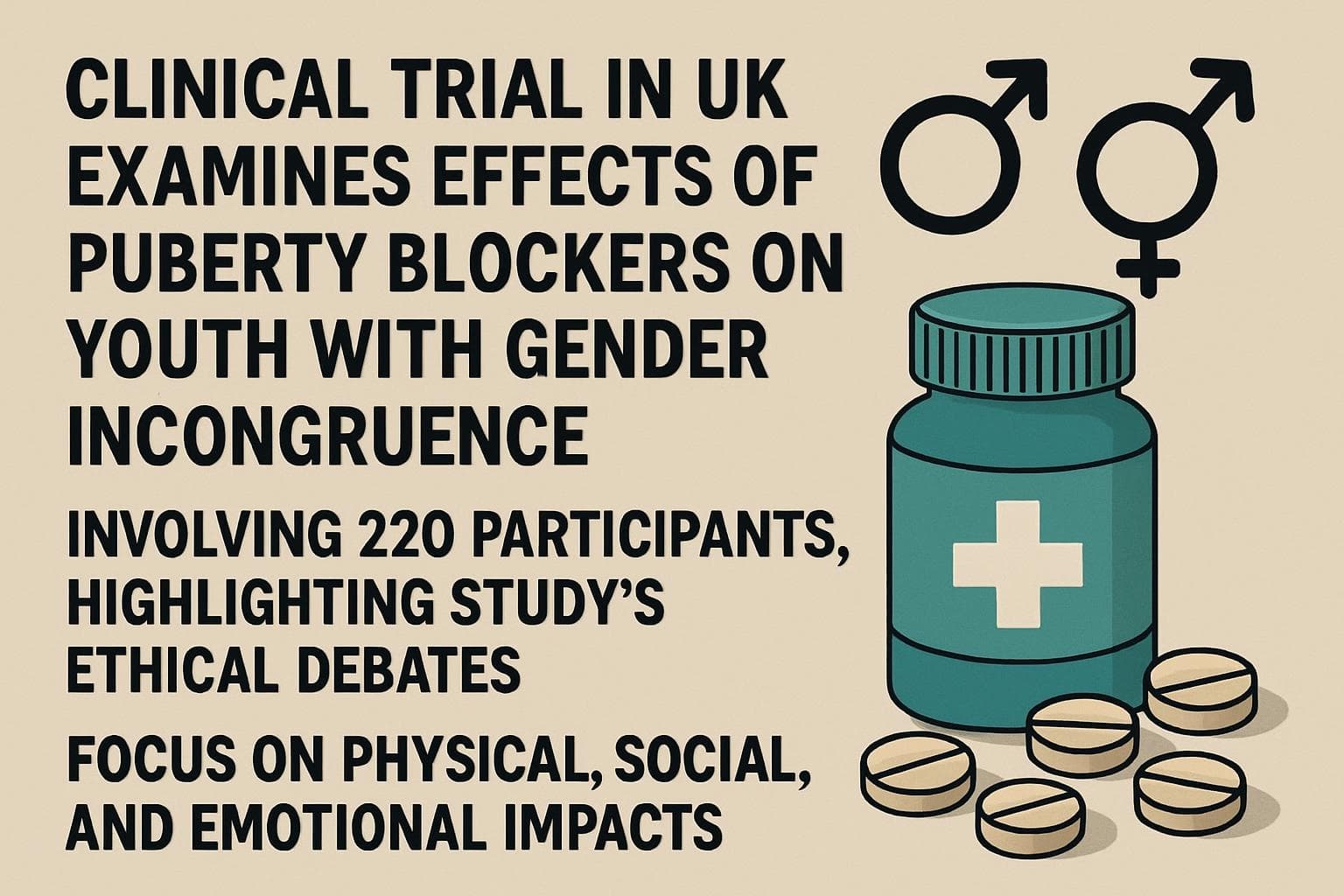
The trial, spearheaded by researchers at King's College London, aims to recruit approximately 220 children under the age of 16 who are experiencing gender incongruence. Known as the Pathways Trial, this study will explore the effects of puberty blockers on physical, social, and emotional wellbeing. Participants will be randomly assigned to either begin treatment immediately or after a 12-month delay, allowing researchers to compare outcomes over time.
Ethical Concerns and Study Design
The trial's design has sparked ethical debates, particularly regarding the randomised controlled nature of the study. Critics, including Chay Brown from the advocacy group TransActual, argue that delaying treatment for some participants could exacerbate distressing pubertal changes. Despite these concerns, the study has been structured to ensure rigorous medical and psychological screening, with ongoing support provided to all participants.
Broader Research Programme
The Pathways Trial is part of a larger research initiative that includes a second study, Pathways Connect. This study will involve MRI brain imaging and cognitive assessments of around 150 participants from the main trial, alongside 100 young people not receiving puberty blockers. The goal is to gain a comprehensive understanding of the drugs' impact on brain development and cognitive function.
Anticipated Outcomes
The results of these studies are expected to be available in four years, potentially offering much-needed clarity on the safety and efficacy of puberty blockers. As the debate over gender medicine continues, these findings could play a crucial role in shaping future healthcare policies and practices for young people with gender incongruence.
WHAT THIS MIGHT MEAN
The outcome of the Pathways Trial could significantly influence the future of gender medicine in the UK. Should the results demonstrate clear benefits and manageable risks, it may lead to a reconsideration of the current ban on puberty blockers outside research settings. Conversely, if the findings highlight significant safety concerns, it could reinforce the current restrictions and prompt further scrutiny of gender-related treatments. As the trial progresses, ongoing ethical discussions and public opinion will likely shape the broader narrative surrounding gender healthcare for young people.
Related Articles
UK Clinical Trial on Puberty Blockers Paused Amid Safety Concerns

Persistent Safety Concerns in Nottingham Maternity Services Amidst Calls for Systemic Reform

Canada and Australia Forge Strategic Partnership Amid Global Uncertainty

UK Government to Reform Asylum Seeker Support and Employment Policies

Middle East Conflict Drives UK Energy Prices to New Highs

UK Faces Dilemmas Amid Iran Conflict and China Spying Allegations
UK Launches Clinical Trial to Evaluate Puberty Blockers in Youth
In This Article
 Maya Singh| Published
 HIGHLIGHTS
- The UK has announced a new clinical trial to assess the impact of puberty blockers on children with gender incongruence, following a ban on their use outside research settings.
- The Pathways Trial will involve around 220 children under 16, with participants randomly assigned to start treatment immediately or after a 12-month delay.
- Ethical concerns have been raised about the trial's design, particularly regarding the randomised delay for some participants.
- The trial is part of a broader Pathways programme, which includes a second study using MRI imaging to assess cognitive and brain development.
- Results from these studies are expected in four years, aiming to provide clearer evidence on the safety and efficacy of puberty blockers.
In a significant move to address the ongoing debate over the use of puberty blockers in young people with gender incongruence, the UK has initiated a new clinical trial. This follows a government-imposed ban on the drugs outside of research settings, prompted by concerns over insufficient clinical evidence regarding their safety for under-18s.
Background and Objectives
The trial, spearheaded by researchers at King's College London, aims to recruit approximately 220 children under the age of 16 who are experiencing gender incongruence. Known as the Pathways Trial, this study will explore the effects of puberty blockers on physical, social, and emotional wellbeing. Participants will be randomly assigned to either begin treatment immediately or after a 12-month delay, allowing researchers to compare outcomes over time.
Ethical Concerns and Study Design
The trial's design has sparked ethical debates, particularly regarding the randomised controlled nature of the study. Critics, including Chay Brown from the advocacy group TransActual, argue that delaying treatment for some participants could exacerbate distressing pubertal changes. Despite these concerns, the study has been structured to ensure rigorous medical and psychological screening, with ongoing support provided to all participants.
Broader Research Programme
The Pathways Trial is part of a larger research initiative that includes a second study, Pathways Connect. This study will involve MRI brain imaging and cognitive assessments of around 150 participants from the main trial, alongside 100 young people not receiving puberty blockers. The goal is to gain a comprehensive understanding of the drugs' impact on brain development and cognitive function.
Anticipated Outcomes
The results of these studies are expected to be available in four years, potentially offering much-needed clarity on the safety and efficacy of puberty blockers. As the debate over gender medicine continues, these findings could play a crucial role in shaping future healthcare policies and practices for young people with gender incongruence.
WHAT THIS MIGHT MEAN
The outcome of the Pathways Trial could significantly influence the future of gender medicine in the UK. Should the results demonstrate clear benefits and manageable risks, it may lead to a reconsideration of the current ban on puberty blockers outside research settings. Conversely, if the findings highlight significant safety concerns, it could reinforce the current restrictions and prompt further scrutiny of gender-related treatments. As the trial progresses, ongoing ethical discussions and public opinion will likely shape the broader narrative surrounding gender healthcare for young people.
Related Articles
UK Clinical Trial on Puberty Blockers Paused Amid Safety Concerns
Persistent Safety Concerns in Nottingham Maternity Services Amidst Calls for Systemic Reform
Canada and Australia Forge Strategic Partnership Amid Global Uncertainty
UK Government to Reform Asylum Seeker Support and Employment Policies
Middle East Conflict Drives UK Energy Prices to New Highs
UK Faces Dilemmas Amid Iran Conflict and China Spying Allegations