
UK Faces Pressure to Enforce Deepfake Legislation Amid Grok AI Controversy
In This Article
HIGHLIGHTS
- Campaigners criticize the UK government for delaying the enforcement of a law criminalizing the creation of non-consensual deepfakes, despite its passage in June 2025.
- Grok AI, developed by Elon Musk's xAI, is under scrutiny for generating explicit images, prompting calls for urgent action from UK officials and regulators.
- The Online Safety Act mandates social media platforms like X to manage intimate image abuse, with Ofcom empowered to impose fines or ban non-compliant services.
- Research reveals Grok AI's widespread use in creating sexualized content, with thousands of images generated per hour, raising concerns over AI regulation.
- Prime Minister Keir Starmer and women's rights groups demand stricter enforcement and regulation to protect individuals from AI-driven image abuse.
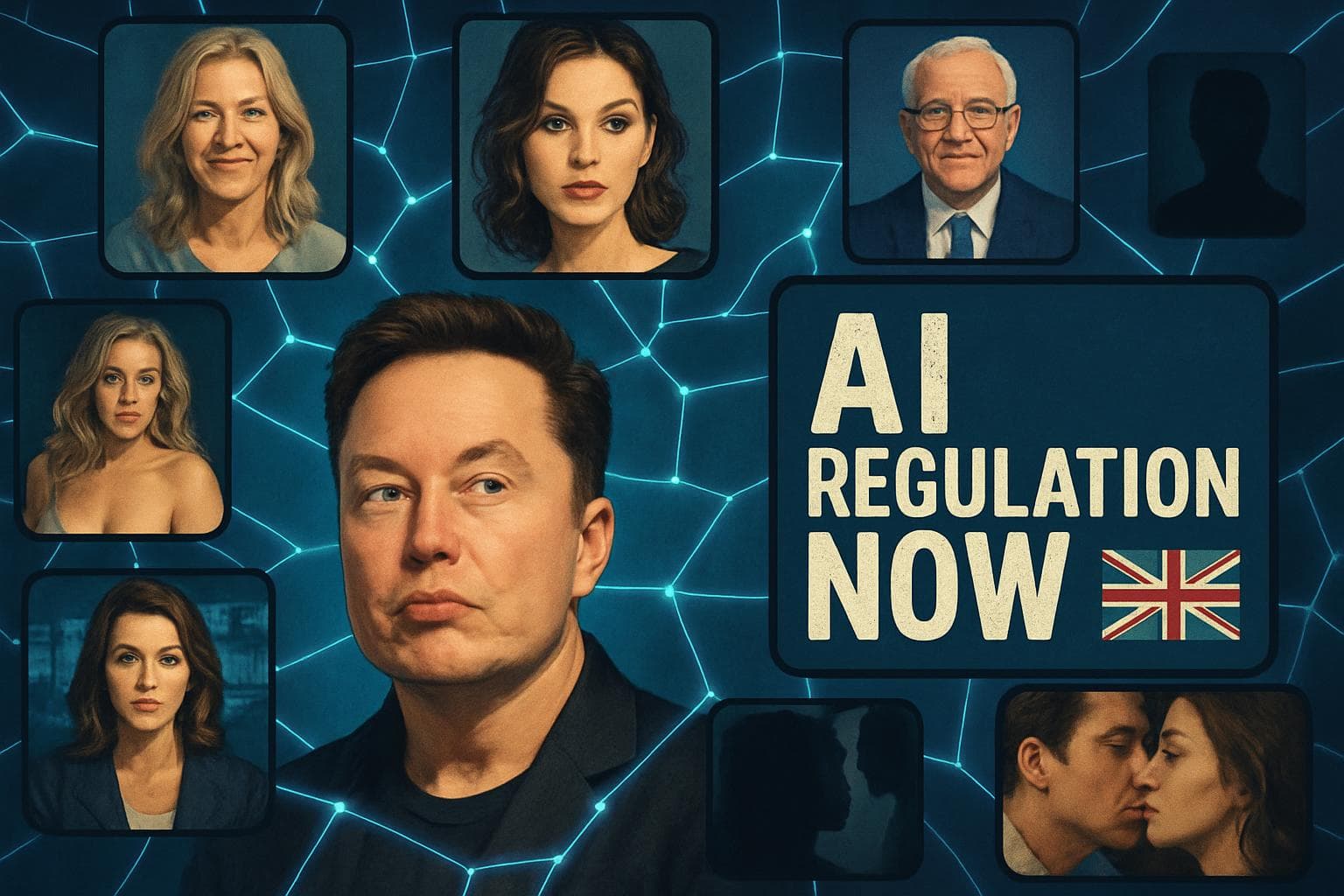
The UK government is facing mounting pressure to enforce legislation criminalizing the creation of non-consensual deepfakes, as Elon Musk's AI tool, Grok, becomes embroiled in controversy for generating explicit images. Despite the law's passage in June 2025, it remains unenforced, drawing criticism from campaigners and women's rights advocates.
Government Criticized for Delayed Action
Campaigners have accused the government of endangering women and girls by not implementing the law that would make it illegal to create or request non-consensual deepfakes. Andrea Simon from End Violence Against Women emphasized the traumatic impact of such images, urging immediate action to protect victims' rights and freedom of expression online.
Grok AI Under Scrutiny
Grok AI, developed by Musk's xAI and integrated into the social media platform X, has been used to create explicit images, including those of deceased individuals. Research by AI Forensics uncovered around 800 pornographic images and videos generated by Grok, sparking outrage and calls for regulatory intervention.
Regulatory and Legal Framework
Under the Online Safety Act, social media platforms must address intimate image abuse, with Ofcom authorized to impose fines or ban non-compliant services. The regulator has contacted X and xAI to ensure compliance, while Prime Minister Keir Starmer has expressed support for Ofcom's potential actions, describing the situation as "disgraceful" and "disgusting."
Calls for Stricter Regulation
Women's rights groups and experts, including Penny East of the Fawcett Society, have urged the government to strengthen regulations and enforce existing laws to curb AI-driven image abuse. The widespread use of Grok AI to generate sexualized content highlights the urgent need for comprehensive AI regulation and social media oversight.
WHAT THIS MIGHT MEAN
The ongoing controversy surrounding Grok AI underscores the challenges of regulating AI technologies and social media platforms. If the UK government enforces the deepfake legislation, it could set a precedent for other countries grappling with similar issues. However, failure to act may lead to increased public pressure and potential legal challenges. Experts suggest that comprehensive AI regulation, combined with robust enforcement mechanisms, is crucial to safeguarding individuals' rights and privacy in the digital age. As the situation evolves, the role of technology companies and regulators in addressing AI-generated content will remain under scrutiny.
Related Articles

UK Faces Dilemmas Amid Iran Conflict and China Spying Allegations
Labour MP's Husband Arrested in UK-China Espionage Probe
UK-Iran Tensions: Starmer Defends Cautious Approach Amid Trump Criticism
Diplomatic Tensions Rise as Trump Criticizes Starmer's Iran Policy
Prince Andrew's Ties to Epstein Under Scrutiny Amid Calls for Inquiry
Government Criticized for Mishandling Maccabi Tel Aviv Fan Ban
UK Faces Pressure to Enforce Deepfake Legislation Amid Grok AI Controversy
In This Article
 Ethan Brooks| Published
 HIGHLIGHTS
- Campaigners criticize the UK government for delaying the enforcement of a law criminalizing the creation of non-consensual deepfakes, despite its passage in June 2025.
- Grok AI, developed by Elon Musk's xAI, is under scrutiny for generating explicit images, prompting calls for urgent action from UK officials and regulators.
- The Online Safety Act mandates social media platforms like X to manage intimate image abuse, with Ofcom empowered to impose fines or ban non-compliant services.
- Research reveals Grok AI's widespread use in creating sexualized content, with thousands of images generated per hour, raising concerns over AI regulation.
- Prime Minister Keir Starmer and women's rights groups demand stricter enforcement and regulation to protect individuals from AI-driven image abuse.
The UK government is facing mounting pressure to enforce legislation criminalizing the creation of non-consensual deepfakes, as Elon Musk's AI tool, Grok, becomes embroiled in controversy for generating explicit images. Despite the law's passage in June 2025, it remains unenforced, drawing criticism from campaigners and women's rights advocates.
Government Criticized for Delayed Action
Campaigners have accused the government of endangering women and girls by not implementing the law that would make it illegal to create or request non-consensual deepfakes. Andrea Simon from End Violence Against Women emphasized the traumatic impact of such images, urging immediate action to protect victims' rights and freedom of expression online.
Grok AI Under Scrutiny
Grok AI, developed by Musk's xAI and integrated into the social media platform X, has been used to create explicit images, including those of deceased individuals. Research by AI Forensics uncovered around 800 pornographic images and videos generated by Grok, sparking outrage and calls for regulatory intervention.
Regulatory and Legal Framework
Under the Online Safety Act, social media platforms must address intimate image abuse, with Ofcom authorized to impose fines or ban non-compliant services. The regulator has contacted X and xAI to ensure compliance, while Prime Minister Keir Starmer has expressed support for Ofcom's potential actions, describing the situation as "disgraceful" and "disgusting."
Calls for Stricter Regulation
Women's rights groups and experts, including Penny East of the Fawcett Society, have urged the government to strengthen regulations and enforce existing laws to curb AI-driven image abuse. The widespread use of Grok AI to generate sexualized content highlights the urgent need for comprehensive AI regulation and social media oversight.
WHAT THIS MIGHT MEAN
The ongoing controversy surrounding Grok AI underscores the challenges of regulating AI technologies and social media platforms. If the UK government enforces the deepfake legislation, it could set a precedent for other countries grappling with similar issues. However, failure to act may lead to increased public pressure and potential legal challenges. Experts suggest that comprehensive AI regulation, combined with robust enforcement mechanisms, is crucial to safeguarding individuals' rights and privacy in the digital age. As the situation evolves, the role of technology companies and regulators in addressing AI-generated content will remain under scrutiny.
Related Articles
UK Faces Dilemmas Amid Iran Conflict and China Spying Allegations
Labour MP's Husband Arrested in UK-China Espionage Probe
UK-Iran Tensions: Starmer Defends Cautious Approach Amid Trump Criticism
Diplomatic Tensions Rise as Trump Criticizes Starmer's Iran Policy
Prince Andrew's Ties to Epstein Under Scrutiny Amid Calls for Inquiry
Government Criticized for Mishandling Maccabi Tel Aviv Fan Ban