
UK Urged to Prioritize Diplomacy Amid Rising Israel-Iran Tensions
In This Article
HIGHLIGHTS
- UK Prime Minister Keir Starmer advocates for diplomacy over military action amid rising Israel-Iran tensions.
- President Trump is considering joining Israeli strikes on Iran, with plans reportedly approved but not finalized.
- UK Attorney General Richard Hermer has raised legal concerns about UK involvement beyond defensive support.
- Calls for transparency grow as ministers face pressure to publish legal advice on potential UK military action.
- Foreign Secretary David Lammy is in Washington to emphasize the UK's commitment to de-escalation and diplomacy.
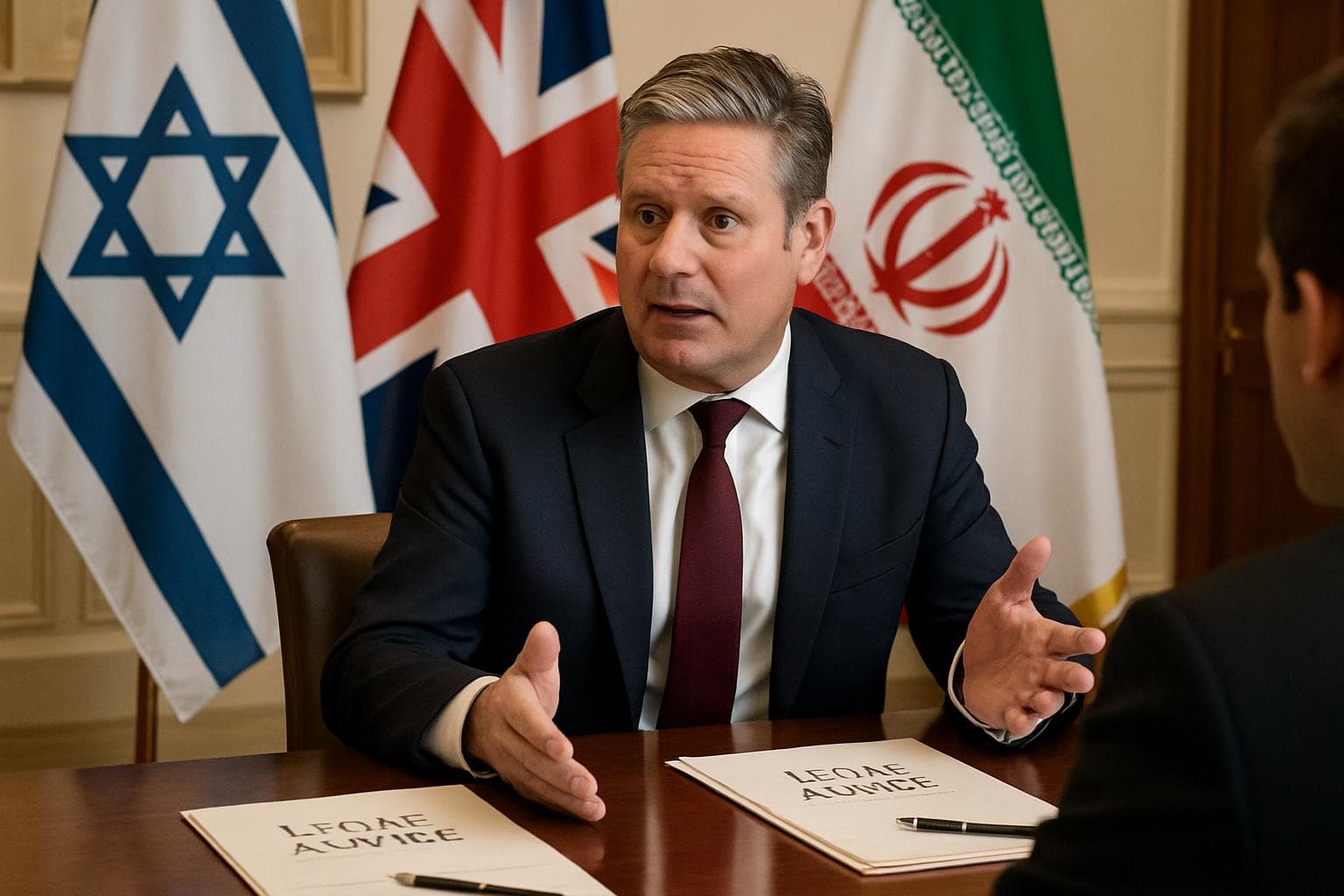
As tensions between Israel and Iran escalate, UK Prime Minister Keir Starmer has called for diplomatic solutions rather than military intervention. This appeal comes as US President Donald Trump considers joining Israeli strikes on Iran, with reports indicating that attack plans have been approved but a final decision is pending.
Diplomatic Efforts and Legal Concerns
Starmer emphasized the importance of addressing Iran's nuclear program through negotiations, stating, "The nuclear issue needs to be dealt with by way of negotiation than by way of conflict." He underscored the risk of regional escalation and the need for de-escalation, acknowledging Israel's right to self-defense.
Meanwhile, UK Attorney General Richard Hermer has reportedly expressed legal concerns about any UK involvement beyond defensive support. Hermer's advice, which has not been publicly disclosed, suggests that UK participation in a bombing campaign against Iran could be illegal unless it involves defending allies.
Calls for Transparency
The situation has prompted calls for transparency, with Liberal Democrat leader Sir Ed Davey urging the government to publish Hermer's legal advice. "The last thing we need is for the UK to be dragged into another illegal war in the Middle East by the US," Davey stated.
Conservative shadow foreign secretary Dame Priti Patel has argued for UK support of US actions, emphasizing the need to work with allies. She suggested that the UK could assist the US with military bases or refueling aircraft if requested.
Diplomatic Engagements
Foreign Secretary David Lammy is currently in Washington to meet with US Secretary of State Marco Rubio, where he is expected to stress the UK's commitment to diplomacy and de-escalation. The UK has not yet played a role in intercepting Iranian missiles directed at Israel, and any decision to support US military action could face significant legal and political scrutiny.
WHAT THIS MIGHT MEAN
If President Trump decides to proceed with military action against Iran, the UK government will face a critical decision on whether to support the US. Legal advice from Attorney General Richard Hermer could limit the extent of UK involvement, potentially leading to political debates and calls for a parliamentary vote.
The emphasis on diplomacy by UK leaders suggests a preference for avoiding military escalation, but the situation remains fluid. The outcome of David Lammy's discussions in Washington may influence the UK's stance and highlight the importance of international cooperation in addressing the Iran nuclear issue.
As tensions continue to rise, the international community will be closely watching the actions of key players, including the US, UK, and Iran, to see if diplomatic efforts can prevent further conflict in the Middle East.
Related Articles

UK Faces Dilemmas Amid Iran Conflict and China Spying Allegations

UK-Iran Tensions: Starmer Defends Cautious Approach Amid Trump Criticism
UK Reinforces Military Presence in Cyprus Amid Middle East Tensions

Middle East Conflict Drives UK Energy Prices to New Highs
Senate Blocks Resolution to Limit Trump's Military Actions in Iran
Canada and Australia Forge Strategic Partnership Amid Global Uncertainty
UK Urged to Prioritize Diplomacy Amid Rising Israel-Iran Tensions
In This Article
 Ethan Brooks| Published
 HIGHLIGHTS
- UK Prime Minister Keir Starmer advocates for diplomacy over military action amid rising Israel-Iran tensions.
- President Trump is considering joining Israeli strikes on Iran, with plans reportedly approved but not finalized.
- UK Attorney General Richard Hermer has raised legal concerns about UK involvement beyond defensive support.
- Calls for transparency grow as ministers face pressure to publish legal advice on potential UK military action.
- Foreign Secretary David Lammy is in Washington to emphasize the UK's commitment to de-escalation and diplomacy.
As tensions between Israel and Iran escalate, UK Prime Minister Keir Starmer has called for diplomatic solutions rather than military intervention. This appeal comes as US President Donald Trump considers joining Israeli strikes on Iran, with reports indicating that attack plans have been approved but a final decision is pending.
Diplomatic Efforts and Legal Concerns
Starmer emphasized the importance of addressing Iran's nuclear program through negotiations, stating, "The nuclear issue needs to be dealt with by way of negotiation than by way of conflict." He underscored the risk of regional escalation and the need for de-escalation, acknowledging Israel's right to self-defense.
Meanwhile, UK Attorney General Richard Hermer has reportedly expressed legal concerns about any UK involvement beyond defensive support. Hermer's advice, which has not been publicly disclosed, suggests that UK participation in a bombing campaign against Iran could be illegal unless it involves defending allies.
Calls for Transparency
The situation has prompted calls for transparency, with Liberal Democrat leader Sir Ed Davey urging the government to publish Hermer's legal advice. "The last thing we need is for the UK to be dragged into another illegal war in the Middle East by the US," Davey stated.
Conservative shadow foreign secretary Dame Priti Patel has argued for UK support of US actions, emphasizing the need to work with allies. She suggested that the UK could assist the US with military bases or refueling aircraft if requested.
Diplomatic Engagements
Foreign Secretary David Lammy is currently in Washington to meet with US Secretary of State Marco Rubio, where he is expected to stress the UK's commitment to diplomacy and de-escalation. The UK has not yet played a role in intercepting Iranian missiles directed at Israel, and any decision to support US military action could face significant legal and political scrutiny.
WHAT THIS MIGHT MEAN
If President Trump decides to proceed with military action against Iran, the UK government will face a critical decision on whether to support the US. Legal advice from Attorney General Richard Hermer could limit the extent of UK involvement, potentially leading to political debates and calls for a parliamentary vote.
The emphasis on diplomacy by UK leaders suggests a preference for avoiding military escalation, but the situation remains fluid. The outcome of David Lammy's discussions in Washington may influence the UK's stance and highlight the importance of international cooperation in addressing the Iran nuclear issue.
As tensions continue to rise, the international community will be closely watching the actions of key players, including the US, UK, and Iran, to see if diplomatic efforts can prevent further conflict in the Middle East.
Related Articles
UK Faces Dilemmas Amid Iran Conflict and China Spying Allegations
UK-Iran Tensions: Starmer Defends Cautious Approach Amid Trump Criticism
UK Reinforces Military Presence in Cyprus Amid Middle East Tensions
Middle East Conflict Drives UK Energy Prices to New Highs
Senate Blocks Resolution to Limit Trump's Military Actions in Iran
Canada and Australia Forge Strategic Partnership Amid Global Uncertainty