
Ukraine Revises US Peace Plan Amid Ongoing Russian Strikes
In This Article
HIGHLIGHTS
- Ukraine has revised a US-backed peace plan, reducing it from 28 to 19 points, removing some of Russia's demands.
- Ukrainian President Zelenskyy welcomed the changes, stating the plan now includes "many correct elements."
- Russian attacks on Kyiv resulted in six deaths, highlighting ongoing tensions despite peace talks.
- US and Russian officials are set to meet in Abu Dhabi for further discussions, following Geneva talks.
- European leaders emphasize the need for a "just and lasting peace," with a virtual meeting planned to discuss developments.
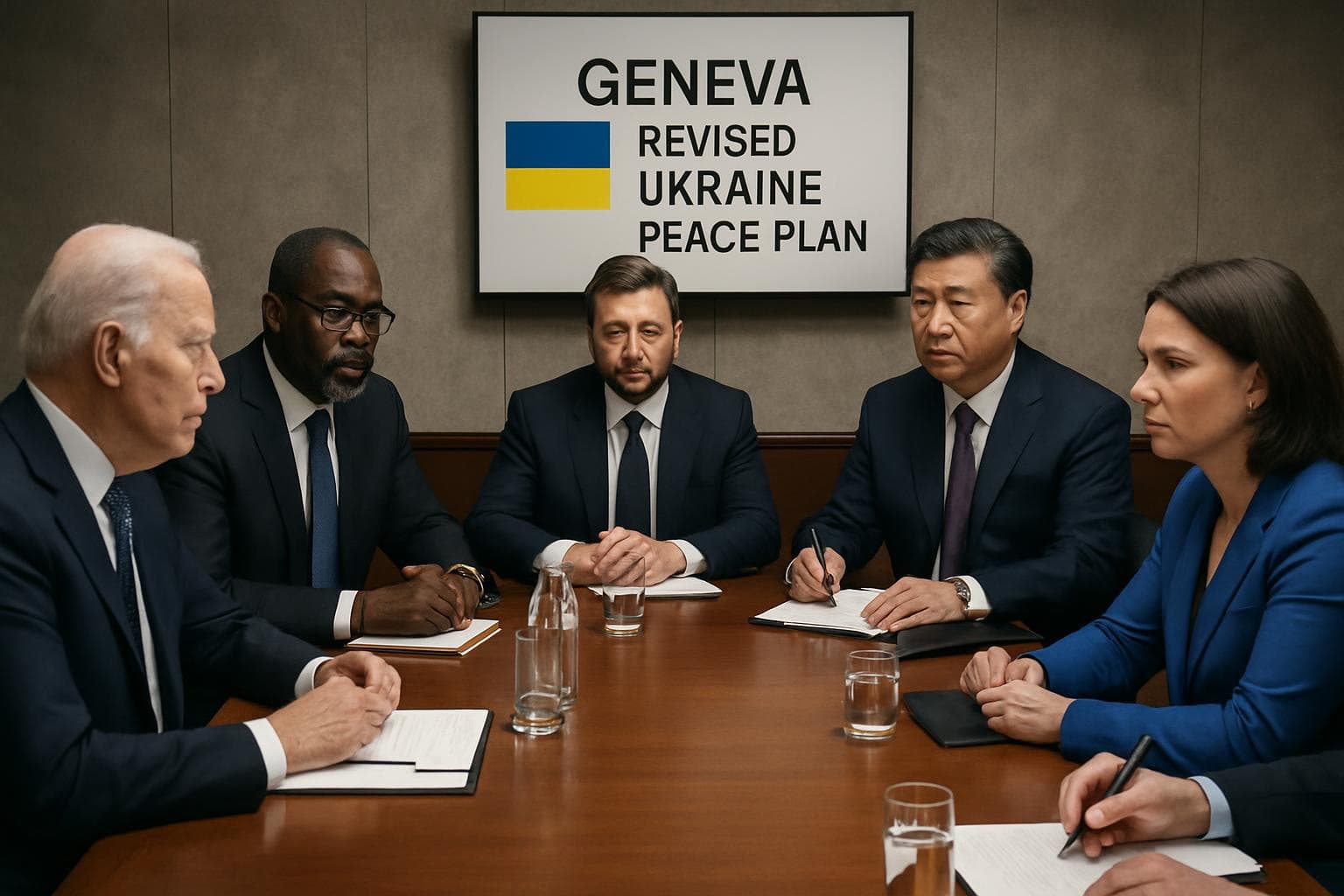
As Ukraine continues to grapple with the ongoing conflict with Russia, significant amendments have been made to a US-backed peace plan initially criticized for favoring Russian interests. The revised plan, now reduced from 28 to 19 points, has been welcomed by Ukrainian President Volodymyr Zelenskyy, who noted that "many correct elements" have been incorporated, making the plan more feasible.
The original plan, drafted by representatives from the US and Russia, called for Ukraine to make substantial territorial concessions, including withdrawing from parts of the Donbas region. However, the revised version, discussed in Geneva, has removed some of these demands, allowing Ukraine to retain control over its decisions regarding EU and NATO membership.
Despite these diplomatic efforts, the situation on the ground remains tense. A recent wave of Russian missile and drone attacks on Kyiv resulted in six fatalities and significant damage to residential areas. Kyiv's mayor, Vitali Klitschko, confirmed the attacks disrupted essential services, including electricity and water supplies.
In a bid to further the peace process, US and Russian officials are scheduled to meet in Abu Dhabi. This follows discussions in Geneva where Ukrainian and US officials worked to amend the peace plan. European leaders, including UK Prime Minister Sir Keir Starmer, have emphasized the importance of achieving a "just and lasting peace" and are set to hold a virtual meeting to discuss the latest developments.
Meanwhile, the Kremlin has expressed dissatisfaction with the amendments, with a top Russian official describing them as "completely unconstructive." Nevertheless, US Secretary of State Marco Rubio hailed the Geneva talks as "very positive," and President Donald Trump expressed cautious optimism about the potential for progress.
WHAT THIS MIGHT MEAN
The revised peace plan marks a critical juncture in the ongoing conflict, potentially paving the way for more constructive negotiations. However, the continued military aggression by Russia underscores the challenges ahead. Should the Abu Dhabi talks yield further progress, it could lead to a de-escalation of hostilities and a more stable geopolitical landscape in Eastern Europe.
The involvement of European allies in the peace process is crucial, as their support could lend additional weight to Ukraine's position. However, the Kremlin's insistence on reworking parts of the plan suggests that reaching a consensus will require careful diplomacy and compromise from all parties involved.
Ultimately, the success of these negotiations will depend on the willingness of both Ukraine and Russia to make concessions and prioritize peace over territorial ambitions. As the situation evolves, the international community will be closely watching for signs of a breakthrough that could bring an end to the conflict.
Images from the Web

Related Articles
Senate Blocks Resolution to Limit Trump's Military Actions in Iran

UK-Iran Tensions: Starmer Defends Cautious Approach Amid Trump Criticism
Spain's Sánchez Stands Firm Against Trump's Trade Threat Over Iran Stance

Russian LNG Tanker Sinks in Mediterranean Amid Accusations of Ukrainian Drone Attack
Congress Subpoenas Attorney General Bondi in Epstein Investigation

UK Faces Dilemmas Amid Iran Conflict and China Spying Allegations
Ukraine Revises US Peace Plan Amid Ongoing Russian Strikes
In This Article
 Ethan Brooks| Published
 HIGHLIGHTS
- Ukraine has revised a US-backed peace plan, reducing it from 28 to 19 points, removing some of Russia's demands.
- Ukrainian President Zelenskyy welcomed the changes, stating the plan now includes "many correct elements."
- Russian attacks on Kyiv resulted in six deaths, highlighting ongoing tensions despite peace talks.
- US and Russian officials are set to meet in Abu Dhabi for further discussions, following Geneva talks.
- European leaders emphasize the need for a "just and lasting peace," with a virtual meeting planned to discuss developments.
As Ukraine continues to grapple with the ongoing conflict with Russia, significant amendments have been made to a US-backed peace plan initially criticized for favoring Russian interests. The revised plan, now reduced from 28 to 19 points, has been welcomed by Ukrainian President Volodymyr Zelenskyy, who noted that "many correct elements" have been incorporated, making the plan more feasible.
The original plan, drafted by representatives from the US and Russia, called for Ukraine to make substantial territorial concessions, including withdrawing from parts of the Donbas region. However, the revised version, discussed in Geneva, has removed some of these demands, allowing Ukraine to retain control over its decisions regarding EU and NATO membership.
Despite these diplomatic efforts, the situation on the ground remains tense. A recent wave of Russian missile and drone attacks on Kyiv resulted in six fatalities and significant damage to residential areas. Kyiv's mayor, Vitali Klitschko, confirmed the attacks disrupted essential services, including electricity and water supplies.
In a bid to further the peace process, US and Russian officials are scheduled to meet in Abu Dhabi. This follows discussions in Geneva where Ukrainian and US officials worked to amend the peace plan. European leaders, including UK Prime Minister Sir Keir Starmer, have emphasized the importance of achieving a "just and lasting peace" and are set to hold a virtual meeting to discuss the latest developments.
Meanwhile, the Kremlin has expressed dissatisfaction with the amendments, with a top Russian official describing them as "completely unconstructive." Nevertheless, US Secretary of State Marco Rubio hailed the Geneva talks as "very positive," and President Donald Trump expressed cautious optimism about the potential for progress.
WHAT THIS MIGHT MEAN
The revised peace plan marks a critical juncture in the ongoing conflict, potentially paving the way for more constructive negotiations. However, the continued military aggression by Russia underscores the challenges ahead. Should the Abu Dhabi talks yield further progress, it could lead to a de-escalation of hostilities and a more stable geopolitical landscape in Eastern Europe.
The involvement of European allies in the peace process is crucial, as their support could lend additional weight to Ukraine's position. However, the Kremlin's insistence on reworking parts of the plan suggests that reaching a consensus will require careful diplomacy and compromise from all parties involved.
Ultimately, the success of these negotiations will depend on the willingness of both Ukraine and Russia to make concessions and prioritize peace over territorial ambitions. As the situation evolves, the international community will be closely watching for signs of a breakthrough that could bring an end to the conflict.
Images from the Web
Related Articles
Senate Blocks Resolution to Limit Trump's Military Actions in Iran
UK-Iran Tensions: Starmer Defends Cautious Approach Amid Trump Criticism
Spain's Sánchez Stands Firm Against Trump's Trade Threat Over Iran Stance
Russian LNG Tanker Sinks in Mediterranean Amid Accusations of Ukrainian Drone Attack
Congress Subpoenas Attorney General Bondi in Epstein Investigation
UK Faces Dilemmas Amid Iran Conflict and China Spying Allegations