
Ultra-Processed Foods: A Growing Global Health Concern
In This Article
HIGHLIGHTS
- Ultra-processed foods (UPFs) are linked to increased risks of chronic diseases such as obesity, type 2 diabetes, and depression, according to a global review.
- The Lancet series calls for urgent public health policies to reduce UPF consumption, similar to efforts against the tobacco industry.
- Critics argue that the Nova classification system may oversimplify the nutritional impact of UPFs, requiring more nuanced research.
- Australia, the USA, and the UK have some of the highest UPF consumption rates, with these foods comprising over half of daily caloric intake.
- Experts emphasize the need for coordinated global action to address the health impacts of UPFs, despite the lack of definitive clinical trials.
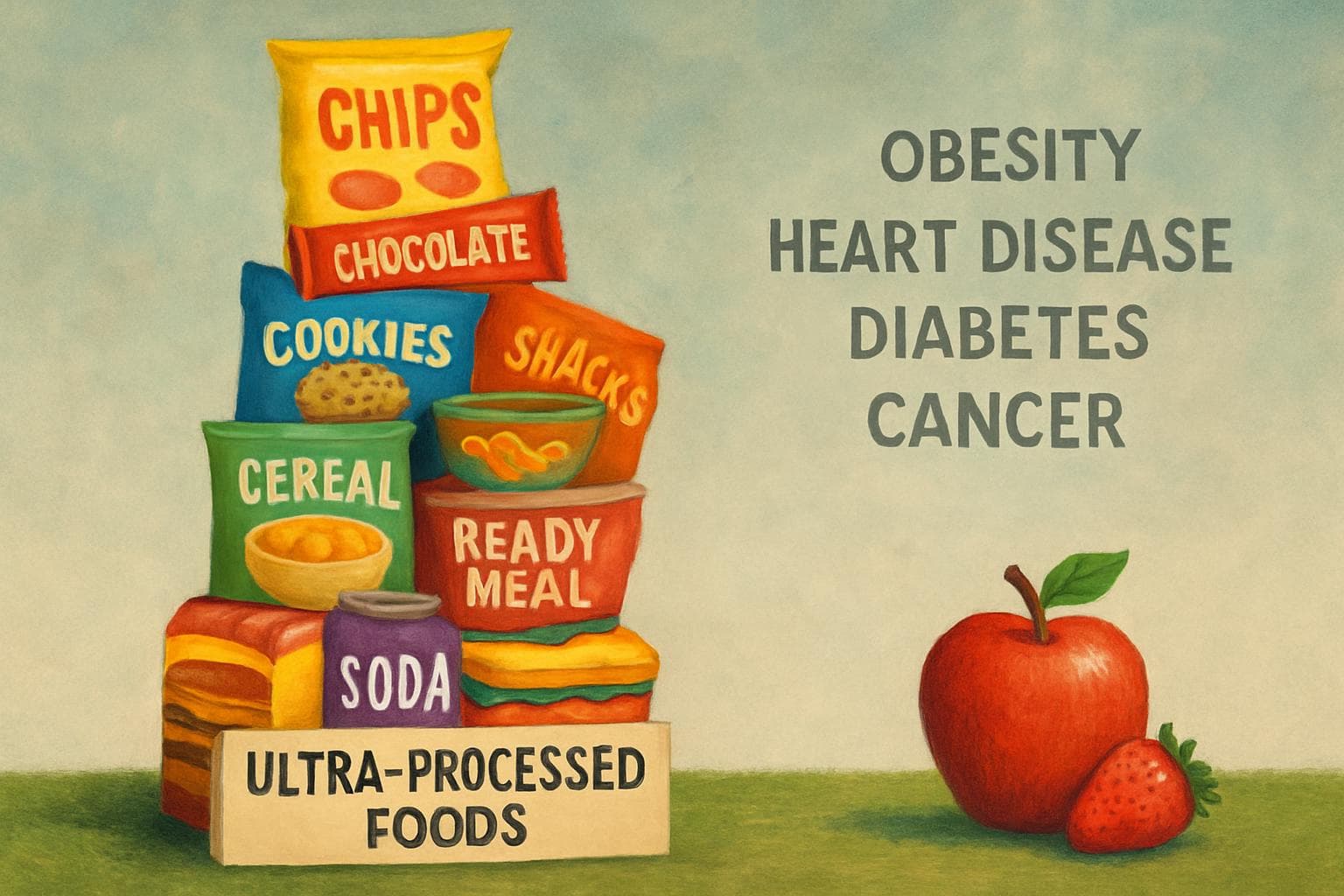
Ultra-processed foods (UPFs) are increasingly being recognized as a significant threat to global health, with experts calling for immediate action to curb their consumption. A comprehensive review published in The Lancet highlights the alarming rise of UPFs in diets worldwide, linking them to a host of chronic diseases, including obesity, type 2 diabetes, cardiovascular disease, and depression.
The Rise of Ultra-Processed Foods
The review, conducted by 43 international experts, underscores the shift from fresh, whole foods to highly processed alternatives. These foods, characterized by more than five industrial ingredients like emulsifiers and preservatives, are becoming staples in diets across the globe. In countries like Australia, the USA, and the UK, UPFs account for more than half of the average daily caloric intake.
Health Implications and Industry Influence
The findings suggest that UPFs pose risks to every major organ system, with 92 out of 104 long-term studies reporting associations with chronic diseases and premature death. Prof. Carlos Monteiro, a key author of the review, emphasizes that the consumption of UPFs is reshaping global dietary patterns, driven by profit-focused corporations employing aggressive marketing tactics.
Despite the compelling evidence, some scientists argue that the Nova classification system, which categorizes foods by processing levels, may not fully capture the nutritional nuances of UPFs. Critics point out that some UPFs, like wholegrain bread and low-fat yoghurts, contain beneficial nutrients despite their classification.
Calls for Policy Action
The Lancet series advocates for robust public health policies to mitigate the impact of UPFs, drawing parallels to the successful regulation of the tobacco industry. However, countries like Australia lag in implementing comprehensive nutrition policies, relying instead on fragmented strategies that experts warn are insufficient.
Prof. Mark Lawrence from Deakin University highlights the need for a "new vision" in food policy, criticizing Australia's health star rating system for allowing UPFs to earn high ratings by substituting harmful ingredients with processed alternatives.
WHAT THIS MIGHT MEAN
The growing body of evidence linking UPFs to health risks could prompt governments to implement stricter regulations, such as higher taxes on these products and clearer labeling. However, the food industry's influence may pose significant challenges to such initiatives. As research continues to evolve, it is crucial for policymakers to balance immediate action with ongoing scientific inquiry to effectively address the health impacts of UPFs. Experts suggest that a coordinated global response, akin to anti-tobacco efforts, could be pivotal in reducing UPF consumption and improving public health outcomes.
Related Articles

Canada and Australia Forge Strategic Partnership Amid Global Uncertainty

Persistent Safety Concerns in Nottingham Maternity Services Amidst Calls for Systemic Reform
Trump's New Tariff Strategy Sparks Global Trade Uncertainty

UK Government to Reform Asylum Seeker Support and Employment Policies

Middle East Conflict Drives UK Energy Prices to New Highs

UK Faces Dilemmas Amid Iran Conflict and China Spying Allegations
Ultra-Processed Foods: A Growing Global Health Concern
In This Article
 Maya Singh| Published
 HIGHLIGHTS
- Ultra-processed foods (UPFs) are linked to increased risks of chronic diseases such as obesity, type 2 diabetes, and depression, according to a global review.
- The Lancet series calls for urgent public health policies to reduce UPF consumption, similar to efforts against the tobacco industry.
- Critics argue that the Nova classification system may oversimplify the nutritional impact of UPFs, requiring more nuanced research.
- Australia, the USA, and the UK have some of the highest UPF consumption rates, with these foods comprising over half of daily caloric intake.
- Experts emphasize the need for coordinated global action to address the health impacts of UPFs, despite the lack of definitive clinical trials.
Ultra-processed foods (UPFs) are increasingly being recognized as a significant threat to global health, with experts calling for immediate action to curb their consumption. A comprehensive review published in The Lancet highlights the alarming rise of UPFs in diets worldwide, linking them to a host of chronic diseases, including obesity, type 2 diabetes, cardiovascular disease, and depression.
The Rise of Ultra-Processed Foods
The review, conducted by 43 international experts, underscores the shift from fresh, whole foods to highly processed alternatives. These foods, characterized by more than five industrial ingredients like emulsifiers and preservatives, are becoming staples in diets across the globe. In countries like Australia, the USA, and the UK, UPFs account for more than half of the average daily caloric intake.
Health Implications and Industry Influence
The findings suggest that UPFs pose risks to every major organ system, with 92 out of 104 long-term studies reporting associations with chronic diseases and premature death. Prof. Carlos Monteiro, a key author of the review, emphasizes that the consumption of UPFs is reshaping global dietary patterns, driven by profit-focused corporations employing aggressive marketing tactics.
Despite the compelling evidence, some scientists argue that the Nova classification system, which categorizes foods by processing levels, may not fully capture the nutritional nuances of UPFs. Critics point out that some UPFs, like wholegrain bread and low-fat yoghurts, contain beneficial nutrients despite their classification.
Calls for Policy Action
The Lancet series advocates for robust public health policies to mitigate the impact of UPFs, drawing parallels to the successful regulation of the tobacco industry. However, countries like Australia lag in implementing comprehensive nutrition policies, relying instead on fragmented strategies that experts warn are insufficient.
Prof. Mark Lawrence from Deakin University highlights the need for a "new vision" in food policy, criticizing Australia's health star rating system for allowing UPFs to earn high ratings by substituting harmful ingredients with processed alternatives.
WHAT THIS MIGHT MEAN
The growing body of evidence linking UPFs to health risks could prompt governments to implement stricter regulations, such as higher taxes on these products and clearer labeling. However, the food industry's influence may pose significant challenges to such initiatives. As research continues to evolve, it is crucial for policymakers to balance immediate action with ongoing scientific inquiry to effectively address the health impacts of UPFs. Experts suggest that a coordinated global response, akin to anti-tobacco efforts, could be pivotal in reducing UPF consumption and improving public health outcomes.
Related Articles
Canada and Australia Forge Strategic Partnership Amid Global Uncertainty
Persistent Safety Concerns in Nottingham Maternity Services Amidst Calls for Systemic Reform
Trump's New Tariff Strategy Sparks Global Trade Uncertainty
UK Government to Reform Asylum Seeker Support and Employment Policies
Middle East Conflict Drives UK Energy Prices to New Highs
UK Faces Dilemmas Amid Iran Conflict and China Spying Allegations