
UN Criticizes UK Ban on Palestine Action as Misuse of Terrorism Laws
In This Article
HIGHLIGHTS
- The UK government's ban on Palestine Action has been criticized by the UN human rights chief as a misuse of counter-terrorism laws.
- Volker Turk, the UN commissioner, labeled the ban "disproportionate and unnecessary," urging its reversal to align with international human rights law.
- The ban, enacted under the Terrorism Act 2000, criminalizes support for Palestine Action, with penalties up to 14 years in prison.
- Over 170 arrests have been made since the ban, including an 80-year-old woman detained for holding a pro-Palestine placard.
- Critics argue the ban conflates protest with terrorism, potentially chilling lawful expressions of freedom of assembly and speech.
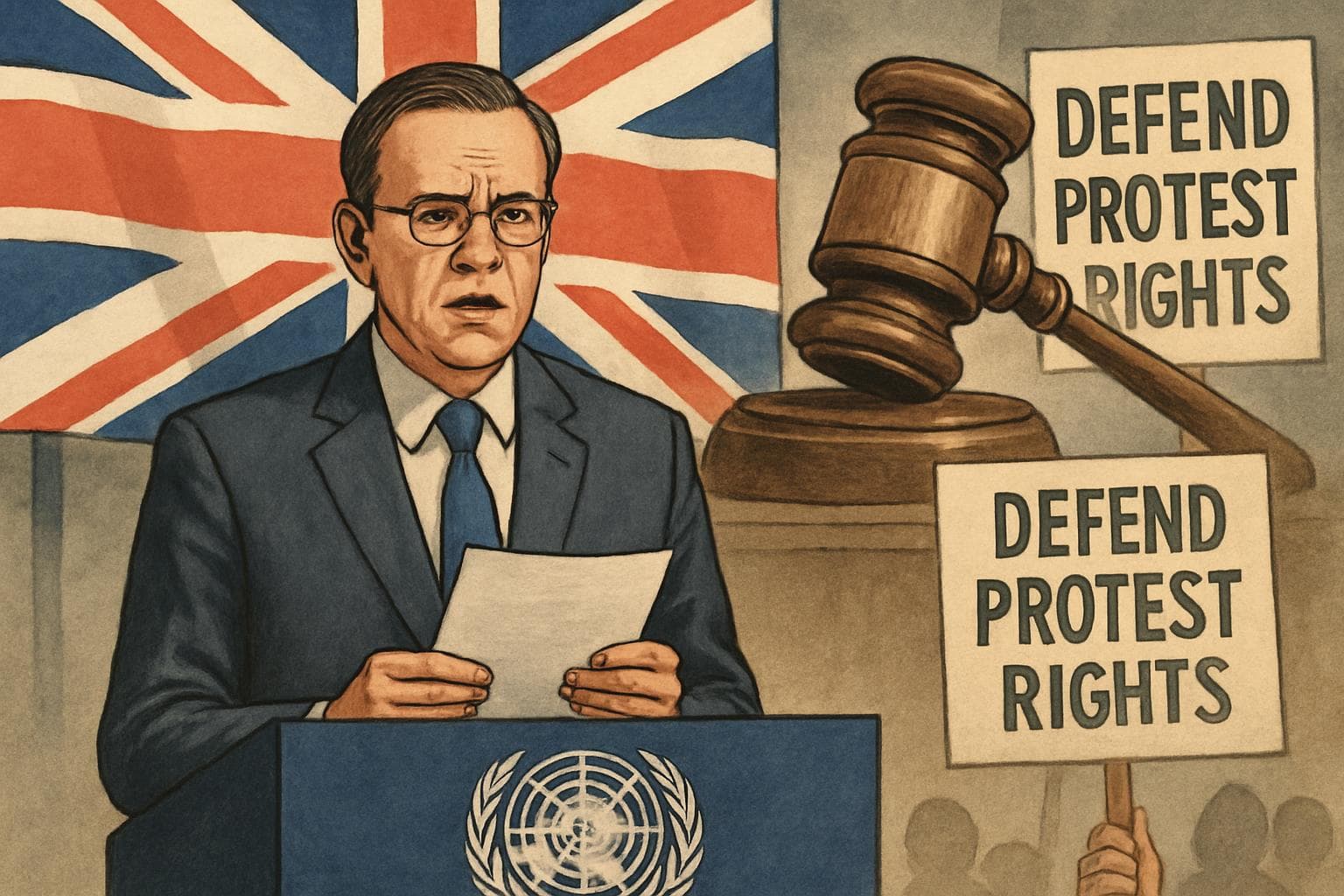
The United Nations has voiced strong opposition to the UK government's recent ban on Palestine Action, a move that has sparked significant controversy and debate. Volker Turk, the UN's high commissioner for human rights, has condemned the ban as a "disturbing" misuse of counter-terrorism legislation, urging the UK to reconsider its stance.
UN Condemnation and Legal Context
The UK government proscribed Palestine Action under the Terrorism Act 2000, following incidents where activists caused significant damage to military aircraft. The ban, which criminalizes membership and support for the group, carries severe penalties, including up to 14 years in prison. Turk criticized the decision as "disproportionate and unnecessary," arguing it infringes on rights to freedom of expression and peaceful assembly, which are protected under international human rights law.
Impact on Protesters and Public Reaction
Since the ban's implementation, over 170 individuals have been arrested, including an elderly woman detained for holding a pro-Palestine placard. Critics, including civil liberties groups and legal experts, warn that the ban sets a dangerous precedent by equating protest with terrorism. They argue it could deter lawful expressions of dissent and assembly, essential components of democratic society.
Government's Stance and Ongoing Legal Challenges
Security Minister Dan Jarvis has defended the ban, stating it targets only those supporting Palestine Action's criminal activities, not general pro-Palestinian expressions. The decision is currently under judicial review, with a High Court judgment expected soon. Meanwhile, several criminal cases related to Palestine Action's activities are pending in the courts.
WHAT THIS MIGHT MEAN
The legal challenge against the ban on Palestine Action could have significant implications for protest rights in the UK. If the High Court rules against the government, it may prompt a reevaluation of how counter-terrorism laws are applied to protest groups. Conversely, upholding the ban could embolden further restrictions on activism, potentially chilling public dissent. Experts suggest that the case underscores the need for a balanced approach that safeguards national security without undermining fundamental freedoms. As the situation unfolds, the international community will be closely watching the UK's adherence to human rights standards.
Related Articles

Prince Andrew's Ties to Epstein Under Scrutiny Amid Calls for Inquiry
Government Criticized for Mishandling Maccabi Tel Aviv Fan Ban

Prince Andrew's Arrest Intensifies Scrutiny on Royal Succession and Prince William's Future Role

UK Defence Faces Scrutiny Amid Ajax Armoured Vehicle Delays and Soldier Safety Concerns

Government Announces £4 Billion Overhaul of SEND Support in England

UK Government's SEND Reforms: A Critical Turning Point for Special Education
UN Criticizes UK Ban on Palestine Action as Misuse of Terrorism Laws
In This Article
 Ethan Brooks| Published
 HIGHLIGHTS
- The UK government's ban on Palestine Action has been criticized by the UN human rights chief as a misuse of counter-terrorism laws.
- Volker Turk, the UN commissioner, labeled the ban "disproportionate and unnecessary," urging its reversal to align with international human rights law.
- The ban, enacted under the Terrorism Act 2000, criminalizes support for Palestine Action, with penalties up to 14 years in prison.
- Over 170 arrests have been made since the ban, including an 80-year-old woman detained for holding a pro-Palestine placard.
- Critics argue the ban conflates protest with terrorism, potentially chilling lawful expressions of freedom of assembly and speech.
The United Nations has voiced strong opposition to the UK government's recent ban on Palestine Action, a move that has sparked significant controversy and debate. Volker Turk, the UN's high commissioner for human rights, has condemned the ban as a "disturbing" misuse of counter-terrorism legislation, urging the UK to reconsider its stance.
UN Condemnation and Legal Context
The UK government proscribed Palestine Action under the Terrorism Act 2000, following incidents where activists caused significant damage to military aircraft. The ban, which criminalizes membership and support for the group, carries severe penalties, including up to 14 years in prison. Turk criticized the decision as "disproportionate and unnecessary," arguing it infringes on rights to freedom of expression and peaceful assembly, which are protected under international human rights law.
Impact on Protesters and Public Reaction
Since the ban's implementation, over 170 individuals have been arrested, including an elderly woman detained for holding a pro-Palestine placard. Critics, including civil liberties groups and legal experts, warn that the ban sets a dangerous precedent by equating protest with terrorism. They argue it could deter lawful expressions of dissent and assembly, essential components of democratic society.
Government's Stance and Ongoing Legal Challenges
Security Minister Dan Jarvis has defended the ban, stating it targets only those supporting Palestine Action's criminal activities, not general pro-Palestinian expressions. The decision is currently under judicial review, with a High Court judgment expected soon. Meanwhile, several criminal cases related to Palestine Action's activities are pending in the courts.
WHAT THIS MIGHT MEAN
The legal challenge against the ban on Palestine Action could have significant implications for protest rights in the UK. If the High Court rules against the government, it may prompt a reevaluation of how counter-terrorism laws are applied to protest groups. Conversely, upholding the ban could embolden further restrictions on activism, potentially chilling public dissent. Experts suggest that the case underscores the need for a balanced approach that safeguards national security without undermining fundamental freedoms. As the situation unfolds, the international community will be closely watching the UK's adherence to human rights standards.
Related Articles
Prince Andrew's Ties to Epstein Under Scrutiny Amid Calls for Inquiry
Government Criticized for Mishandling Maccabi Tel Aviv Fan Ban
Prince Andrew's Arrest Intensifies Scrutiny on Royal Succession and Prince William's Future Role
UK Defence Faces Scrutiny Amid Ajax Armoured Vehicle Delays and Soldier Safety Concerns
Government Announces £4 Billion Overhaul of SEND Support in England
UK Government's SEND Reforms: A Critical Turning Point for Special Education