
US Congress Requests Prince Andrew's Testimony in Epstein Investigation

In This Article
HIGHLIGHTS
- A US congressional panel has requested Andrew Mountbatten Windsor to participate in its investigation into Jeffrey Epstein's criminal network.
- The letter, signed by 13 Democrats, seeks Andrew's cooperation for a transcribed interview by November 20.
- Andrew, who recently lost his royal titles, has been linked to Epstein through flight logs and allegations by Virginia Giuffre.
- The committee, controlled by Republicans, cannot compel Andrew to testify, as he is a foreign national.
- Andrew has consistently denied any wrongdoing related to Epstein and the allegations against him.
In a significant development, a US congressional panel has formally requested Andrew Mountbatten Windsor, formerly known as Prince Andrew, to participate in its ongoing investigation into the criminal operations of the late financier Jeffrey Epstein. The request, made by the House Oversight Committee, seeks to uncover the extent of Epstein's network and the involvement of his associates.
Democratic Push for Cooperation
The letter, spearheaded by California Congressman Robert Garcia and co-signed by 13 other Democrats, was sent to Andrew's residence at Royal Lodge, Windsor Great Park. It invites him to partake in a transcribed interview by November 20. The committee aims to gather information on Epstein's operations, citing Andrew's documented friendship with Epstein as a potential source of valuable insights.
Royal Titles and Allegations
This request follows Andrew's recent decision to relinquish his royal titles, including the "prince" title, amid mounting pressure over his ties to Epstein. His name has appeared in documents and flight logs related to Epstein's estate, and he has been accused by Virginia Giuffre, a prominent Epstein accuser, of sexual assault—allegations he has consistently denied.
Political and Legal Context
Despite the Democrats' push, the committee, controlled by Republicans, lacks the authority to compel Andrew, a foreign national, to testify. This limitation echoes past frustrations, as US authorities have previously reported Andrew's lack of cooperation with their inquiries. In 2020, Geoffrey Berman, then US attorney for the Southern District of New York, noted Andrew's failure to respond to interview requests, despite his public commitment to assist law enforcement.
Public and Political Reactions
The request has sparked varied reactions. UK Prime Minister Sir Keir Starmer emphasized the importance of sharing relevant information with inquiries, while Liberal Democrat leader Sir Ed Davey called for Andrew to testify before both US Congress and the UK Parliament. "The public deserves answers and full transparency about this scandal," Davey stated.
WHAT THIS MIGHT MEAN
The congressional request for Andrew's testimony marks a pivotal moment in the Epstein investigation, potentially influencing both legal and political landscapes. Should Andrew choose to cooperate, it could provide critical insights into Epstein's network, aiding justice for victims. However, his decision to remain silent could further complicate efforts to hold powerful individuals accountable.
Politically, the situation underscores the complexities of international legal cooperation and the challenges faced by lawmakers in pursuing justice across borders. As the November 20 deadline approaches, all eyes will be on Andrew's response, which could have lasting implications for both his personal legacy and the broader pursuit of justice in the Epstein case.
Related Articles
Prince Andrew's Arrest Intensifies Scrutiny on Royal Succession and Prince William's Future Role
Prince Andrew's Ties to Epstein Under Scrutiny Amid Calls for Inquiry
MPs Weigh Inquiry into Andrew Mountbatten-Windsor's Trade Envoy Role Amid Arrest
UK Police Intensify Investigation into Andrew Mountbatten-Windsor Amid Misconduct Allegations
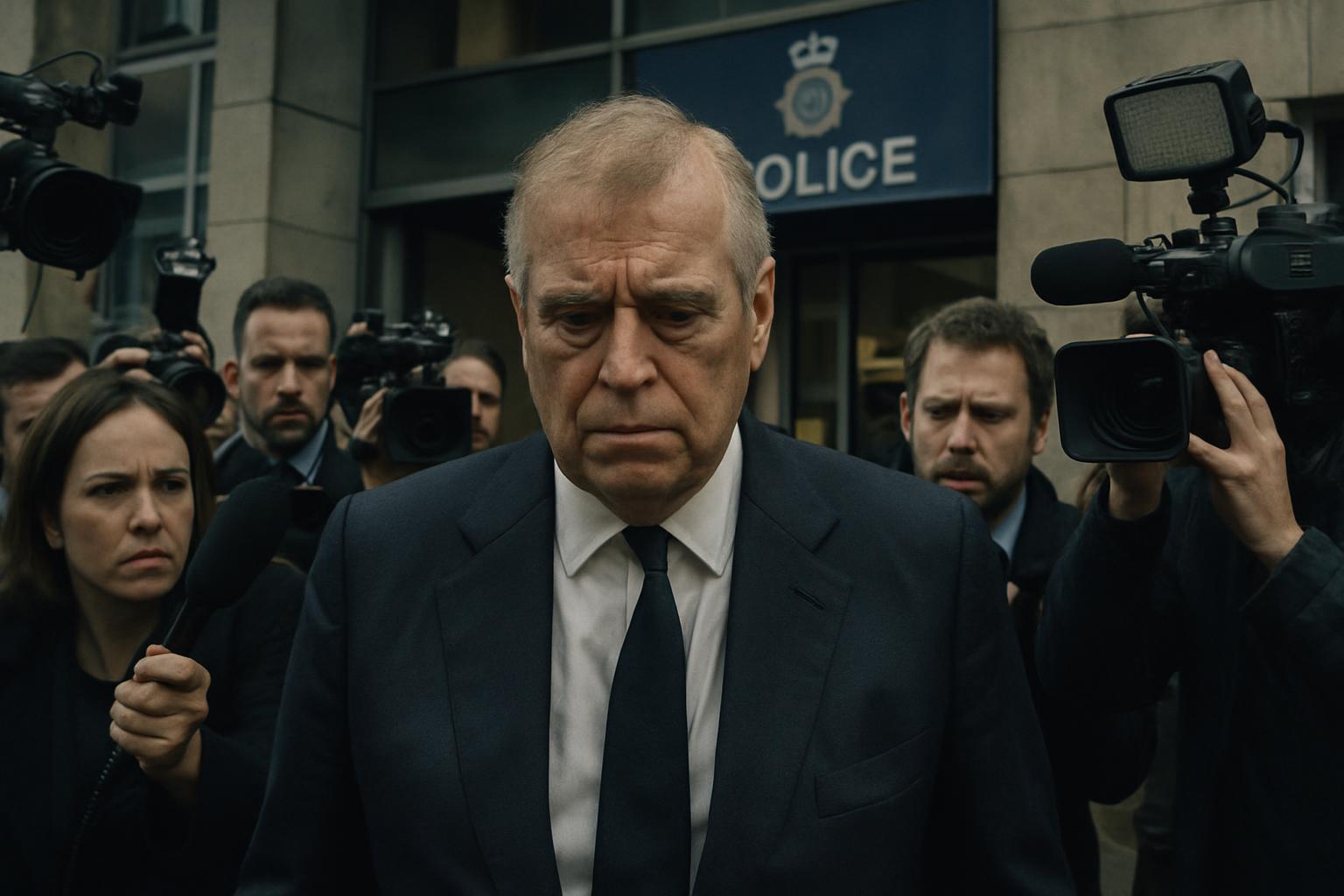
Arrest of Andrew Mountbatten-Windsor Sparks Unprecedented Crisis for British Monarchy
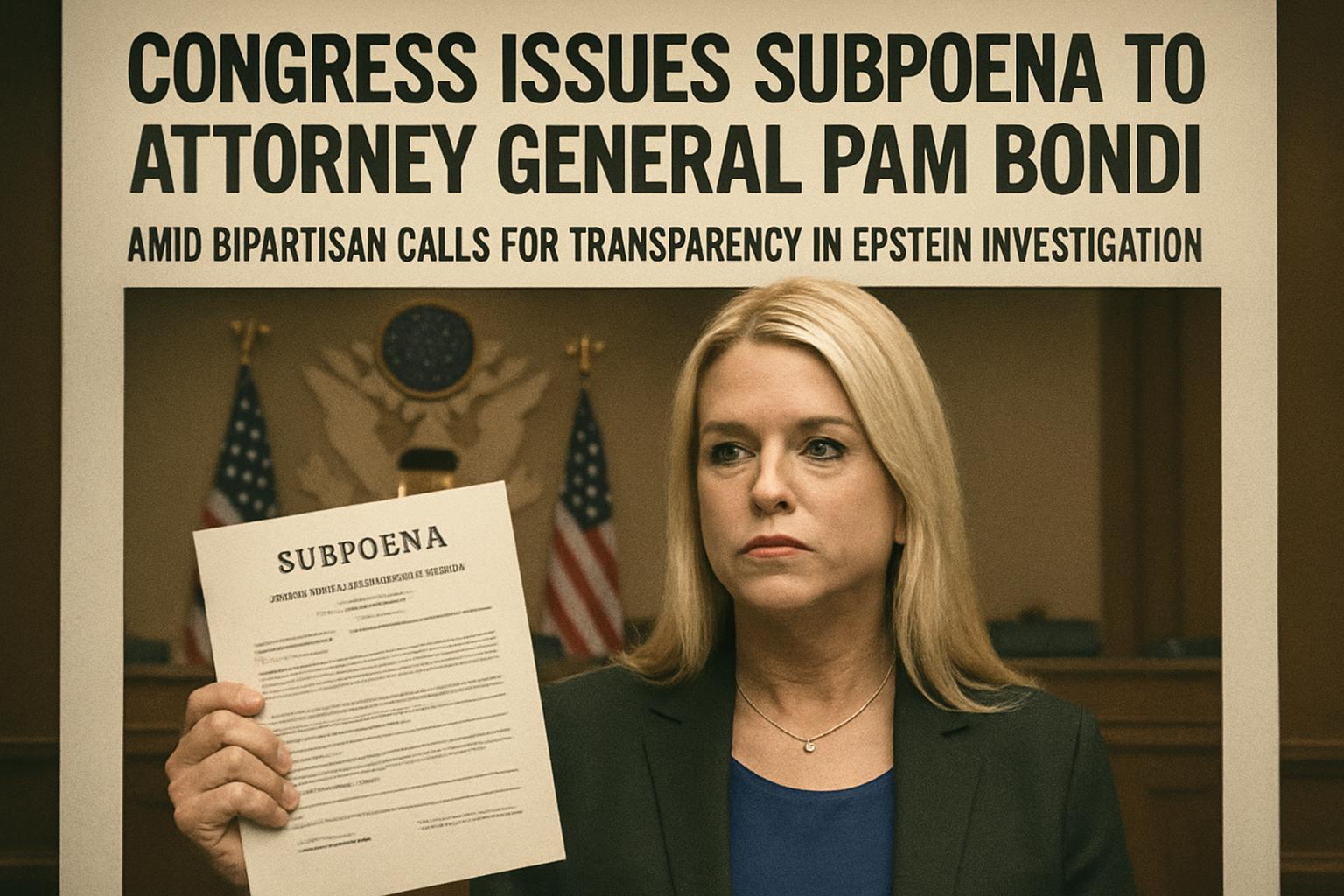
Congress Subpoenas Attorney General Bondi in Epstein Investigation
US Congress Requests Prince Andrew's Testimony in Epstein Investigation
In This Article
 Ethan Brooks| Published
 HIGHLIGHTS
- A US congressional panel has requested Andrew Mountbatten Windsor to participate in its investigation into Jeffrey Epstein's criminal network.
- The letter, signed by 13 Democrats, seeks Andrew's cooperation for a transcribed interview by November 20.
- Andrew, who recently lost his royal titles, has been linked to Epstein through flight logs and allegations by Virginia Giuffre.
- The committee, controlled by Republicans, cannot compel Andrew to testify, as he is a foreign national.
- Andrew has consistently denied any wrongdoing related to Epstein and the allegations against him.
In a significant development, a US congressional panel has formally requested Andrew Mountbatten Windsor, formerly known as Prince Andrew, to participate in its ongoing investigation into the criminal operations of the late financier Jeffrey Epstein. The request, made by the House Oversight Committee, seeks to uncover the extent of Epstein's network and the involvement of his associates.
Democratic Push for Cooperation
The letter, spearheaded by California Congressman Robert Garcia and co-signed by 13 other Democrats, was sent to Andrew's residence at Royal Lodge, Windsor Great Park. It invites him to partake in a transcribed interview by November 20. The committee aims to gather information on Epstein's operations, citing Andrew's documented friendship with Epstein as a potential source of valuable insights.
Royal Titles and Allegations
This request follows Andrew's recent decision to relinquish his royal titles, including the "prince" title, amid mounting pressure over his ties to Epstein. His name has appeared in documents and flight logs related to Epstein's estate, and he has been accused by Virginia Giuffre, a prominent Epstein accuser, of sexual assault—allegations he has consistently denied.
Political and Legal Context
Despite the Democrats' push, the committee, controlled by Republicans, lacks the authority to compel Andrew, a foreign national, to testify. This limitation echoes past frustrations, as US authorities have previously reported Andrew's lack of cooperation with their inquiries. In 2020, Geoffrey Berman, then US attorney for the Southern District of New York, noted Andrew's failure to respond to interview requests, despite his public commitment to assist law enforcement.
Public and Political Reactions
The request has sparked varied reactions. UK Prime Minister Sir Keir Starmer emphasized the importance of sharing relevant information with inquiries, while Liberal Democrat leader Sir Ed Davey called for Andrew to testify before both US Congress and the UK Parliament. "The public deserves answers and full transparency about this scandal," Davey stated.
WHAT THIS MIGHT MEAN
The congressional request for Andrew's testimony marks a pivotal moment in the Epstein investigation, potentially influencing both legal and political landscapes. Should Andrew choose to cooperate, it could provide critical insights into Epstein's network, aiding justice for victims. However, his decision to remain silent could further complicate efforts to hold powerful individuals accountable.
Politically, the situation underscores the complexities of international legal cooperation and the challenges faced by lawmakers in pursuing justice across borders. As the November 20 deadline approaches, all eyes will be on Andrew's response, which could have lasting implications for both his personal legacy and the broader pursuit of justice in the Epstein case.
Related Articles
Prince Andrew's Arrest Intensifies Scrutiny on Royal Succession and Prince William's Future Role
Prince Andrew's Ties to Epstein Under Scrutiny Amid Calls for Inquiry
MPs Weigh Inquiry into Andrew Mountbatten-Windsor's Trade Envoy Role Amid Arrest
UK Police Intensify Investigation into Andrew Mountbatten-Windsor Amid Misconduct Allegations
Arrest of Andrew Mountbatten-Windsor Sparks Unprecedented Crisis for British Monarchy
Congress Subpoenas Attorney General Bondi in Epstein Investigation