
Venezuelan Diaspora Celebrates Maduro's Capture Amid Uncertainty Over Future

In This Article
HIGHLIGHTS
- US special forces captured Venezuelan President Nicolás Maduro, sparking celebrations among the Venezuelan diaspora in Doral, Florida.
- The US plans to temporarily control Venezuela, raising concerns about the future of Venezuelan refugees in the US.
- In Caracas, residents face uncertainty and fear following the US intervention, with many skeptical about the promised improvements.
- Venezuelan military leaders have recognized Vice-President Delcy Rodríguez as interim president, maintaining some continuity in governance.
- The international community has expressed concern over the precedent set by the US military action in Venezuela.
In the early hours of Saturday, US special forces executed a dramatic operation that led to the capture of Venezuelan President Nicolás Maduro and his wife, Cilia Flores. This development has sent ripples of joy and uncertainty through the Venezuelan diaspora in Doral, Florida, home to the largest concentration of Venezuelans in the United States.
Celebrations in Doral
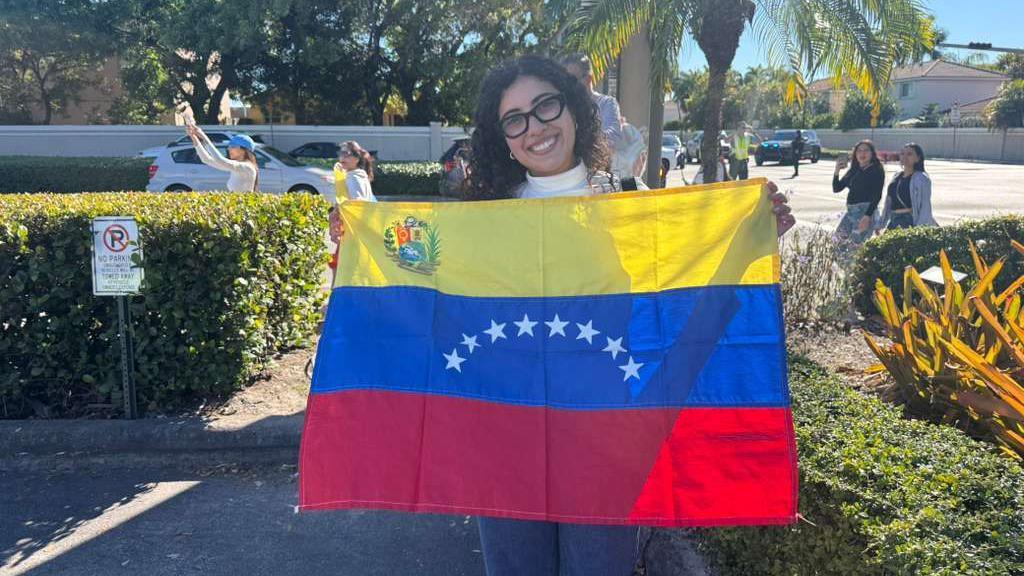
As news of Maduro's capture spread, hundreds of Venezuelan expatriates gathered at El Arepazo, a popular community hub in Doral, to celebrate. The streets were alive with music, chants of "libertad," and the waving of Venezuela's national flag. Rosana Mateos, a Venezuelan expat, expressed disbelief and relief at the news, echoing the sentiments of many who blame Maduro for Venezuela's economic collapse and political turmoil. Bryan Marquez, a recent immigrant from Venezuela, credited US President Donald Trump for the operation, expressing gratitude for what he sees as a step toward a better future for his homeland.
US Intervention and Its Implications
Despite the celebrations, Trump's announcement that the US would temporarily seize control of Venezuela has sparked concerns among the Venezuelan community. The plan includes American businesses taking over Venezuela's oil infrastructure, a move that has been met with mixed reactions. Eduardo Gamarra, a professor at Florida International University, warned that this could accelerate deportations of Venezuelan refugees in the US, as the rationale for asylum may no longer apply.
Uncertainty in Caracas
In Caracas, the mood is markedly different. Residents are grappling with the aftermath of the US intervention, which included a large-scale attack on the city. Griselda Guzmán, a pensioner, and other locals expressed fear and skepticism about the future. Many doubt that the US-led changes will bring the promised peace and prosperity. The Venezuelan military has recognized Vice-President Delcy Rodríguez as interim president, but the situation remains tense.
International Reactions
The international community has voiced concerns over the US's military action in Venezuela, with several Latin American countries warning of the dangerous precedent it sets for regional security. As the situation unfolds, the world watches closely to see how these developments will impact Venezuela's future and its people.
WHAT THIS MIGHT MEAN
The capture of Nicolás Maduro marks a significant turning point in Venezuela's political crisis, but the path forward remains fraught with challenges. The US's temporary control of Venezuela could lead to economic restructuring, but it also risks alienating Venezuelans who fear foreign intervention. The recognition of Delcy Rodríguez as interim president may provide some stability, but her ability to govern effectively is uncertain.
For Venezuelan refugees in the US, the situation is precarious. The potential for accelerated deportations looms, as the justification for asylum may weaken with the US's involvement in Venezuela's governance. Experts suggest that the international community's response will be crucial in shaping the outcome, as diplomatic efforts could either support or hinder Venezuela's recovery.
Images from the Web
Related Articles
Cuba Faces Widespread Blackout Amid Deepening Fuel Crisis
El Mencho's Death Sparks Violent Unrest Across Mexico

UK Faces Dilemmas Amid Iran Conflict and China Spying Allegations
Spain's Sánchez Stands Firm Against Trump's Trade Threat Over Iran Stance
China Sets Lowest GDP Growth Target in Decades Amid Economic Challenges

Tech Giants Pledge to Cover AI Data Center Energy Costs Amid Rising Electricity Concerns
Venezuelan Diaspora Celebrates Maduro's Capture Amid Uncertainty Over Future
In This Article
HIGHLIGHTS
- US special forces captured Venezuelan President Nicolás Maduro, sparking celebrations among the Venezuelan diaspora in Doral, Florida.
- The US plans to temporarily control Venezuela, raising concerns about the future of Venezuelan refugees in the US.
- In Caracas, residents face uncertainty and fear following the US intervention, with many skeptical about the promised improvements.
- Venezuelan military leaders have recognized Vice-President Delcy Rodríguez as interim president, maintaining some continuity in governance.
- The international community has expressed concern over the precedent set by the US military action in Venezuela.
In the early hours of Saturday, US special forces executed a dramatic operation that led to the capture of Venezuelan President Nicolás Maduro and his wife, Cilia Flores. This development has sent ripples of joy and uncertainty through the Venezuelan diaspora in Doral, Florida, home to the largest concentration of Venezuelans in the United States.
Celebrations in Doral
As news of Maduro's capture spread, hundreds of Venezuelan expatriates gathered at El Arepazo, a popular community hub in Doral, to celebrate. The streets were alive with music, chants of "libertad," and the waving of Venezuela's national flag. Rosana Mateos, a Venezuelan expat, expressed disbelief and relief at the news, echoing the sentiments of many who blame Maduro for Venezuela's economic collapse and political turmoil. Bryan Marquez, a recent immigrant from Venezuela, credited US President Donald Trump for the operation, expressing gratitude for what he sees as a step toward a better future for his homeland.
US Intervention and Its Implications
Despite the celebrations, Trump's announcement that the US would temporarily seize control of Venezuela has sparked concerns among the Venezuelan community. The plan includes American businesses taking over Venezuela's oil infrastructure, a move that has been met with mixed reactions. Eduardo Gamarra, a professor at Florida International University, warned that this could accelerate deportations of Venezuelan refugees in the US, as the rationale for asylum may no longer apply.
Uncertainty in Caracas
In Caracas, the mood is markedly different. Residents are grappling with the aftermath of the US intervention, which included a large-scale attack on the city. Griselda Guzmán, a pensioner, and other locals expressed fear and skepticism about the future. Many doubt that the US-led changes will bring the promised peace and prosperity. The Venezuelan military has recognized Vice-President Delcy Rodríguez as interim president, but the situation remains tense.
International Reactions
The international community has voiced concerns over the US's military action in Venezuela, with several Latin American countries warning of the dangerous precedent it sets for regional security. As the situation unfolds, the world watches closely to see how these developments will impact Venezuela's future and its people.
WHAT THIS MIGHT MEAN
The capture of Nicolás Maduro marks a significant turning point in Venezuela's political crisis, but the path forward remains fraught with challenges. The US's temporary control of Venezuela could lead to economic restructuring, but it also risks alienating Venezuelans who fear foreign intervention. The recognition of Delcy Rodríguez as interim president may provide some stability, but her ability to govern effectively is uncertain.
For Venezuelan refugees in the US, the situation is precarious. The potential for accelerated deportations looms, as the justification for asylum may weaken with the US's involvement in Venezuela's governance. Experts suggest that the international community's response will be crucial in shaping the outcome, as diplomatic efforts could either support or hinder Venezuela's recovery.
Images from the Web
Related Articles
Cuba Faces Widespread Blackout Amid Deepening Fuel Crisis
El Mencho's Death Sparks Violent Unrest Across Mexico
UK Faces Dilemmas Amid Iran Conflict and China Spying Allegations
Spain's Sánchez Stands Firm Against Trump's Trade Threat Over Iran Stance
China Sets Lowest GDP Growth Target in Decades Amid Economic Challenges
Tech Giants Pledge to Cover AI Data Center Energy Costs Amid Rising Electricity Concerns