
Venezuela's Political Turmoil: Prisoner Releases and Power Struggles Amid US Pressure
In This Article
HIGHLIGHTS
- The Venezuelan government announced the release of political prisoners following the US's capture of President Nicolás Maduro on January 3, 2026.
- Ramón Guanipa, son of jailed opposition leader Juan Pablo Guanipa, urged Donald Trump to maintain pressure on Venezuela, citing limited prisoner releases.
- Diosdado Cabello, a key figure in Venezuela's security apparatus, faces a $25 million US bounty and pressure to align with US demands.
- The US's actions have destabilized Cabello's influence, with some predicting he may comply with Washington's directives.
- The Venezuelan government's prisoner release claims are disputed, with human rights groups confirming fewer releases than reported.
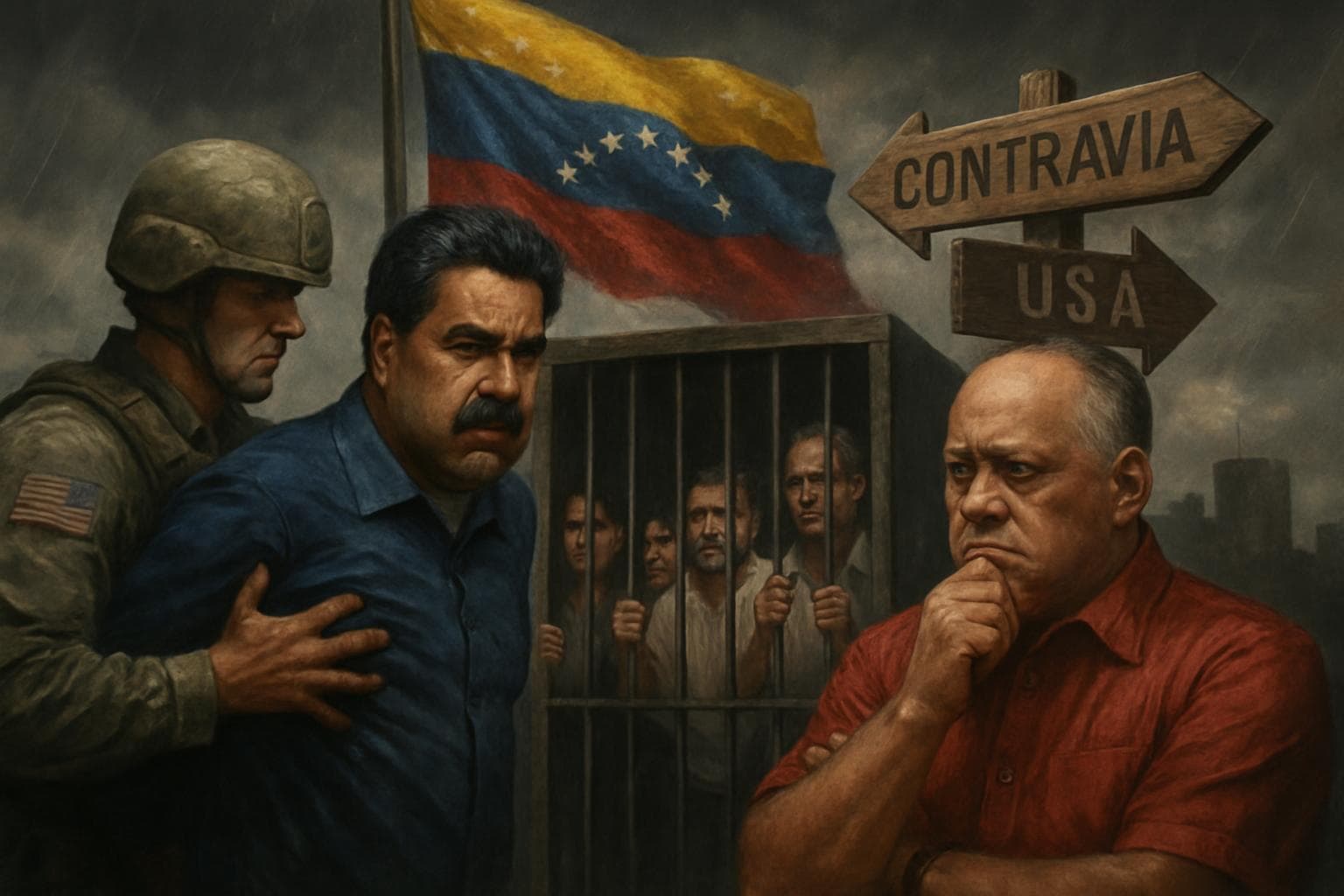
In a dramatic turn of events, Venezuela's political landscape is undergoing significant upheaval following the US's capture of President Nicolás Maduro on January 3, 2026. This bold move has prompted the Venezuelan government to announce the release of political prisoners, a gesture seen by many as an attempt to appease international scrutiny. However, the reality of these releases remains contentious.
Prisoner Releases Under Scrutiny
The Venezuelan government declared its intention to release a substantial number of political detainees, a move hailed by some as a "goodwill gesture." Yet, Ramón Guanipa, whose father, Juan Pablo Guanipa, remains imprisoned, has cautioned US President Donald Trump against being misled by these promises. While the government claims over 100 prisoners have been freed, human rights organizations have confirmed only about 40 releases, casting doubt on the government's transparency.
Power Struggles Within Venezuela
The capture of Maduro has left a power vacuum, with Diosdado Cabello, a prominent figure in Venezuela's security apparatus, facing increased pressure. Known for his formidable influence, Cabello is now under scrutiny, with a $25 million bounty on his head from the US. Former government minister Andrés Izarra suggests that Cabello's authority has been severely undermined, leaving him with little choice but to align with the US's demands or face potential removal.
International and Domestic Reactions
The international community is closely watching these developments, with the US taking credit for the prisoner releases. Trump has publicly acknowledged the Venezuelan authorities' actions, though relatives of those still detained express frustration over the limited progress. Meanwhile, Cabello's diminished power is seen as a potential turning point, with some Venezuelans hoping for his downfall, viewing him as the true power behind the regime.
WHAT THIS MIGHT MEAN
The unfolding situation in Venezuela presents several potential outcomes. If Cabello chooses to cooperate with the US, it could lead to a shift in the country's political dynamics, potentially easing tensions with Washington. However, resistance from Cabello could result in further instability and possible US intervention. The international community will likely continue to monitor the situation closely, with human rights organizations advocating for the release of all political prisoners. As Venezuela navigates this turbulent period, the actions of key figures like Cabello and the Rodríguez siblings will be pivotal in shaping the nation's future.
Related Articles
Cuba Faces Widespread Blackout Amid Deepening Fuel Crisis
El Mencho's Death Sparks Violent Unrest Across Mexico

UK Faces Dilemmas Amid Iran Conflict and China Spying Allegations
Spain's Sánchez Stands Firm Against Trump's Trade Threat Over Iran Stance
China Sets Lowest GDP Growth Target in Decades Amid Economic Challenges

Tech Giants Pledge to Cover AI Data Center Energy Costs Amid Rising Electricity Concerns
Venezuela's Political Turmoil: Prisoner Releases and Power Struggles Amid US Pressure
In This Article
HIGHLIGHTS
- The Venezuelan government announced the release of political prisoners following the US's capture of President Nicolás Maduro on January 3, 2026.
- Ramón Guanipa, son of jailed opposition leader Juan Pablo Guanipa, urged Donald Trump to maintain pressure on Venezuela, citing limited prisoner releases.
- Diosdado Cabello, a key figure in Venezuela's security apparatus, faces a $25 million US bounty and pressure to align with US demands.
- The US's actions have destabilized Cabello's influence, with some predicting he may comply with Washington's directives.
- The Venezuelan government's prisoner release claims are disputed, with human rights groups confirming fewer releases than reported.
In a dramatic turn of events, Venezuela's political landscape is undergoing significant upheaval following the US's capture of President Nicolás Maduro on January 3, 2026. This bold move has prompted the Venezuelan government to announce the release of political prisoners, a gesture seen by many as an attempt to appease international scrutiny. However, the reality of these releases remains contentious.
Prisoner Releases Under Scrutiny
The Venezuelan government declared its intention to release a substantial number of political detainees, a move hailed by some as a "goodwill gesture." Yet, Ramón Guanipa, whose father, Juan Pablo Guanipa, remains imprisoned, has cautioned US President Donald Trump against being misled by these promises. While the government claims over 100 prisoners have been freed, human rights organizations have confirmed only about 40 releases, casting doubt on the government's transparency.
Power Struggles Within Venezuela
The capture of Maduro has left a power vacuum, with Diosdado Cabello, a prominent figure in Venezuela's security apparatus, facing increased pressure. Known for his formidable influence, Cabello is now under scrutiny, with a $25 million bounty on his head from the US. Former government minister Andrés Izarra suggests that Cabello's authority has been severely undermined, leaving him with little choice but to align with the US's demands or face potential removal.
International and Domestic Reactions
The international community is closely watching these developments, with the US taking credit for the prisoner releases. Trump has publicly acknowledged the Venezuelan authorities' actions, though relatives of those still detained express frustration over the limited progress. Meanwhile, Cabello's diminished power is seen as a potential turning point, with some Venezuelans hoping for his downfall, viewing him as the true power behind the regime.
WHAT THIS MIGHT MEAN
The unfolding situation in Venezuela presents several potential outcomes. If Cabello chooses to cooperate with the US, it could lead to a shift in the country's political dynamics, potentially easing tensions with Washington. However, resistance from Cabello could result in further instability and possible US intervention. The international community will likely continue to monitor the situation closely, with human rights organizations advocating for the release of all political prisoners. As Venezuela navigates this turbulent period, the actions of key figures like Cabello and the Rodríguez siblings will be pivotal in shaping the nation's future.
Related Articles
Cuba Faces Widespread Blackout Amid Deepening Fuel Crisis
El Mencho's Death Sparks Violent Unrest Across Mexico
UK Faces Dilemmas Amid Iran Conflict and China Spying Allegations
Spain's Sánchez Stands Firm Against Trump's Trade Threat Over Iran Stance
China Sets Lowest GDP Growth Target in Decades Amid Economic Challenges
Tech Giants Pledge to Cover AI Data Center Energy Costs Amid Rising Electricity Concerns