
WHO Calls for Expanded Access to Obesity Drugs Amid Global Shortage
In This Article
HIGHLIGHTS
- The World Health Organization (WHO) highlights a shortage of obesity treatments like GLP-1 medications, accessible to fewer than 10% of those in need.
- WHO's new guidelines emphasize the need for equitable access to these drugs, which are seen as a breakthrough in obesity treatment.
- Current production can only meet the needs of 100 million people, far below the projected 2 billion obese individuals by 2030.
- WHO calls for strategies like voluntary licensing to expand access and reduce costs, especially in lower-income countries.
- GLP-1 drugs, including Wegovy and Mounjaro, are recognized for their potential to treat obesity and related health issues but must be paired with lifestyle changes.
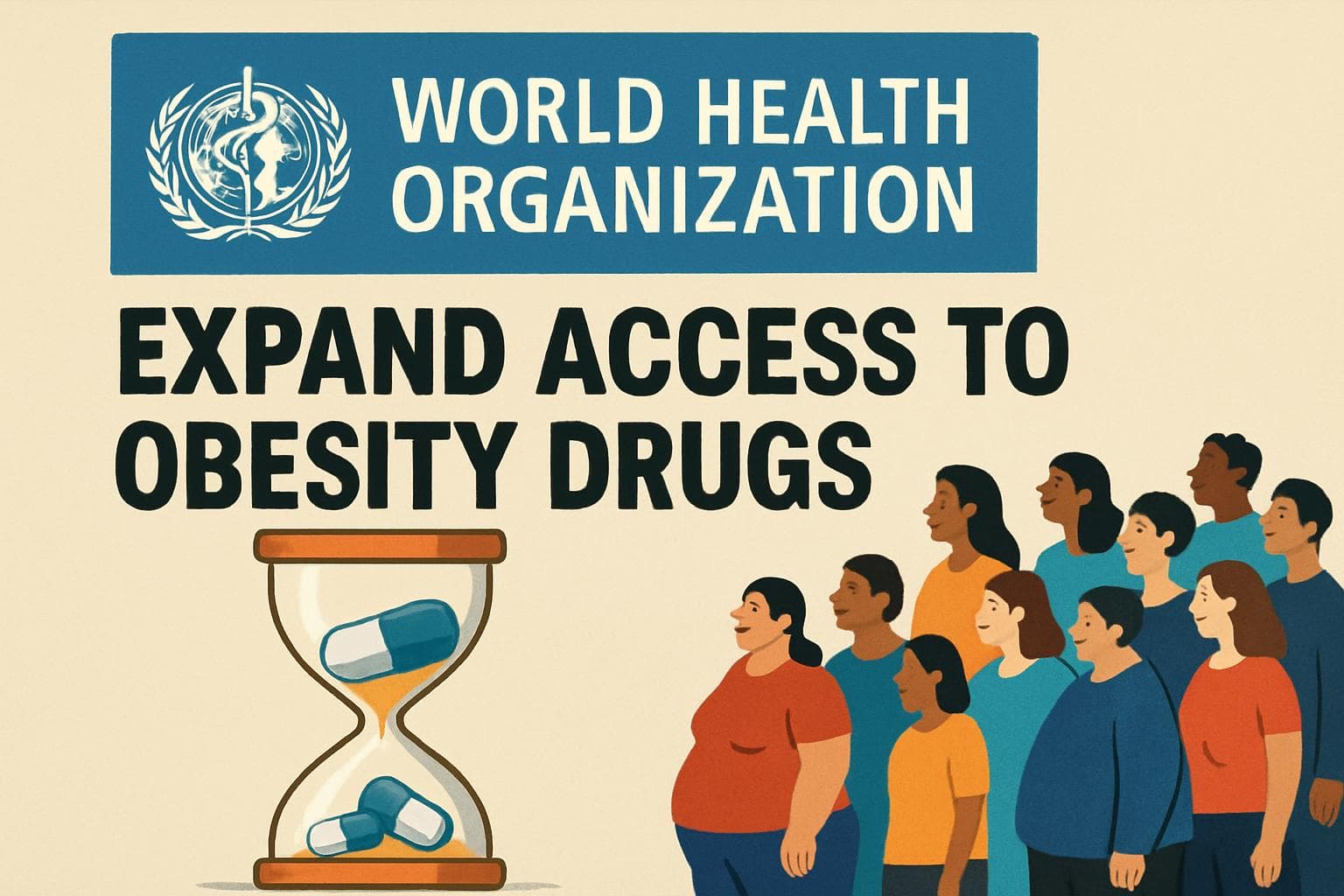
The World Health Organization (WHO) has issued a stark warning about the limited availability of breakthrough obesity treatments, such as GLP-1 medications, which are currently accessible to fewer than one in ten individuals who could benefit from them. As obesity rates continue to climb globally, with projections indicating that over two billion people could be affected by 2030, the WHO is urging countries to ensure broader and fairer access to these vital drugs.
A New Chapter in Obesity Treatment
GLP-1 medications, including well-known brands like Wegovy and Mounjaro, have been hailed as a significant advancement in the fight against obesity. These drugs work by mimicking a natural hormone that slows digestion, curbs appetite, and increases feelings of fullness, thereby aiding weight loss. WHO Director-General Dr. Tedros Adhanom Ghebreyesus emphasized that while these medications alone cannot resolve the global health crisis, they represent a crucial component in managing obesity and its associated health risks.
Barriers to Access and Production
Despite their potential, the global production capacity for GLP-1 therapies remains limited, with current capabilities only able to serve about 100 million people. This figure is a mere fraction of the estimated one billion individuals who could benefit from these treatments. The WHO has identified three major barriers to widespread access: production capacity, affordability, and healthcare system readiness. To address these challenges, the organization is advocating for strategies such as voluntary licensing, which would allow other manufacturers to produce affordable versions of patented drugs like semaglutide, the active ingredient in Wegovy.
The Need for Comprehensive Care
The WHO's guidelines stress that GLP-1 drugs should be part of a comprehensive obesity management plan that includes dietary advice, exercise, and lifestyle counseling. The organization also warns against the use of these medications by pregnant women and highlights the importance of creating healthier environments to prevent obesity. As the patent on semaglutide is set to expire in several countries by 2026, there is potential for increased production and reduced costs, particularly in nations like India, Canada, and Brazil.
WHAT THIS MIGHT MEAN
Looking ahead, the expiration of semaglutide's patent could lead to a surge in the availability of generic versions, potentially lowering costs and increasing access in many countries. However, without significant investment in production capacity and healthcare infrastructure, the gap between supply and demand may persist. Experts suggest that a collaborative effort between governments, pharmaceutical companies, and international organizations will be essential to ensure that these life-changing medications reach those most in need. As the global obesity crisis continues to escalate, the role of GLP-1 therapies in public health strategies will likely become increasingly prominent.
Related Articles

Canada Calls for De-escalation Amid US-Israel Strikes on Iran
Canada and Australia Forge Strategic Partnership Amid Global Uncertainty

Iran Postpones Khamenei Funeral Amid Escalating US-Israeli Strikes

Violence Erupts Across Mexico Following Death of Drug Lord El Mencho
US Supreme Court Ruling Sparks Trade Uncertainty in Asia and Beyond
Trump's New Tariff Strategy Sparks Global Trade Uncertainty
WHO Calls for Expanded Access to Obesity Drugs Amid Global Shortage
In This Article
 Maya Singh| Published
 HIGHLIGHTS
- The World Health Organization (WHO) highlights a shortage of obesity treatments like GLP-1 medications, accessible to fewer than 10% of those in need.
- WHO's new guidelines emphasize the need for equitable access to these drugs, which are seen as a breakthrough in obesity treatment.
- Current production can only meet the needs of 100 million people, far below the projected 2 billion obese individuals by 2030.
- WHO calls for strategies like voluntary licensing to expand access and reduce costs, especially in lower-income countries.
- GLP-1 drugs, including Wegovy and Mounjaro, are recognized for their potential to treat obesity and related health issues but must be paired with lifestyle changes.
The World Health Organization (WHO) has issued a stark warning about the limited availability of breakthrough obesity treatments, such as GLP-1 medications, which are currently accessible to fewer than one in ten individuals who could benefit from them. As obesity rates continue to climb globally, with projections indicating that over two billion people could be affected by 2030, the WHO is urging countries to ensure broader and fairer access to these vital drugs.
A New Chapter in Obesity Treatment
GLP-1 medications, including well-known brands like Wegovy and Mounjaro, have been hailed as a significant advancement in the fight against obesity. These drugs work by mimicking a natural hormone that slows digestion, curbs appetite, and increases feelings of fullness, thereby aiding weight loss. WHO Director-General Dr. Tedros Adhanom Ghebreyesus emphasized that while these medications alone cannot resolve the global health crisis, they represent a crucial component in managing obesity and its associated health risks.
Barriers to Access and Production
Despite their potential, the global production capacity for GLP-1 therapies remains limited, with current capabilities only able to serve about 100 million people. This figure is a mere fraction of the estimated one billion individuals who could benefit from these treatments. The WHO has identified three major barriers to widespread access: production capacity, affordability, and healthcare system readiness. To address these challenges, the organization is advocating for strategies such as voluntary licensing, which would allow other manufacturers to produce affordable versions of patented drugs like semaglutide, the active ingredient in Wegovy.
The Need for Comprehensive Care
The WHO's guidelines stress that GLP-1 drugs should be part of a comprehensive obesity management plan that includes dietary advice, exercise, and lifestyle counseling. The organization also warns against the use of these medications by pregnant women and highlights the importance of creating healthier environments to prevent obesity. As the patent on semaglutide is set to expire in several countries by 2026, there is potential for increased production and reduced costs, particularly in nations like India, Canada, and Brazil.
WHAT THIS MIGHT MEAN
Looking ahead, the expiration of semaglutide's patent could lead to a surge in the availability of generic versions, potentially lowering costs and increasing access in many countries. However, without significant investment in production capacity and healthcare infrastructure, the gap between supply and demand may persist. Experts suggest that a collaborative effort between governments, pharmaceutical companies, and international organizations will be essential to ensure that these life-changing medications reach those most in need. As the global obesity crisis continues to escalate, the role of GLP-1 therapies in public health strategies will likely become increasingly prominent.
Related Articles
Canada Calls for De-escalation Amid US-Israel Strikes on Iran
Canada and Australia Forge Strategic Partnership Amid Global Uncertainty
Iran Postpones Khamenei Funeral Amid Escalating US-Israeli Strikes
Violence Erupts Across Mexico Following Death of Drug Lord El Mencho
US Supreme Court Ruling Sparks Trade Uncertainty in Asia and Beyond
Trump's New Tariff Strategy Sparks Global Trade Uncertainty