
Wildfire Smoke Triggers Air Quality Alerts in Canada and US Amid Political Tensions
In This Article
HIGHLIGHTS
- Air quality alerts have been issued in Canada and the US due to smoke from ongoing wildfires, affecting regions like Toronto and Chicago.
- Canadian wildfires have forced thousands to evacuate, with significant fires in Manitoba, Saskatchewan, and Newfoundland.
- Six US Republican lawmakers have criticized Canada for the smoke, despite supporting a bill that increases fossil fuel production.
- Scientists link the intensifying wildfire seasons to climate change, with Canada warming at twice the global average rate.
- The US west has seen an eightfold increase in land burned by wildfires since the 1980s, exacerbating air quality issues.
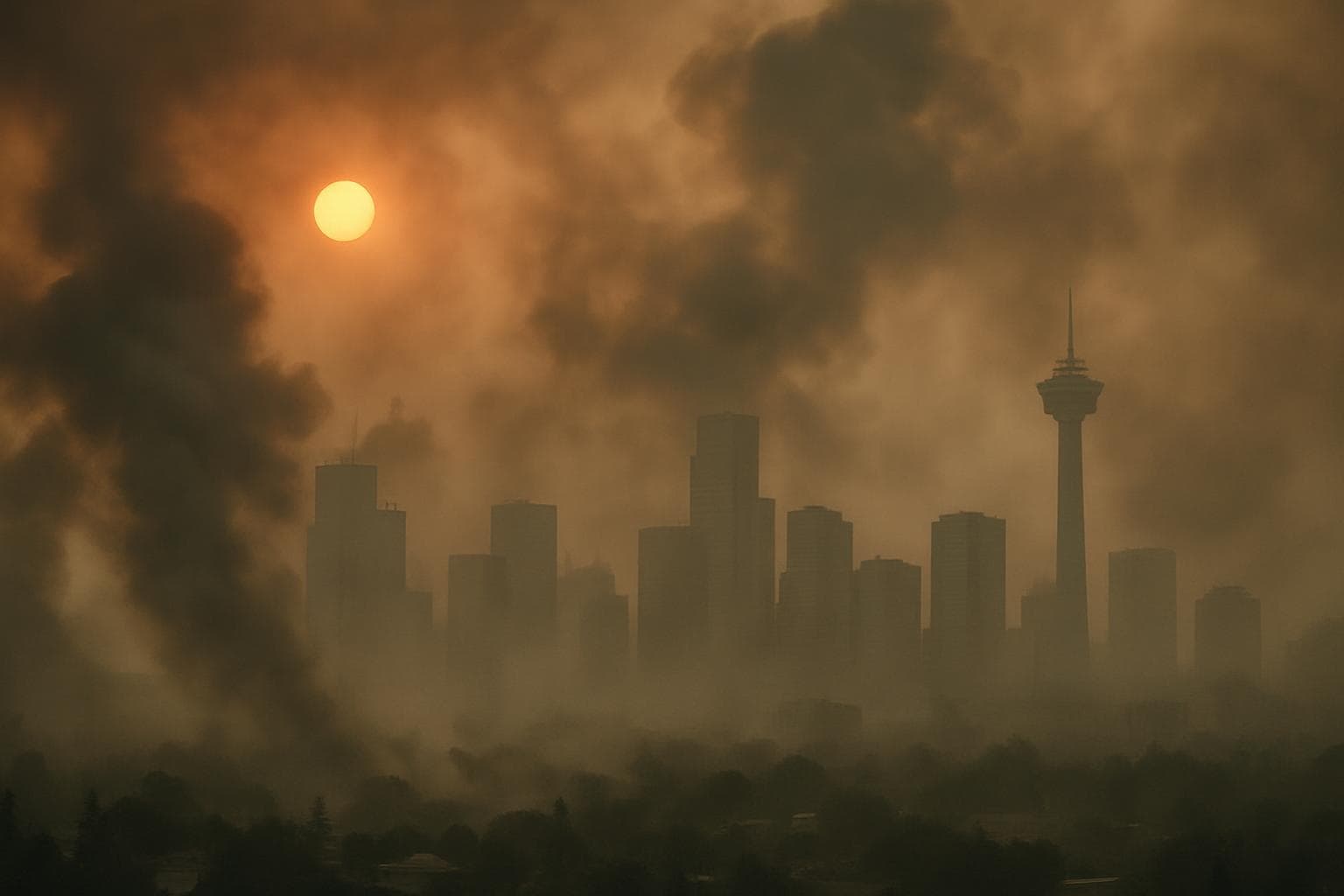
As wildfires continue to rage across Canada, air quality alerts have been issued in both Canada and the northern United States, prompting officials to urge residents to limit outdoor activities. Environment Canada has issued alerts for much of Ontario, with Toronto experiencing some of the worst air quality globally. In the US, similar warnings have been issued for Chicago, with additional precautions advised for vulnerable groups, including the elderly and infants.
Impact on Communities
The wildfires have forced thousands to evacuate in provinces such as Manitoba and Saskatchewan, where states of emergency have been declared. In Newfoundland, a fire on the Bonavista peninsula has doubled in size overnight, destroying several cabins. The National Weather Service in Chicago has warned of unhealthy ozone levels exacerbated by Canadian wildfire smoke.
Political Repercussions
The political ramifications of the wildfire smoke have reached Washington, where six Republican lawmakers have written to the Canadian ambassador, expressing concerns over the impact on American summer activities. Despite their complaints, these lawmakers recently supported a bill that increases fossil fuel incentives, a move criticized by environmental groups for exacerbating climate change.
Scientific Insights
Scientists have consistently linked the intensifying wildfire seasons to climate change, noting that Canada is warming at twice the global average rate. The US west has seen an eightfold increase in land burned by wildfires since the 1980s, contributing to worsening air quality. Research indicates that toxic wildfire smoke has caused significant health impacts, including 15,000 deaths in the US over a 15-year period.
WHAT THIS MIGHT MEAN
The ongoing wildfires and resulting air quality issues highlight the urgent need for coordinated environmental policies between Canada and the US. As climate change continues to drive more extreme weather events, both countries may face increasing pressure to implement sustainable practices and reduce reliance on fossil fuels. Experts suggest that without significant policy shifts, the frequency and intensity of wildfires will likely escalate, posing further risks to public health and safety. The political discourse surrounding these events may also influence future legislative decisions, potentially impacting US-Canada relations and global climate initiatives.
Related Articles

Canada Calls for De-escalation Amid US-Israel Strikes on Iran

Canada and Australia Forge Strategic Partnership Amid Global Uncertainty
Historic Nor'easter Storm Paralyzes US North-East with Blizzard Warnings and Travel Bans

China Sets Lowest GDP Growth Target in Decades Amid Economic Challenges
Cuba Faces Widespread Blackout Amid Deepening Fuel Crisis

UK Faces Dilemmas Amid Iran Conflict and China Spying Allegations
Wildfire Smoke Triggers Air Quality Alerts in Canada and US Amid Political Tensions
In This Article
HIGHLIGHTS
- Air quality alerts have been issued in Canada and the US due to smoke from ongoing wildfires, affecting regions like Toronto and Chicago.
- Canadian wildfires have forced thousands to evacuate, with significant fires in Manitoba, Saskatchewan, and Newfoundland.
- Six US Republican lawmakers have criticized Canada for the smoke, despite supporting a bill that increases fossil fuel production.
- Scientists link the intensifying wildfire seasons to climate change, with Canada warming at twice the global average rate.
- The US west has seen an eightfold increase in land burned by wildfires since the 1980s, exacerbating air quality issues.
As wildfires continue to rage across Canada, air quality alerts have been issued in both Canada and the northern United States, prompting officials to urge residents to limit outdoor activities. Environment Canada has issued alerts for much of Ontario, with Toronto experiencing some of the worst air quality globally. In the US, similar warnings have been issued for Chicago, with additional precautions advised for vulnerable groups, including the elderly and infants.
Impact on Communities
The wildfires have forced thousands to evacuate in provinces such as Manitoba and Saskatchewan, where states of emergency have been declared. In Newfoundland, a fire on the Bonavista peninsula has doubled in size overnight, destroying several cabins. The National Weather Service in Chicago has warned of unhealthy ozone levels exacerbated by Canadian wildfire smoke.
Political Repercussions
The political ramifications of the wildfire smoke have reached Washington, where six Republican lawmakers have written to the Canadian ambassador, expressing concerns over the impact on American summer activities. Despite their complaints, these lawmakers recently supported a bill that increases fossil fuel incentives, a move criticized by environmental groups for exacerbating climate change.
Scientific Insights
Scientists have consistently linked the intensifying wildfire seasons to climate change, noting that Canada is warming at twice the global average rate. The US west has seen an eightfold increase in land burned by wildfires since the 1980s, contributing to worsening air quality. Research indicates that toxic wildfire smoke has caused significant health impacts, including 15,000 deaths in the US over a 15-year period.
WHAT THIS MIGHT MEAN
The ongoing wildfires and resulting air quality issues highlight the urgent need for coordinated environmental policies between Canada and the US. As climate change continues to drive more extreme weather events, both countries may face increasing pressure to implement sustainable practices and reduce reliance on fossil fuels. Experts suggest that without significant policy shifts, the frequency and intensity of wildfires will likely escalate, posing further risks to public health and safety. The political discourse surrounding these events may also influence future legislative decisions, potentially impacting US-Canada relations and global climate initiatives.
Related Articles
Canada Calls for De-escalation Amid US-Israel Strikes on Iran
Canada and Australia Forge Strategic Partnership Amid Global Uncertainty
Historic Nor'easter Storm Paralyzes US North-East with Blizzard Warnings and Travel Bans
China Sets Lowest GDP Growth Target in Decades Amid Economic Challenges
Cuba Faces Widespread Blackout Amid Deepening Fuel Crisis
UK Faces Dilemmas Amid Iran Conflict and China Spying Allegations