
Air India Crash: Sole Survivor's Story and Families' Call for Government Action
In This Article
HIGHLIGHTS
- A tragic Air India crash in Ahmedabad claimed at least 270 lives, including 52 Britons, with only one survivor, Vishwash Kumar Ramesh.
- The crash involved a Boeing 787-8 Dreamliner, which plummeted shortly after takeoff, raising questions about its emergency systems.
- Families of victims, including the Nanabawa family, have criticized the UK government's response for being disorganized and lacking support.
- A joint funeral was held for three British victims, with community support raising over £50,000 in their memory.
- Investigators are examining the deployment of the ram air turbine (RAT), which suggests potential issues with the plane's engines.
The devastating crash of an Air India Boeing 787-8 Dreamliner in Ahmedabad has left a trail of grief and unanswered questions. The tragedy, which occurred on June 12, resulted in the deaths of at least 270 people, including 52 Britons. Among the victims were Akeel Nanabawa, Hannaa Vorajee, and their four-year-old daughter, Sara, who were laid to rest in a joint funeral in Gloucester.
Survivor's Miraculous Escape
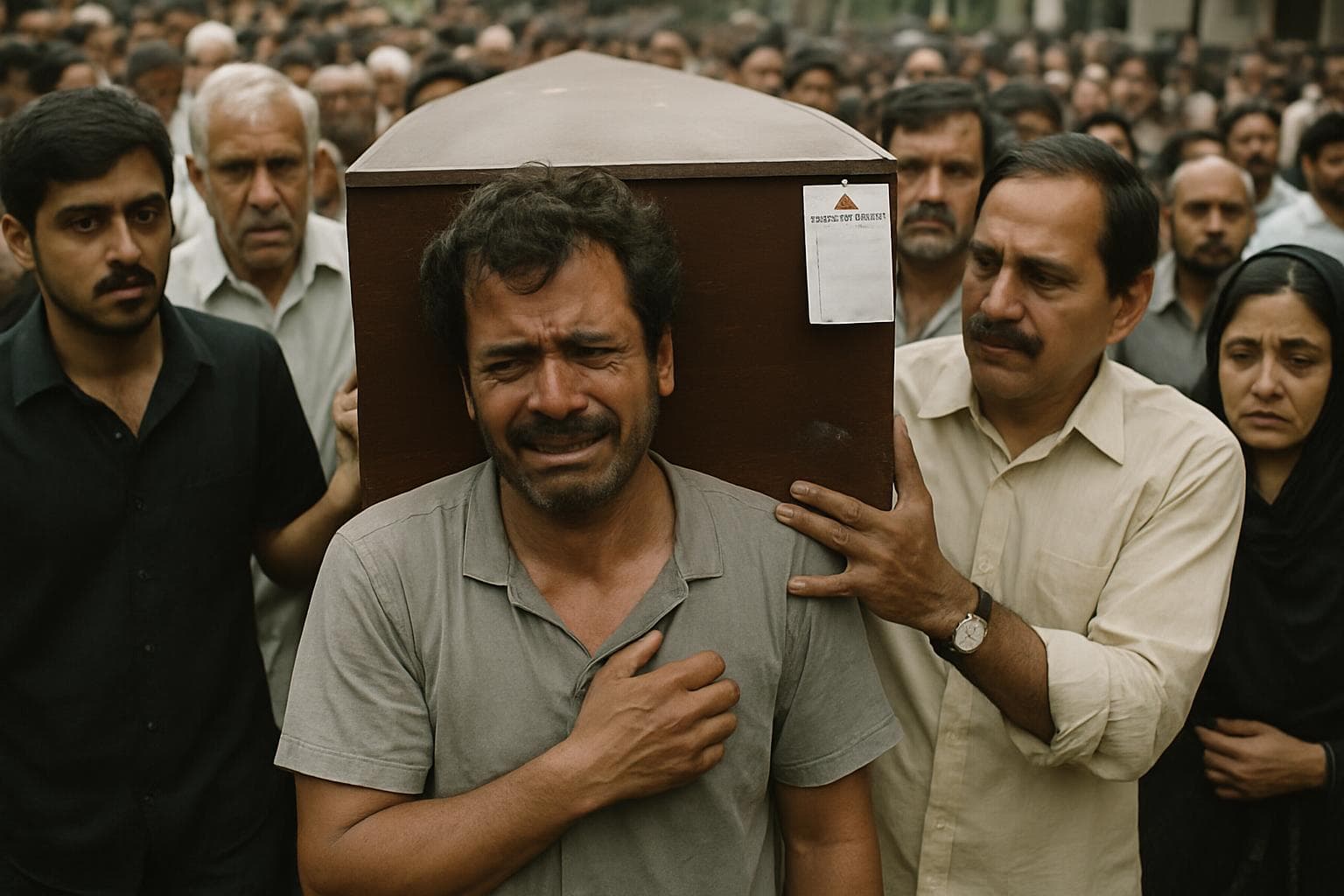
Vishwash Kumar Ramesh, the sole survivor, emerged from the wreckage with minor injuries. Despite his miraculous escape, Ramesh was visibly distraught as he carried his brother Ajay's coffin during a funeral procession in Diu. "It's a miracle I survived," he told The Sun, expressing his sorrow for not being able to save his brother.
Community Support and Criticism of Government Response
The Nanabawa family expressed gratitude for the community's support, which has raised over £50,000 in memory of the victims. However, they criticized the UK government for its "disorganized and understaffed" response, urging improvements in handling such crises. "Our families were left to navigate the process with minimal support," they stated, calling for better-equipped embassy personnel.
Investigation into Emergency Systems
As investigators delve into the crash, attention has turned to the plane's emergency systems. The deployment of the ram air turbine (RAT), a backup power source, has raised questions about the aircraft's engine performance during takeoff. While the RAT is designed to provide emergency electricity, its activation suggests potential issues with the engines, according to experts.
Funerals and Ongoing Grief
Funerals for other victims, including Faizan Rafik, have been held across India and the UK. Mourners gathered in Leicester to pay their respects, with family members expressing frustration over the lack of updates and support from authorities. "We need some kind of support from someone," said Rafik's cousin, Sameer.
WHAT THIS MIGHT MEAN
The investigation into the Air India crash is expected to be lengthy, with the focus on the plane's emergency systems potentially leading to broader aviation safety discussions. If the RAT deployment indicates engine failure, it could prompt reviews of Boeing 787 Dreamliner safety protocols. Meanwhile, the UK government's response to the tragedy may face scrutiny, potentially leading to policy changes in crisis management and support for citizens abroad. As families continue to grieve, their calls for accountability and improved support systems resonate, highlighting the need for compassionate and efficient government action in times of crisis.
Related Articles

UK Government to Reform Asylum Seeker Support and Employment Policies

UK Faces Dilemmas Amid Iran Conflict and China Spying Allegations
UK Reinforces Military Presence in Cyprus Amid Middle East Tensions

UK-Iran Tensions: Starmer Defends Cautious Approach Amid Trump Criticism
Persistent Safety Concerns in Nottingham Maternity Services Amidst Calls for Systemic Reform

Diplomatic Tensions Rise as Trump Criticizes Starmer's Iran Policy
Air India Crash: Sole Survivor's Story and Families' Call for Government Action
In This Article
 Ethan Brooks| Published
 HIGHLIGHTS
- A tragic Air India crash in Ahmedabad claimed at least 270 lives, including 52 Britons, with only one survivor, Vishwash Kumar Ramesh.
- The crash involved a Boeing 787-8 Dreamliner, which plummeted shortly after takeoff, raising questions about its emergency systems.
- Families of victims, including the Nanabawa family, have criticized the UK government's response for being disorganized and lacking support.
- A joint funeral was held for three British victims, with community support raising over £50,000 in their memory.
- Investigators are examining the deployment of the ram air turbine (RAT), which suggests potential issues with the plane's engines.
The devastating crash of an Air India Boeing 787-8 Dreamliner in Ahmedabad has left a trail of grief and unanswered questions. The tragedy, which occurred on June 12, resulted in the deaths of at least 270 people, including 52 Britons. Among the victims were Akeel Nanabawa, Hannaa Vorajee, and their four-year-old daughter, Sara, who were laid to rest in a joint funeral in Gloucester.
Survivor's Miraculous Escape
Vishwash Kumar Ramesh, the sole survivor, emerged from the wreckage with minor injuries. Despite his miraculous escape, Ramesh was visibly distraught as he carried his brother Ajay's coffin during a funeral procession in Diu. "It's a miracle I survived," he told The Sun, expressing his sorrow for not being able to save his brother.
Community Support and Criticism of Government Response
The Nanabawa family expressed gratitude for the community's support, which has raised over £50,000 in memory of the victims. However, they criticized the UK government for its "disorganized and understaffed" response, urging improvements in handling such crises. "Our families were left to navigate the process with minimal support," they stated, calling for better-equipped embassy personnel.
Investigation into Emergency Systems
As investigators delve into the crash, attention has turned to the plane's emergency systems. The deployment of the ram air turbine (RAT), a backup power source, has raised questions about the aircraft's engine performance during takeoff. While the RAT is designed to provide emergency electricity, its activation suggests potential issues with the engines, according to experts.
Funerals and Ongoing Grief
Funerals for other victims, including Faizan Rafik, have been held across India and the UK. Mourners gathered in Leicester to pay their respects, with family members expressing frustration over the lack of updates and support from authorities. "We need some kind of support from someone," said Rafik's cousin, Sameer.
WHAT THIS MIGHT MEAN
The investigation into the Air India crash is expected to be lengthy, with the focus on the plane's emergency systems potentially leading to broader aviation safety discussions. If the RAT deployment indicates engine failure, it could prompt reviews of Boeing 787 Dreamliner safety protocols. Meanwhile, the UK government's response to the tragedy may face scrutiny, potentially leading to policy changes in crisis management and support for citizens abroad. As families continue to grieve, their calls for accountability and improved support systems resonate, highlighting the need for compassionate and efficient government action in times of crisis.
Related Articles
UK Government to Reform Asylum Seeker Support and Employment Policies
UK Faces Dilemmas Amid Iran Conflict and China Spying Allegations
UK Reinforces Military Presence in Cyprus Amid Middle East Tensions
UK-Iran Tensions: Starmer Defends Cautious Approach Amid Trump Criticism
Persistent Safety Concerns in Nottingham Maternity Services Amidst Calls for Systemic Reform
Diplomatic Tensions Rise as Trump Criticizes Starmer's Iran Policy