
Air Pollution Significantly Increases Dementia Risk, Comprehensive Study Reveals
In This Article
HIGHLIGHTS
- A comprehensive study links long-term exposure to air pollution with a higher risk of dementia, analyzing data from over 29 million people.
- PM2.5, nitrogen dioxide, and soot are identified as key pollutants increasing dementia risk by 17%, 3%, and 13% respectively.
- Researchers call for stricter pollution controls and policy interventions targeting transport and industry sectors.
- The study highlights the need for diverse participant representation, as most data came from high-income countries.
- Experts emphasize the importance of interdisciplinary approaches in dementia prevention, involving urban planning and environmental regulation.
A groundbreaking study has established a significant link between long-term exposure to air pollution and an increased risk of developing dementia. Conducted by the Medical Research Council (MRC) Epidemiology Unit and the University of Cambridge, the research analyzed data from over 29 million individuals, making it the most comprehensive study of its kind.
Pollutants and Dementia Risk
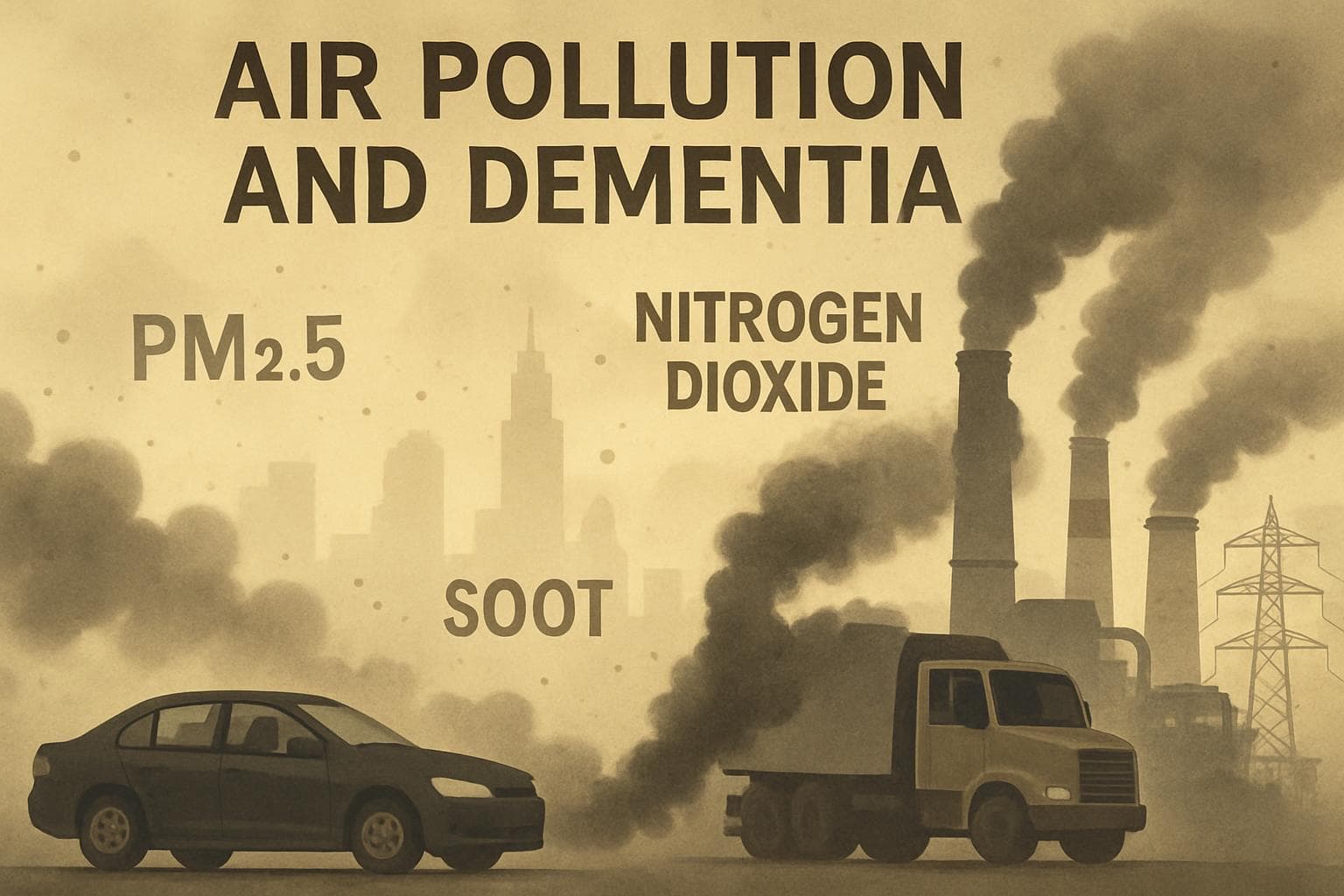
The study identified three primary pollutants—PM2.5, nitrogen dioxide, and soot—as major contributors to the heightened dementia risk. PM2.5, a particulate matter from vehicle emissions and industrial activities, was found to increase dementia risk by 17% for every 10 micrograms per cubic meter. Nitrogen dioxide, primarily from fossil fuel combustion, raised the risk by 3%, while soot, from sources like vehicle exhaust and wood burning, increased it by 13%.
Urgent Need for Policy Interventions
Researchers emphasized the urgent need for policy interventions to combat air pollution, particularly in high-income countries where most study participants resided. Clare Rogowski from the MRC Epidemiology Unit stated, "Stricter limits for several pollutants are likely to be necessary, targeting major contributors such as the transport and industry sectors."
Health and Social Implications
The study underscores the broader health implications of air pollution, linking it to inflammation and oxidative stress, which can damage brain cells and contribute to dementia. Dr. Haneen Khreis, a senior author of the study, noted that tackling air pollution could deliver long-term health, social, and economic benefits, reducing the burden on healthcare systems and families.
Call for Diverse Representation
Despite its extensive scope, the study acknowledged a limitation in participant diversity, as most data were drawn from white individuals in high-income countries. Researchers urged future studies to include more participants from marginalized backgrounds to ensure comprehensive understanding and policy development.
WHAT THIS MIGHT MEAN
The findings of this study could prompt significant policy shifts at regional, national, and international levels. Governments may implement stricter air quality regulations, focusing on reducing emissions from transportation and industrial sources. Additionally, urban planning could play a crucial role in mitigating pollution exposure, potentially influencing city designs and public transport systems.
Experts suggest that interdisciplinary collaboration will be vital in addressing the multifaceted challenge of dementia prevention. By integrating environmental health considerations into public health strategies, policymakers can work towards reducing the incidence of dementia and improving overall public health outcomes.
Related Articles



Air Pollution Significantly Increases Dementia Risk, Comprehensive Study Reveals
In This Article
 Maya Singh| Published
 HIGHLIGHTS
- A comprehensive study links long-term exposure to air pollution with a higher risk of dementia, analyzing data from over 29 million people.
- PM2.5, nitrogen dioxide, and soot are identified as key pollutants increasing dementia risk by 17%, 3%, and 13% respectively.
- Researchers call for stricter pollution controls and policy interventions targeting transport and industry sectors.
- The study highlights the need for diverse participant representation, as most data came from high-income countries.
- Experts emphasize the importance of interdisciplinary approaches in dementia prevention, involving urban planning and environmental regulation.
A groundbreaking study has established a significant link between long-term exposure to air pollution and an increased risk of developing dementia. Conducted by the Medical Research Council (MRC) Epidemiology Unit and the University of Cambridge, the research analyzed data from over 29 million individuals, making it the most comprehensive study of its kind.
Pollutants and Dementia Risk
The study identified three primary pollutants—PM2.5, nitrogen dioxide, and soot—as major contributors to the heightened dementia risk. PM2.5, a particulate matter from vehicle emissions and industrial activities, was found to increase dementia risk by 17% for every 10 micrograms per cubic meter. Nitrogen dioxide, primarily from fossil fuel combustion, raised the risk by 3%, while soot, from sources like vehicle exhaust and wood burning, increased it by 13%.
Urgent Need for Policy Interventions
Researchers emphasized the urgent need for policy interventions to combat air pollution, particularly in high-income countries where most study participants resided. Clare Rogowski from the MRC Epidemiology Unit stated, "Stricter limits for several pollutants are likely to be necessary, targeting major contributors such as the transport and industry sectors."
Health and Social Implications
The study underscores the broader health implications of air pollution, linking it to inflammation and oxidative stress, which can damage brain cells and contribute to dementia. Dr. Haneen Khreis, a senior author of the study, noted that tackling air pollution could deliver long-term health, social, and economic benefits, reducing the burden on healthcare systems and families.
Call for Diverse Representation
Despite its extensive scope, the study acknowledged a limitation in participant diversity, as most data were drawn from white individuals in high-income countries. Researchers urged future studies to include more participants from marginalized backgrounds to ensure comprehensive understanding and policy development.
WHAT THIS MIGHT MEAN
The findings of this study could prompt significant policy shifts at regional, national, and international levels. Governments may implement stricter air quality regulations, focusing on reducing emissions from transportation and industrial sources. Additionally, urban planning could play a crucial role in mitigating pollution exposure, potentially influencing city designs and public transport systems.
Experts suggest that interdisciplinary collaboration will be vital in addressing the multifaceted challenge of dementia prevention. By integrating environmental health considerations into public health strategies, policymakers can work towards reducing the incidence of dementia and improving overall public health outcomes.