
New Study Reveals Five Key Phases of Brain Development Across a Lifetime
In This Article
HIGHLIGHTS
- A study from the University of Cambridge identifies five distinct phases of brain development, with key turning points at ages nine, 32, 66, and 83.
- Adolescence, previously thought to end in the 20s, is now believed to extend into the early 30s, marking a period of increased neural efficiency.
- The research, involving nearly 4,000 brain scans, highlights the brain's structural journey as marked by major turning points rather than steady progression.
- Understanding these phases could provide insights into the varying risks of mental health disorders and dementia throughout life.
- The study's findings were published in the journal Nature Communications, emphasizing the importance of neural wiring efficiency and connectivity.
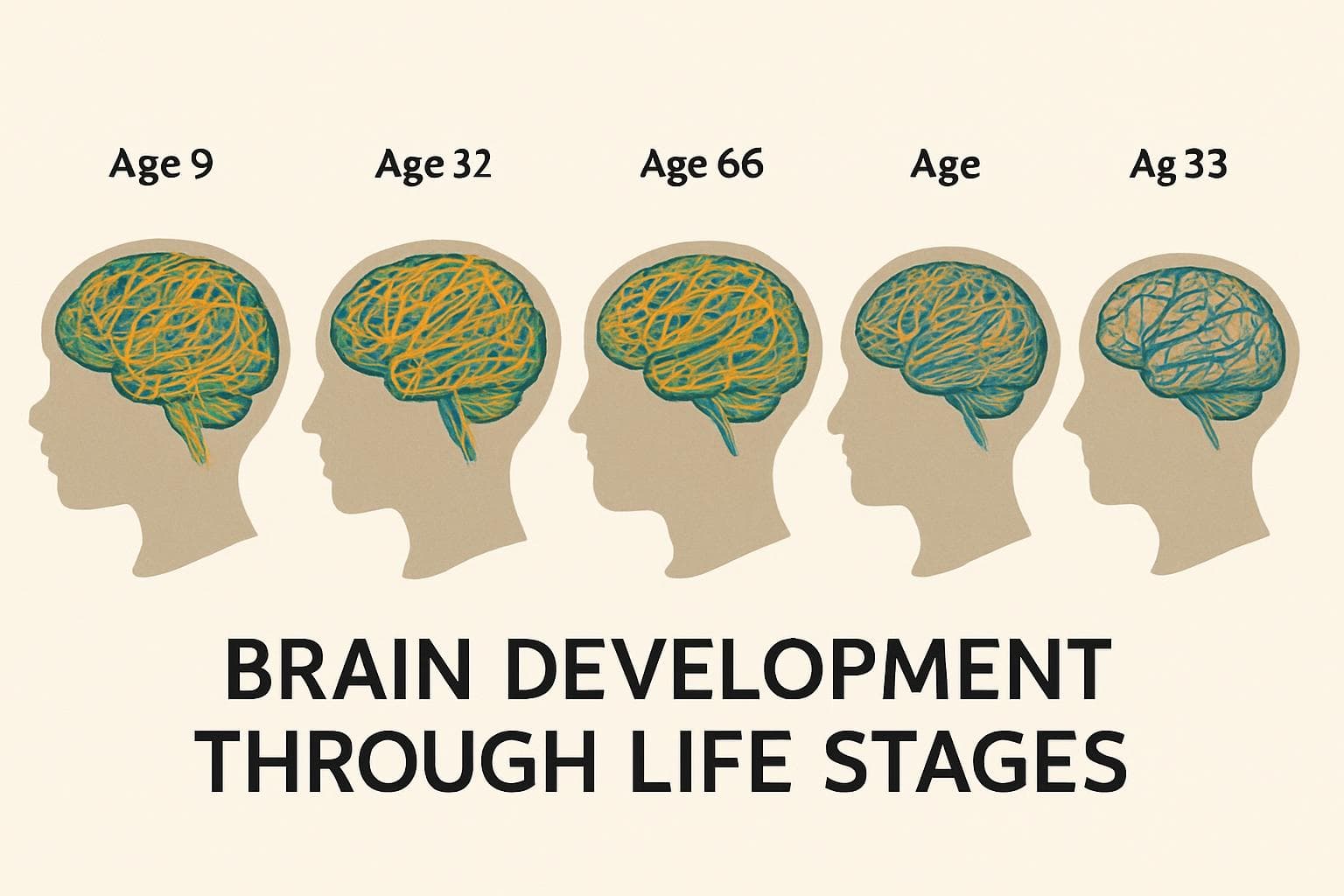
In a groundbreaking study, scientists from the University of Cambridge have mapped out five distinct phases of brain development, challenging previous assumptions about the timeline of adolescence and adulthood. The research, which analyzed nearly 4,000 brain scans from individuals aged under one to 90, identifies pivotal turning points in brain organization at ages nine, 32, 66, and 83.
Adolescence Extended into Early 30s
Traditionally, adolescence was thought to conclude in the late teens or early 20s. However, this new study suggests that the adolescent phase extends into the early 30s, a period characterized by increased neural efficiency. Dr. Alexa Mousley, the lead author, explains that this phase is marked by a significant shift in brain connectivity, which could explain the heightened risk of mental health disorders during this time.
Five Distinct Phases of Brain Development
The study outlines five major epochs of brain development: childhood (birth to age nine), adolescence (nine to 32), adulthood (32 to 66), early ageing (66 to 83), and late ageing (83 onwards). Each phase is defined by unique changes in neural wiring and brain architecture. For instance, childhood is a period of rapid growth and synaptic pruning, while adulthood is marked by stability and gradual decline in efficiency.
Implications for Mental Health and Cognitive Performance
The research provides valuable insights into how the brain's structural journey impacts mental health and cognitive performance. By understanding these phases, scientists hope to better identify when the brain is most vulnerable to disruptions, potentially leading to improved interventions for mental health disorders and dementia.
A New Perspective on Brain Architecture
Prof. Duncan Astle, a senior author of the study, emphasizes that the brain's development is not a linear progression but rather a series of major turning points. This perspective could revolutionize how we understand brain health across the lifespan, offering new avenues for research and treatment.
WHAT THIS MIGHT MEAN
The findings from this study could have significant implications for both neuroscience research and clinical practice. By redefining the timeline of adolescence and adulthood, scientists may develop more targeted interventions for mental health disorders that often emerge during these phases. Additionally, understanding the brain's vulnerability at different ages could lead to earlier detection and prevention strategies for cognitive decline and dementia. As research continues, these insights may pave the way for personalized approaches to brain health, tailored to the unique developmental trajectory of each individual.
Related Articles

Air Pollution Significantly Increases Dementia Risk, Comprehensive Study Reveals

UK Study to Explore Impact of Social Media Restrictions on Teen Mental Health

Humans Rank Among Top Monogamous Mammals, Study Finds

Parasocial Relationships: Cambridge Dictionary's Word of the Year Reflects Modern Connections

Great Barrier Reef's Future Hinges on Global Warming Limits, Study Finds
New Study Reveals Five Key Phases of Brain Development Across a Lifetime
In This Article
 Maya Singh| Published
 HIGHLIGHTS
- A study from the University of Cambridge identifies five distinct phases of brain development, with key turning points at ages nine, 32, 66, and 83.
- Adolescence, previously thought to end in the 20s, is now believed to extend into the early 30s, marking a period of increased neural efficiency.
- The research, involving nearly 4,000 brain scans, highlights the brain's structural journey as marked by major turning points rather than steady progression.
- Understanding these phases could provide insights into the varying risks of mental health disorders and dementia throughout life.
- The study's findings were published in the journal Nature Communications, emphasizing the importance of neural wiring efficiency and connectivity.
In a groundbreaking study, scientists from the University of Cambridge have mapped out five distinct phases of brain development, challenging previous assumptions about the timeline of adolescence and adulthood. The research, which analyzed nearly 4,000 brain scans from individuals aged under one to 90, identifies pivotal turning points in brain organization at ages nine, 32, 66, and 83.
Adolescence Extended into Early 30s
Traditionally, adolescence was thought to conclude in the late teens or early 20s. However, this new study suggests that the adolescent phase extends into the early 30s, a period characterized by increased neural efficiency. Dr. Alexa Mousley, the lead author, explains that this phase is marked by a significant shift in brain connectivity, which could explain the heightened risk of mental health disorders during this time.
Five Distinct Phases of Brain Development
The study outlines five major epochs of brain development: childhood (birth to age nine), adolescence (nine to 32), adulthood (32 to 66), early ageing (66 to 83), and late ageing (83 onwards). Each phase is defined by unique changes in neural wiring and brain architecture. For instance, childhood is a period of rapid growth and synaptic pruning, while adulthood is marked by stability and gradual decline in efficiency.
Implications for Mental Health and Cognitive Performance
The research provides valuable insights into how the brain's structural journey impacts mental health and cognitive performance. By understanding these phases, scientists hope to better identify when the brain is most vulnerable to disruptions, potentially leading to improved interventions for mental health disorders and dementia.
A New Perspective on Brain Architecture
Prof. Duncan Astle, a senior author of the study, emphasizes that the brain's development is not a linear progression but rather a series of major turning points. This perspective could revolutionize how we understand brain health across the lifespan, offering new avenues for research and treatment.
WHAT THIS MIGHT MEAN
The findings from this study could have significant implications for both neuroscience research and clinical practice. By redefining the timeline of adolescence and adulthood, scientists may develop more targeted interventions for mental health disorders that often emerge during these phases. Additionally, understanding the brain's vulnerability at different ages could lead to earlier detection and prevention strategies for cognitive decline and dementia. As research continues, these insights may pave the way for personalized approaches to brain health, tailored to the unique developmental trajectory of each individual.
Related Articles
Air Pollution Significantly Increases Dementia Risk, Comprehensive Study Reveals
UK Study to Explore Impact of Social Media Restrictions on Teen Mental Health
Humans Rank Among Top Monogamous Mammals, Study Finds
Parasocial Relationships: Cambridge Dictionary's Word of the Year Reflects Modern Connections
Great Barrier Reef's Future Hinges on Global Warming Limits, Study Finds