
AI's Dual Impact on London Jobs: Sadiq Khan's Call for Action
In This Article
HIGHLIGHTS
- Sadiq Khan warns that AI could lead to mass unemployment in London without proper controls and interventions.
- A taskforce will be established to assess AI's impact on jobs, with findings expected in the summer.
- City Hall polling indicates 56% of London workers expect AI to affect their jobs within the next year.
- AI offers potential benefits for public services and productivity but poses risks if used recklessly.
- Free AI training will be commissioned for Londoners to prepare for the changing job landscape.
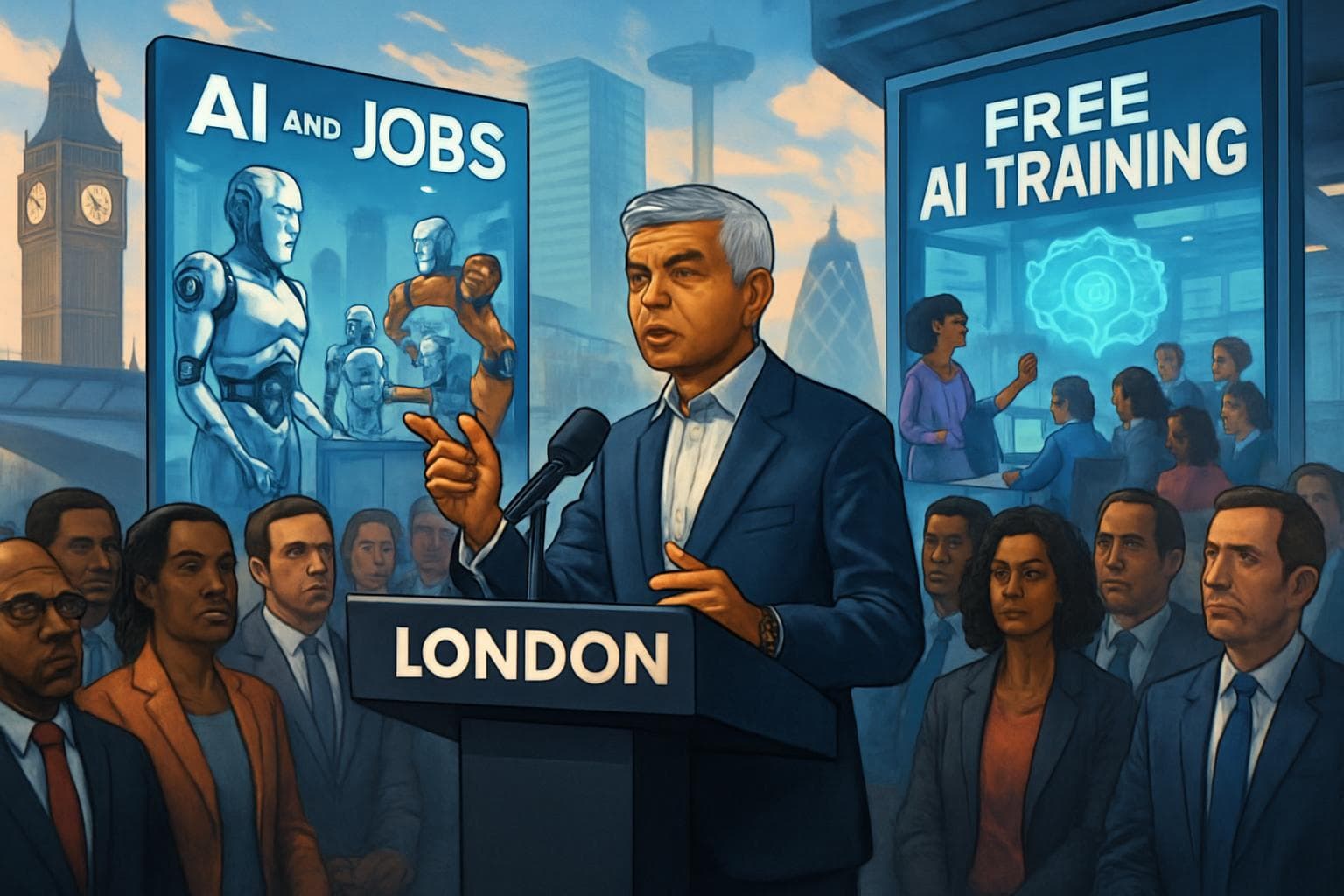
In a compelling address at Mansion House, London Mayor Sadiq Khan highlighted the urgent need for strategic action to manage the transformative impact of artificial intelligence (AI) on the city's labor market. Khan cautioned that without proper oversight, AI could become a "weapon of mass destruction of jobs," particularly affecting sectors like finance, professional services, and the creative industries.
AI's Potential and Perils
Khan emphasized the dual nature of AI, which, if harnessed correctly, could revolutionize public services and address complex issues such as cancer care and climate change. However, he warned that unchecked AI development might lead to mass unemployment and exacerbate social inequalities. "We mustn't drift into a future we didn't ask for," Khan stated, urging stakeholders to "seize the potential of AI" for positive transformation.
Taskforce and Training Initiatives
To address these challenges, Khan announced the formation of a taskforce comprising experts from government, the skills sector, and the AI industry. This group will evaluate AI's impact on jobs and propose strategies to support Londoners. Additionally, City Hall will offer free AI training to equip residents with essential skills for the future workforce.
Public Concerns and Government Response
Recent polling by City Hall revealed that 56% of London workers anticipate AI affecting their jobs within the next year. In response, a No 10 spokesperson highlighted ongoing efforts to train 7.5 million workers in AI skills, with new courses launching in April. This initiative aims to prepare the workforce for the evolving job market.
Broader Implications and Expert Opinions
While the potential for job displacement is significant, experts remain divided on AI's long-term impact. Reports from Anthropic and Forrester suggest that AI's effect on job markets may be less severe than anticipated, with human collaboration remaining crucial for complex tasks.
WHAT THIS MIGHT MEAN
As AI continues to evolve, its impact on the labor market will likely intensify, prompting further debate among policymakers, businesses, and workers. The taskforce's findings, due in the summer, will be pivotal in shaping London's approach to AI integration. If successful, these initiatives could serve as a model for other cities grappling with similar challenges. However, failure to act decisively may result in increased unemployment and social inequality, underscoring the importance of proactive measures and continuous dialogue among stakeholders.
Related Articles

Rachel Reeves Unveils £26bn Tax Hike to Address UK Cost of Living Crisis

Keir Starmer Faces Mounting Pressure Over Mandelson Scandal
Mandelson Faces Calls for Resignation Amid Epstein Document Scandal

Andy Burnham's By-Election Bid Sparks Labour Leadership Speculation
Court of Appeal Upholds Low Traffic Neighbourhoods in Tower Hamlets

Wes Streeting Urges Labour to Overcome 'Excuses Culture' in Public Service Reform
AI's Dual Impact on London Jobs: Sadiq Khan's Call for Action
In This Article
 Daniel Rivera| Published
 HIGHLIGHTS
- Sadiq Khan warns that AI could lead to mass unemployment in London without proper controls and interventions.
- A taskforce will be established to assess AI's impact on jobs, with findings expected in the summer.
- City Hall polling indicates 56% of London workers expect AI to affect their jobs within the next year.
- AI offers potential benefits for public services and productivity but poses risks if used recklessly.
- Free AI training will be commissioned for Londoners to prepare for the changing job landscape.
In a compelling address at Mansion House, London Mayor Sadiq Khan highlighted the urgent need for strategic action to manage the transformative impact of artificial intelligence (AI) on the city's labor market. Khan cautioned that without proper oversight, AI could become a "weapon of mass destruction of jobs," particularly affecting sectors like finance, professional services, and the creative industries.
AI's Potential and Perils
Khan emphasized the dual nature of AI, which, if harnessed correctly, could revolutionize public services and address complex issues such as cancer care and climate change. However, he warned that unchecked AI development might lead to mass unemployment and exacerbate social inequalities. "We mustn't drift into a future we didn't ask for," Khan stated, urging stakeholders to "seize the potential of AI" for positive transformation.
Taskforce and Training Initiatives
To address these challenges, Khan announced the formation of a taskforce comprising experts from government, the skills sector, and the AI industry. This group will evaluate AI's impact on jobs and propose strategies to support Londoners. Additionally, City Hall will offer free AI training to equip residents with essential skills for the future workforce.
Public Concerns and Government Response
Recent polling by City Hall revealed that 56% of London workers anticipate AI affecting their jobs within the next year. In response, a No 10 spokesperson highlighted ongoing efforts to train 7.5 million workers in AI skills, with new courses launching in April. This initiative aims to prepare the workforce for the evolving job market.
Broader Implications and Expert Opinions
While the potential for job displacement is significant, experts remain divided on AI's long-term impact. Reports from Anthropic and Forrester suggest that AI's effect on job markets may be less severe than anticipated, with human collaboration remaining crucial for complex tasks.
WHAT THIS MIGHT MEAN
As AI continues to evolve, its impact on the labor market will likely intensify, prompting further debate among policymakers, businesses, and workers. The taskforce's findings, due in the summer, will be pivotal in shaping London's approach to AI integration. If successful, these initiatives could serve as a model for other cities grappling with similar challenges. However, failure to act decisively may result in increased unemployment and social inequality, underscoring the importance of proactive measures and continuous dialogue among stakeholders.
Related Articles
Rachel Reeves Unveils £26bn Tax Hike to Address UK Cost of Living Crisis
Keir Starmer Faces Mounting Pressure Over Mandelson Scandal
Mandelson Faces Calls for Resignation Amid Epstein Document Scandal
Andy Burnham's By-Election Bid Sparks Labour Leadership Speculation
Court of Appeal Upholds Low Traffic Neighbourhoods in Tower Hamlets
Wes Streeting Urges Labour to Overcome 'Excuses Culture' in Public Service Reform