
Alberta Separatists' US Talks Stir Controversy Over Canadian Sovereignty
In This Article
HIGHLIGHTS
- Alberta separatists have engaged in talks with the Trump administration, sparking accusations of "treason" from Canadian officials.
- Alberta Premier Danielle Smith and Prime Minister Mark Carney urge the US to respect Canadian sovereignty amid these developments.
- The Alberta independence movement is gathering signatures for a potential referendum, aiming for 178,000 signatures.
- US Treasury Secretary Scott Bessent expressed support for Alberta's independence, citing the province's natural resources.
- Indigenous leaders warn against foreign interference, emphasizing the need for consultation with treaty holders.
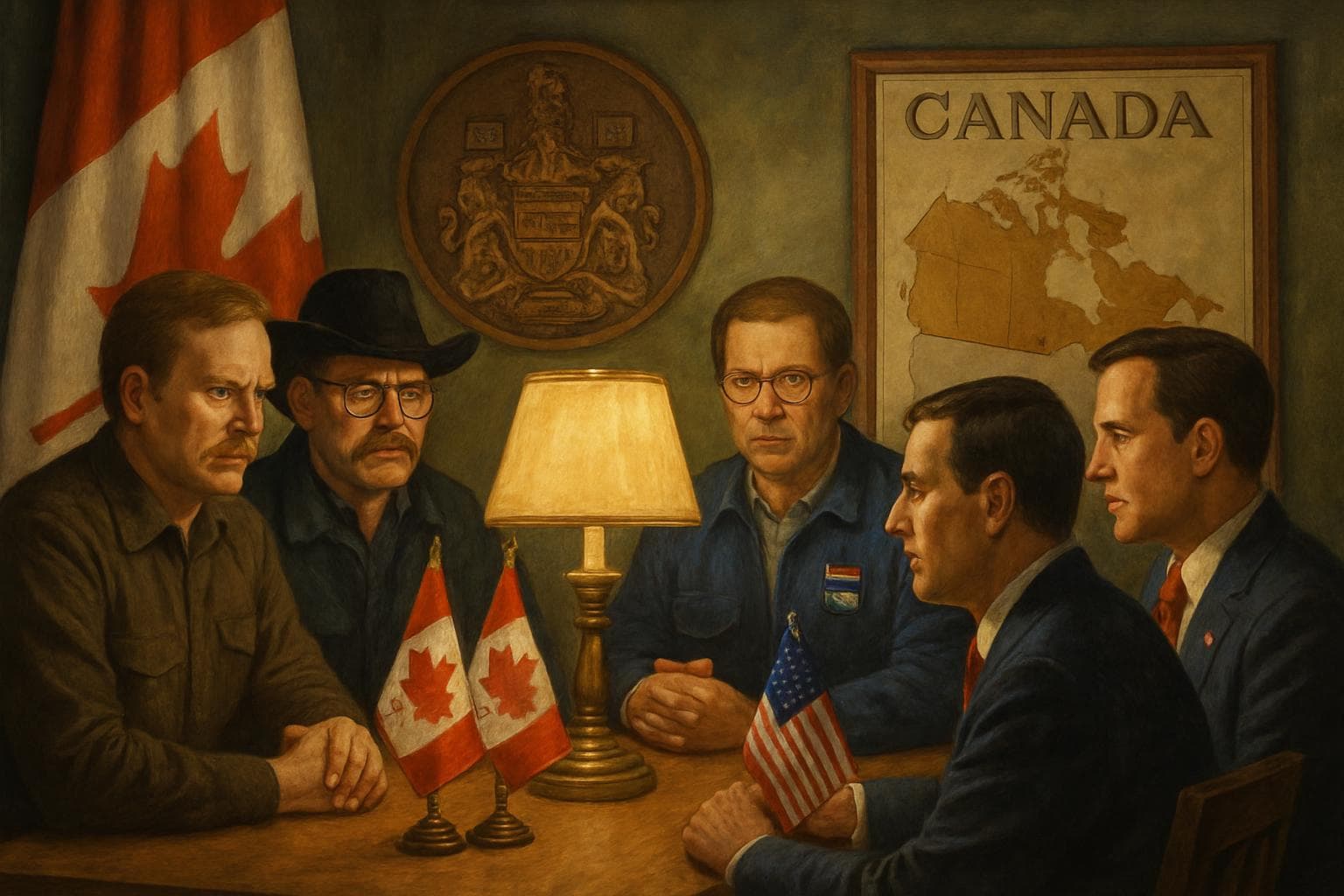
Recent revelations of covert meetings between Alberta separatists and members of the Trump administration have ignited a political firestorm in Canada. The meetings, first reported by the Financial Times, have prompted accusations of "treason" from British Columbia Premier David Eby, who criticized the separatists for seeking foreign assistance to break up Canada. "To go to a foreign country and ask for assistance in breaking up Canada, there's an old-fashioned word for that – and that word is treason," Eby stated.
Alberta Premier Danielle Smith and Prime Minister Mark Carney have both called for the US to respect Canadian sovereignty. Carney emphasized his expectations for the US administration to uphold this principle, while Smith reiterated her support for a "strong and sovereign Alberta within a united Canada." Despite this, Smith acknowledged the growing separatist sentiment, stating, "What we need to do is we need to give Albertans hope."
The Alberta independence movement, although still a minority, is actively collecting signatures to trigger a referendum on secession. Organizers aim to gather 178,000 signatures in the coming months. Jeffrey Rath, co-founder of the Alberta Prosperity Project, confirmed that his group has traveled to Washington on several occasions for what he described as a "fact-finding basis."
US Treasury Secretary Scott Bessent has publicly expressed support for Alberta's independence, citing the province's wealth of natural resources. "Alberta is a natural partner for the US. They have great resources," Bessent remarked in a recent interview.
Indigenous leaders in Alberta have voiced concerns about potential foreign interference in the referendum process. They stress that any move towards secession must involve consultation with treaty holders, whose agreements predate Alberta's establishment as a province.
WHAT THIS MIGHT MEAN
The unfolding situation between Alberta separatists and the Trump administration could have significant implications for US-Canada relations. If the separatists succeed in gathering enough signatures for a referendum, it could lead to heightened tensions within Canada and with its southern neighbor. The involvement of US officials in these discussions raises questions about foreign interference and the potential impact on Canada's political landscape.
Experts suggest that the Canadian government may need to strengthen its diplomatic efforts to ensure that international actors respect its sovereignty. Additionally, the role of Indigenous leaders and treaty holders will be crucial in any discussions about Alberta's future, as their historical agreements are integral to the province's legal framework.
As the situation develops, the Canadian government and Alberta's leadership will need to navigate these complex dynamics carefully, balancing regional aspirations with national unity and international diplomacy.
Related Articles
Canada and Australia Forge Strategic Partnership Amid Global Uncertainty
Canada Calls for De-escalation Amid US-Israel Strikes on Iran
Tech Giants Pledge to Cover AI Data Center Energy Costs Amid Rising Electricity Concerns
Violence Erupts Across Mexico Following Death of Drug Lord El Mencho

OpenAI's Missed Warning: Tumbler Ridge Shooting Raises Questions on AI's Role in Violence Prevention

Middle East Conflict Drives UK Energy Prices to New Highs
Alberta Separatists' US Talks Stir Controversy Over Canadian Sovereignty
In This Article
HIGHLIGHTS
- Alberta separatists have engaged in talks with the Trump administration, sparking accusations of "treason" from Canadian officials.
- Alberta Premier Danielle Smith and Prime Minister Mark Carney urge the US to respect Canadian sovereignty amid these developments.
- The Alberta independence movement is gathering signatures for a potential referendum, aiming for 178,000 signatures.
- US Treasury Secretary Scott Bessent expressed support for Alberta's independence, citing the province's natural resources.
- Indigenous leaders warn against foreign interference, emphasizing the need for consultation with treaty holders.
Recent revelations of covert meetings between Alberta separatists and members of the Trump administration have ignited a political firestorm in Canada. The meetings, first reported by the Financial Times, have prompted accusations of "treason" from British Columbia Premier David Eby, who criticized the separatists for seeking foreign assistance to break up Canada. "To go to a foreign country and ask for assistance in breaking up Canada, there's an old-fashioned word for that – and that word is treason," Eby stated.
Alberta Premier Danielle Smith and Prime Minister Mark Carney have both called for the US to respect Canadian sovereignty. Carney emphasized his expectations for the US administration to uphold this principle, while Smith reiterated her support for a "strong and sovereign Alberta within a united Canada." Despite this, Smith acknowledged the growing separatist sentiment, stating, "What we need to do is we need to give Albertans hope."
The Alberta independence movement, although still a minority, is actively collecting signatures to trigger a referendum on secession. Organizers aim to gather 178,000 signatures in the coming months. Jeffrey Rath, co-founder of the Alberta Prosperity Project, confirmed that his group has traveled to Washington on several occasions for what he described as a "fact-finding basis."
US Treasury Secretary Scott Bessent has publicly expressed support for Alberta's independence, citing the province's wealth of natural resources. "Alberta is a natural partner for the US. They have great resources," Bessent remarked in a recent interview.
Indigenous leaders in Alberta have voiced concerns about potential foreign interference in the referendum process. They stress that any move towards secession must involve consultation with treaty holders, whose agreements predate Alberta's establishment as a province.
WHAT THIS MIGHT MEAN
The unfolding situation between Alberta separatists and the Trump administration could have significant implications for US-Canada relations. If the separatists succeed in gathering enough signatures for a referendum, it could lead to heightened tensions within Canada and with its southern neighbor. The involvement of US officials in these discussions raises questions about foreign interference and the potential impact on Canada's political landscape.
Experts suggest that the Canadian government may need to strengthen its diplomatic efforts to ensure that international actors respect its sovereignty. Additionally, the role of Indigenous leaders and treaty holders will be crucial in any discussions about Alberta's future, as their historical agreements are integral to the province's legal framework.
As the situation develops, the Canadian government and Alberta's leadership will need to navigate these complex dynamics carefully, balancing regional aspirations with national unity and international diplomacy.
Related Articles
Canada and Australia Forge Strategic Partnership Amid Global Uncertainty
Canada Calls for De-escalation Amid US-Israel Strikes on Iran
Tech Giants Pledge to Cover AI Data Center Energy Costs Amid Rising Electricity Concerns
Violence Erupts Across Mexico Following Death of Drug Lord El Mencho
OpenAI's Missed Warning: Tumbler Ridge Shooting Raises Questions on AI's Role in Violence Prevention
Middle East Conflict Drives UK Energy Prices to New Highs