
AOL Bids Farewell to Dial-Up Internet After Three Decades
In This Article
HIGHLIGHTS
- AOL is discontinuing its dial-up internet service in the US and Canada as of September 30, 2023, marking the end of an era.
- At its peak, AOL had over 30 million subscribers and was a dominant internet service provider in the late 1990s and early 2000s.
- The decline of dial-up began with the introduction of faster broadband internet services, which now serve over 300 million users in the US.
- AOL's merger with Time Warner in 2000 was a significant event in media history but is often cited as a disastrous deal.
- AOL and Yahoo are currently owned by Apollo Global, following a series of acquisitions and mergers over the years.
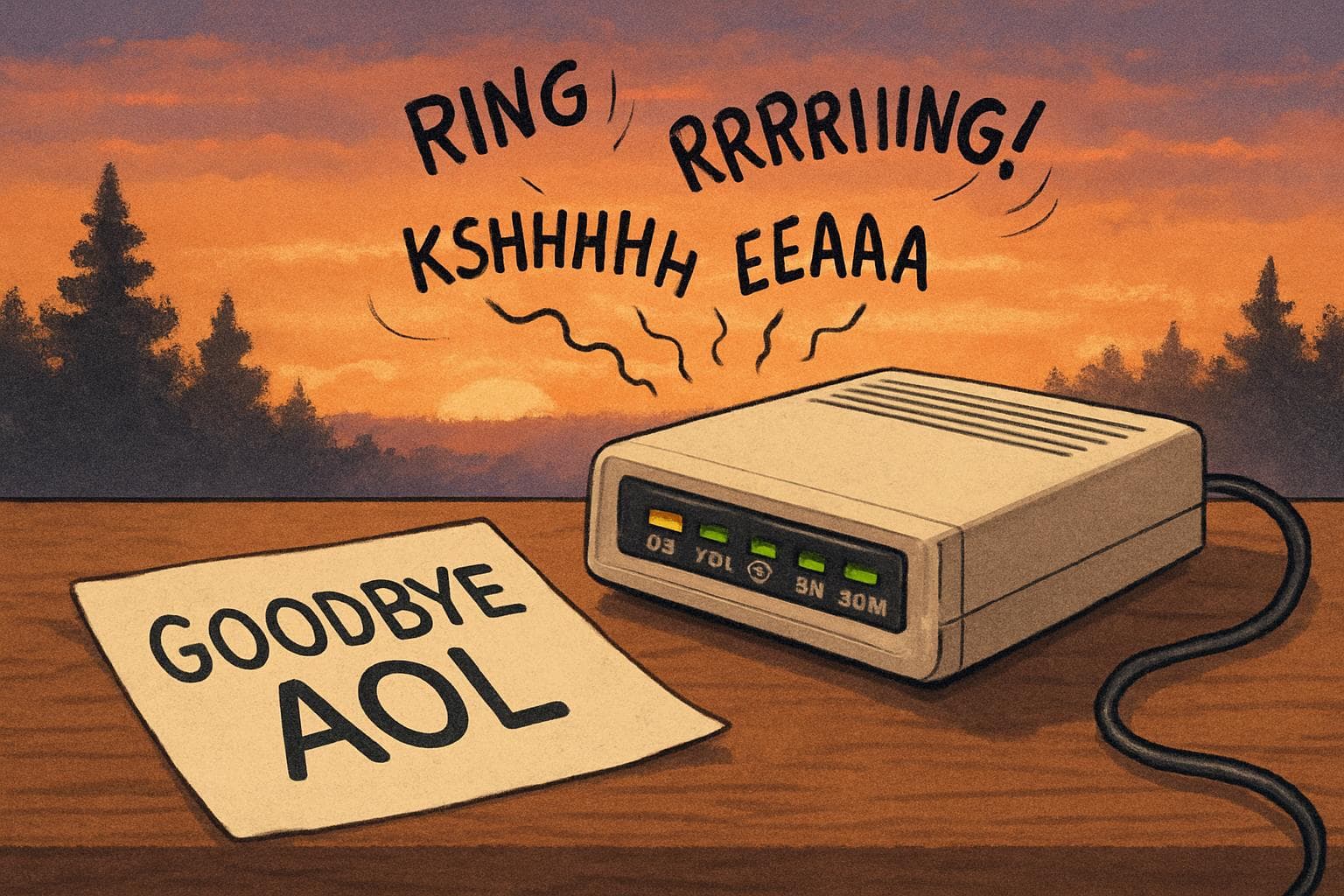
In a move that signifies the end of an era, AOL has announced the discontinuation of its dial-up internet service in the United States and Canada, effective September 30, 2023. This decision marks the closure of a chapter that introduced millions to the internet through the iconic sounds of modems connecting via phone lines.
A Legacy of Connection
AOL, or America Online, was a pioneering force in the digital world, launching its dial-up service in the mid-1980s. By the late 1990s and early 2000s, AOL had become the leading internet service provider in the US, boasting over 30 million subscribers. The company's distinctive "You've got mail" notification became a cultural touchstone, as did its strategy of distributing free trial discs to attract new users.
The Rise and Fall of Dial-Up
The advent of broadband internet in the mid-1990s, which offered faster and more reliable connections, began to overshadow dial-up services. Today, broadband serves over 300 million users in the US, while fewer than 300,000 households still rely on dial-up. AOL's decision to retire its dial-up service reflects the broader shift towards high-speed internet and the digital evolution that has transformed how people connect online.
A Notable Merger and Its Aftermath
In 2000, AOL merged with Time Warner in a $165 billion all-stock deal, a move that was initially seen as a groundbreaking convergence of media and technology. However, the merger is now often regarded as one of the most ill-fated in corporate history, as the anticipated synergies failed to materialize. AOL was eventually spun off from Time Warner in 2009, and in 2015, it was acquired by Verizon, which later merged it with Yahoo. Today, both AOL and Yahoo are owned by Apollo Global.
Nostalgia for a Bygone Era
The discontinuation of AOL's dial-up service is a poignant reminder of the rapid technological advancements that have reshaped the internet landscape. As digital nostalgia grows, the legacy of AOL's dial-up service remains a testament to the early days of online connectivity, when the internet was a novel frontier.
WHAT THIS MIGHT MEAN
The end of AOL's dial-up service underscores the relentless pace of technological change and the ongoing shift towards faster, more integrated digital solutions. As broadband and mobile internet continue to dominate, the focus may increasingly turn to emerging technologies such as 5G and AI-driven platforms, which promise to further revolutionize connectivity.
From a historical perspective, AOL's journey serves as a case study in the volatility of the tech industry, highlighting both the potential for rapid growth and the risks of strategic missteps. As the digital landscape evolves, companies must remain agile and forward-thinking to navigate the challenges and opportunities that lie ahead.
Related Articles

Canada Calls for De-escalation Amid US-Israel Strikes on Iran

China Sets Lowest GDP Growth Target in Decades Amid Economic Challenges
Canada and Australia Forge Strategic Partnership Amid Global Uncertainty

Cuba Faces Widespread Blackout Amid Deepening Fuel Crisis

UK Faces Dilemmas Amid Iran Conflict and China Spying Allegations

Google Faces Legal Battle Over AI Chatbot's Alleged Role in Tragic Death
AOL Bids Farewell to Dial-Up Internet After Three Decades
In This Article
 Daniel Rivera| Published
 HIGHLIGHTS
- AOL is discontinuing its dial-up internet service in the US and Canada as of September 30, 2023, marking the end of an era.
- At its peak, AOL had over 30 million subscribers and was a dominant internet service provider in the late 1990s and early 2000s.
- The decline of dial-up began with the introduction of faster broadband internet services, which now serve over 300 million users in the US.
- AOL's merger with Time Warner in 2000 was a significant event in media history but is often cited as a disastrous deal.
- AOL and Yahoo are currently owned by Apollo Global, following a series of acquisitions and mergers over the years.
In a move that signifies the end of an era, AOL has announced the discontinuation of its dial-up internet service in the United States and Canada, effective September 30, 2023. This decision marks the closure of a chapter that introduced millions to the internet through the iconic sounds of modems connecting via phone lines.
A Legacy of Connection
AOL, or America Online, was a pioneering force in the digital world, launching its dial-up service in the mid-1980s. By the late 1990s and early 2000s, AOL had become the leading internet service provider in the US, boasting over 30 million subscribers. The company's distinctive "You've got mail" notification became a cultural touchstone, as did its strategy of distributing free trial discs to attract new users.
The Rise and Fall of Dial-Up
The advent of broadband internet in the mid-1990s, which offered faster and more reliable connections, began to overshadow dial-up services. Today, broadband serves over 300 million users in the US, while fewer than 300,000 households still rely on dial-up. AOL's decision to retire its dial-up service reflects the broader shift towards high-speed internet and the digital evolution that has transformed how people connect online.
A Notable Merger and Its Aftermath
In 2000, AOL merged with Time Warner in a $165 billion all-stock deal, a move that was initially seen as a groundbreaking convergence of media and technology. However, the merger is now often regarded as one of the most ill-fated in corporate history, as the anticipated synergies failed to materialize. AOL was eventually spun off from Time Warner in 2009, and in 2015, it was acquired by Verizon, which later merged it with Yahoo. Today, both AOL and Yahoo are owned by Apollo Global.
Nostalgia for a Bygone Era
The discontinuation of AOL's dial-up service is a poignant reminder of the rapid technological advancements that have reshaped the internet landscape. As digital nostalgia grows, the legacy of AOL's dial-up service remains a testament to the early days of online connectivity, when the internet was a novel frontier.
WHAT THIS MIGHT MEAN
The end of AOL's dial-up service underscores the relentless pace of technological change and the ongoing shift towards faster, more integrated digital solutions. As broadband and mobile internet continue to dominate, the focus may increasingly turn to emerging technologies such as 5G and AI-driven platforms, which promise to further revolutionize connectivity.
From a historical perspective, AOL's journey serves as a case study in the volatility of the tech industry, highlighting both the potential for rapid growth and the risks of strategic missteps. As the digital landscape evolves, companies must remain agile and forward-thinking to navigate the challenges and opportunities that lie ahead.
Related Articles
Canada Calls for De-escalation Amid US-Israel Strikes on Iran
China Sets Lowest GDP Growth Target in Decades Amid Economic Challenges
Canada and Australia Forge Strategic Partnership Amid Global Uncertainty
Cuba Faces Widespread Blackout Amid Deepening Fuel Crisis
UK Faces Dilemmas Amid Iran Conflict and China Spying Allegations
Google Faces Legal Battle Over AI Chatbot's Alleged Role in Tragic Death