
Apple Challenges €500m EU Fine Over App Store Practices
In This Article
HIGHLIGHTS
- Apple is appealing a €500m fine imposed by the EU for alleged anti-competitive practices on its App Store.
- The European Commission claims Apple restricted app developers from directing users to alternative marketplaces.
- Apple argues the fine and imposed changes exceed legal requirements and complicate business terms.
- The fine is part of the EU's Digital Markets Act, targeting dominant "gatekeepers" like Apple and Meta.
- The case highlights ongoing tensions between US tech giants and EU regulatory frameworks.
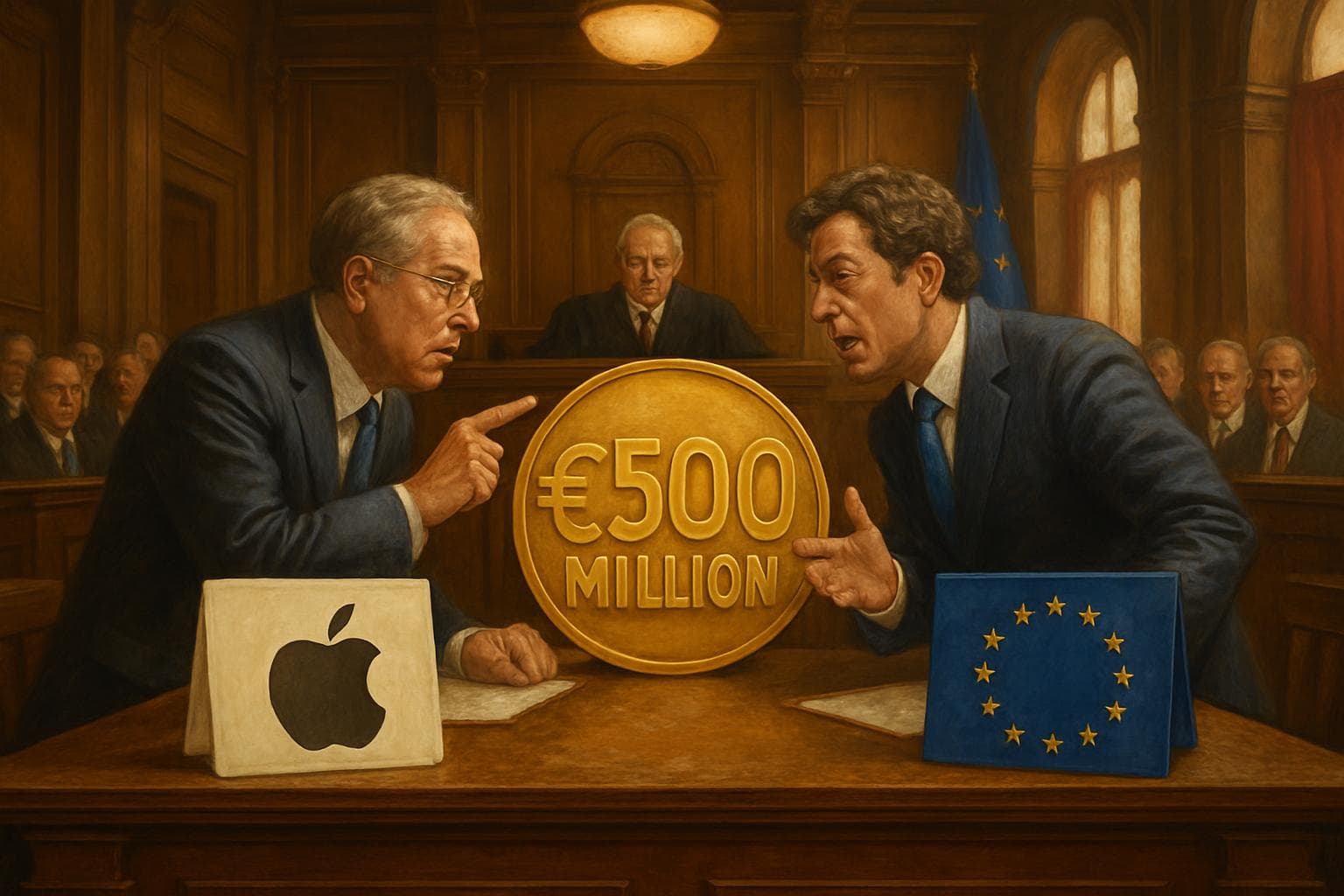
Apple has launched an appeal against a €500 million fine levied by the European Union, marking the latest chapter in the ongoing friction between major US tech companies and European regulators. The fine, imposed by the European Commission in April, accuses Apple of breaching the Digital Markets Act by restricting app developers' ability to guide users toward alternative marketplaces outside its App Store.
Allegations of Anti-Competitive Behavior
The European Commission, the EU's executive arm, contends that Apple's practices stifle competition by preventing developers from informing users about potentially cheaper deals available outside the App Store. In response, Apple has criticized the Commission's decision as "unprecedented," arguing that the imposed fine and required changes exceed what the law mandates. The company claims these changes introduce unnecessary complexity for both developers and users.
Apple's Defense and Legal Strategy
Apple has taken its case to the General Court, the EU's second highest judicial body, asserting that the Commission is overreaching by dictating how it should operate its App Store. "As our appeal will show, the [Commission] is mandating how we run our store and forcing business terms which are confusing for developers and bad for users," Apple stated. The tech giant has already adjusted its App Store policies to comply with the EU's demands, including implementing new fee structures to avoid daily fines of up to €50 million.
Broader Implications and Reactions
The fine against Apple is one of the first under the EU's Digital Markets Act, a landmark regulation aimed at curbing the dominance of major tech "gatekeepers." The Act imposes stringent obligations on companies like Apple and Meta, with potential fines reaching up to 10% of their annual global revenue for non-compliance. Henna Virkkunen, the Commission's vice-president for tech sovereignty, emphasized that the DMA is designed to foster free business and consumer choice.
The case has drawn international attention, with former US President Donald Trump criticizing the EU's regulatory approach as unfairly targeting American tech firms. His administration had previously expressed concerns over the EU's treatment of US companies, describing it as a form of "lawfare."
WHAT THIS MIGHT MEAN
The outcome of Apple's appeal could set a significant precedent for how the Digital Markets Act is enforced against other tech giants. If the General Court sides with Apple, it may embolden other companies to challenge EU regulations, potentially leading to a reevaluation of the DMA's scope and application. Conversely, if the court upholds the fine, it could strengthen the EU's regulatory stance, encouraging stricter oversight of tech companies operating within its jurisdiction. Experts suggest that this case underscores the growing regulatory scrutiny faced by US tech firms in Europe, which may influence future transatlantic trade negotiations and tech policy discussions.
Related Articles

Tech Giants Pledge to Cover AI Data Center Energy Costs Amid Rising Electricity Concerns

Spain's Sánchez Stands Firm Against Trump's Trade Threat Over Iran Stance

Congress Subpoenas Attorney General Bondi in Epstein Investigation

Cuba Faces Widespread Blackout Amid Deepening Fuel Crisis

Russian LNG Tanker Sinks in Mediterranean Amid Accusations of Ukrainian Drone Attack

UK Faces Dilemmas Amid Iran Conflict and China Spying Allegations
Apple Challenges €500m EU Fine Over App Store Practices
In This Article
 Alex Carter| Published
 HIGHLIGHTS
- Apple is appealing a €500m fine imposed by the EU for alleged anti-competitive practices on its App Store.
- The European Commission claims Apple restricted app developers from directing users to alternative marketplaces.
- Apple argues the fine and imposed changes exceed legal requirements and complicate business terms.
- The fine is part of the EU's Digital Markets Act, targeting dominant "gatekeepers" like Apple and Meta.
- The case highlights ongoing tensions between US tech giants and EU regulatory frameworks.
Apple has launched an appeal against a €500 million fine levied by the European Union, marking the latest chapter in the ongoing friction between major US tech companies and European regulators. The fine, imposed by the European Commission in April, accuses Apple of breaching the Digital Markets Act by restricting app developers' ability to guide users toward alternative marketplaces outside its App Store.
Allegations of Anti-Competitive Behavior
The European Commission, the EU's executive arm, contends that Apple's practices stifle competition by preventing developers from informing users about potentially cheaper deals available outside the App Store. In response, Apple has criticized the Commission's decision as "unprecedented," arguing that the imposed fine and required changes exceed what the law mandates. The company claims these changes introduce unnecessary complexity for both developers and users.
Apple's Defense and Legal Strategy
Apple has taken its case to the General Court, the EU's second highest judicial body, asserting that the Commission is overreaching by dictating how it should operate its App Store. "As our appeal will show, the [Commission] is mandating how we run our store and forcing business terms which are confusing for developers and bad for users," Apple stated. The tech giant has already adjusted its App Store policies to comply with the EU's demands, including implementing new fee structures to avoid daily fines of up to €50 million.
Broader Implications and Reactions
The fine against Apple is one of the first under the EU's Digital Markets Act, a landmark regulation aimed at curbing the dominance of major tech "gatekeepers." The Act imposes stringent obligations on companies like Apple and Meta, with potential fines reaching up to 10% of their annual global revenue for non-compliance. Henna Virkkunen, the Commission's vice-president for tech sovereignty, emphasized that the DMA is designed to foster free business and consumer choice.
The case has drawn international attention, with former US President Donald Trump criticizing the EU's regulatory approach as unfairly targeting American tech firms. His administration had previously expressed concerns over the EU's treatment of US companies, describing it as a form of "lawfare."
WHAT THIS MIGHT MEAN
The outcome of Apple's appeal could set a significant precedent for how the Digital Markets Act is enforced against other tech giants. If the General Court sides with Apple, it may embolden other companies to challenge EU regulations, potentially leading to a reevaluation of the DMA's scope and application. Conversely, if the court upholds the fine, it could strengthen the EU's regulatory stance, encouraging stricter oversight of tech companies operating within its jurisdiction. Experts suggest that this case underscores the growing regulatory scrutiny faced by US tech firms in Europe, which may influence future transatlantic trade negotiations and tech policy discussions.
Related Articles
Tech Giants Pledge to Cover AI Data Center Energy Costs Amid Rising Electricity Concerns
Spain's Sánchez Stands Firm Against Trump's Trade Threat Over Iran Stance
Congress Subpoenas Attorney General Bondi in Epstein Investigation
Cuba Faces Widespread Blackout Amid Deepening Fuel Crisis
Russian LNG Tanker Sinks in Mediterranean Amid Accusations of Ukrainian Drone Attack
UK Faces Dilemmas Amid Iran Conflict and China Spying Allegations