
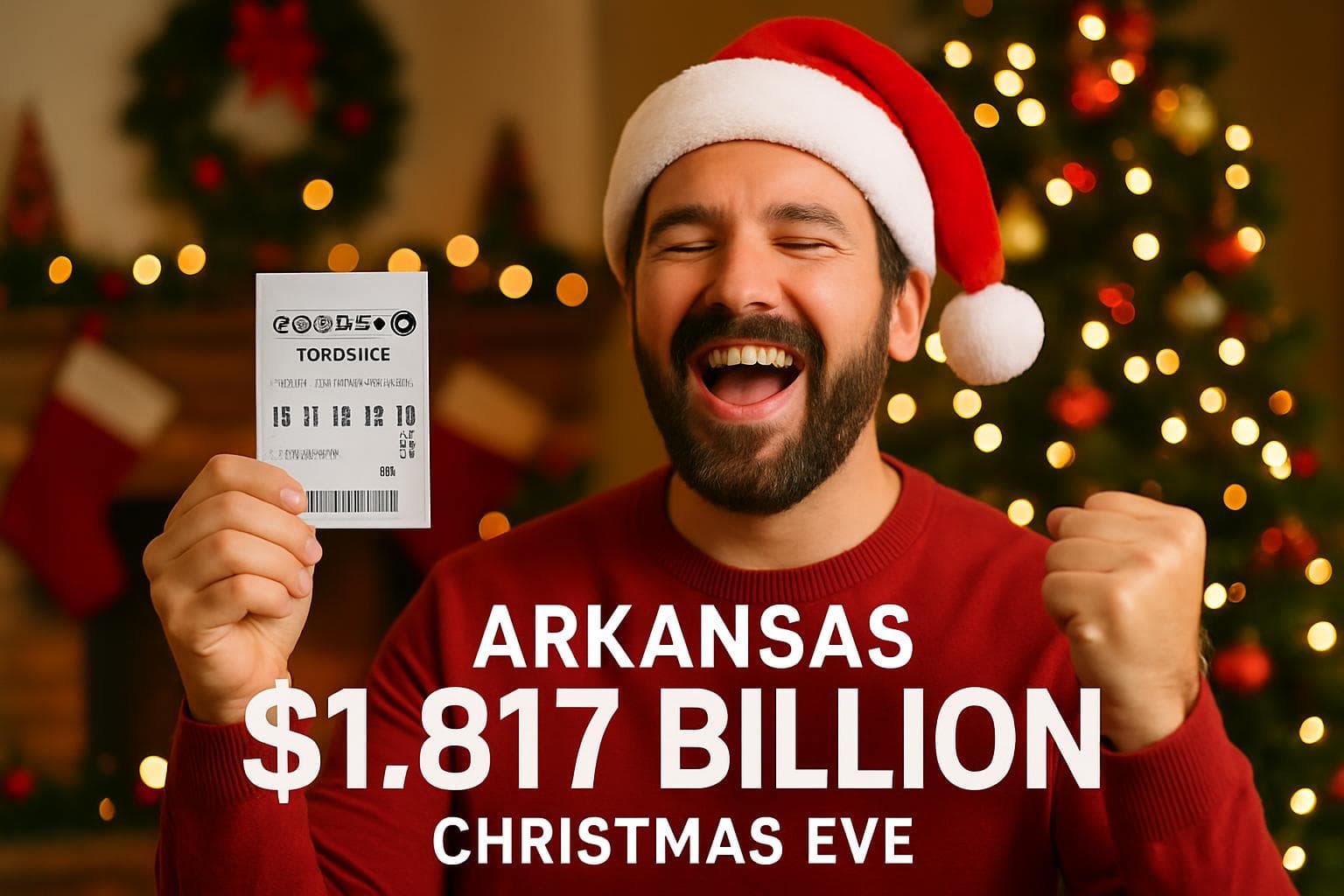
Arkansas Player Wins $1.817 Billion Powerball Jackpot on Christmas Eve
In This Article
HIGHLIGHTS
- An Arkansas Powerball player won a $1.817 billion jackpot on Christmas Eve, marking the second-largest lottery prize in US history.
- The winning ticket matched all six numbers, offering a lump-sum cash option of $834.9 million.
- This win ended a three-month streak without a top-prize winner, with the last jackpot claimed on September 6.
- Powerball's odds of winning the jackpot are 1 in 292.2 million, with tickets costing $2 each.
- The winnings are subject to federal taxes between 24% and 37%, and potentially state taxes.
In a remarkable stroke of luck, a Powerball player from Arkansas has claimed a staggering $1.817 billion jackpot during the Christmas Eve drawing, making it the second-largest lottery prize ever won in the United States. The winning ticket, which matched all six numbers—4, 25, 31, 52, 59, and the red Powerball 19—offers the winner the choice of a lump-sum cash payment of $834.9 million.
Historic Win Ends Jackpot Drought
This monumental win concludes a three-month period without a top-prize winner, with the last jackpot being claimed on September 6 by players in Missouri and Texas. The Powerball game, which began in 1992, is played across 45 states, Washington D.C., Puerto Rico, and the US Virgin Islands. The odds of winning the jackpot stand at a daunting 1 in 292.2 million, yet the allure of such life-changing sums continues to draw players nationwide.
Economic Impact and Tax Implications
The Powerball jackpot's growth is fueled by ticket sales, which also support public programs and services across the country. Tickets are priced at $2 each, and the game is designed to generate massive jackpots by rolling over when no one wins. The winnings are subject to federal taxes ranging from 24% to 37%, with additional state taxes potentially applying, depending on the winner's location.
A Tradition of Holiday Wins
Interestingly, this is not the first time a Powerball jackpot has been won on Christmas Eve; the last occurrence was in 2011. The game has also seen winners on Christmas Day four times, most recently in 2013. As the Powerball continues to capture the public's imagination, players like Indianapolis glass artist Chris Winters express the sentiment of many: "With the prize so high, I just bought one kind of impulsively. Why not?"
WHAT THIS MIGHT MEAN
The recent Powerball win in Arkansas could spark renewed interest in lottery games, potentially increasing ticket sales and contributing further to public programs funded by these revenues. As the winner decides between a lump-sum payment or an annuity, financial advisors will likely emphasize the importance of careful planning to manage such a substantial windfall. Additionally, this win may prompt discussions on the impact of lottery winnings on personal finances and the broader economy, as well as the ethical considerations of state-sponsored gambling.
Related Articles

China Sets Lowest GDP Growth Target in Decades Amid Economic Challenges

Cuba Faces Widespread Blackout Amid Deepening Fuel Crisis

UK Faces Dilemmas Amid Iran Conflict and China Spying Allegations

Google Faces Legal Battle Over AI Chatbot's Alleged Role in Tragic Death

Iran Postpones Khamenei Funeral Amid Escalating US-Israeli Strikes

James Talarico Secures Democratic Nomination in Texas Senate Race Amidst Republican Runoff
Arkansas Player Wins $1.817 Billion Powerball Jackpot on Christmas Eve
In This Article
 Marcus Blake| Published
 HIGHLIGHTS
- An Arkansas Powerball player won a $1.817 billion jackpot on Christmas Eve, marking the second-largest lottery prize in US history.
- The winning ticket matched all six numbers, offering a lump-sum cash option of $834.9 million.
- This win ended a three-month streak without a top-prize winner, with the last jackpot claimed on September 6.
- Powerball's odds of winning the jackpot are 1 in 292.2 million, with tickets costing $2 each.
- The winnings are subject to federal taxes between 24% and 37%, and potentially state taxes.
In a remarkable stroke of luck, a Powerball player from Arkansas has claimed a staggering $1.817 billion jackpot during the Christmas Eve drawing, making it the second-largest lottery prize ever won in the United States. The winning ticket, which matched all six numbers—4, 25, 31, 52, 59, and the red Powerball 19—offers the winner the choice of a lump-sum cash payment of $834.9 million.
Historic Win Ends Jackpot Drought
This monumental win concludes a three-month period without a top-prize winner, with the last jackpot being claimed on September 6 by players in Missouri and Texas. The Powerball game, which began in 1992, is played across 45 states, Washington D.C., Puerto Rico, and the US Virgin Islands. The odds of winning the jackpot stand at a daunting 1 in 292.2 million, yet the allure of such life-changing sums continues to draw players nationwide.
Economic Impact and Tax Implications
The Powerball jackpot's growth is fueled by ticket sales, which also support public programs and services across the country. Tickets are priced at $2 each, and the game is designed to generate massive jackpots by rolling over when no one wins. The winnings are subject to federal taxes ranging from 24% to 37%, with additional state taxes potentially applying, depending on the winner's location.
A Tradition of Holiday Wins
Interestingly, this is not the first time a Powerball jackpot has been won on Christmas Eve; the last occurrence was in 2011. The game has also seen winners on Christmas Day four times, most recently in 2013. As the Powerball continues to capture the public's imagination, players like Indianapolis glass artist Chris Winters express the sentiment of many: "With the prize so high, I just bought one kind of impulsively. Why not?"
WHAT THIS MIGHT MEAN
The recent Powerball win in Arkansas could spark renewed interest in lottery games, potentially increasing ticket sales and contributing further to public programs funded by these revenues. As the winner decides between a lump-sum payment or an annuity, financial advisors will likely emphasize the importance of careful planning to manage such a substantial windfall. Additionally, this win may prompt discussions on the impact of lottery winnings on personal finances and the broader economy, as well as the ethical considerations of state-sponsored gambling.
Related Articles
China Sets Lowest GDP Growth Target in Decades Amid Economic Challenges
Cuba Faces Widespread Blackout Amid Deepening Fuel Crisis
UK Faces Dilemmas Amid Iran Conflict and China Spying Allegations
Google Faces Legal Battle Over AI Chatbot's Alleged Role in Tragic Death
Iran Postpones Khamenei Funeral Amid Escalating US-Israeli Strikes
James Talarico Secures Democratic Nomination in Texas Senate Race Amidst Republican Runoff