
Bad Bunny's Super Bowl Show: A Celebration of Puerto Rican Culture and Unity
In This Article
HIGHLIGHTS
- Bad Bunny's Super Bowl halftime show celebrated Puerto Rican culture and unity, marking the first all Spanish-language performance.
- The show included guest appearances from Lady Gaga and Ricky Martin, emphasizing a message of American unity.
- Bad Bunny subtly addressed political themes, such as Hurricane Maria and immigration, without directly criticizing the Trump administration.
- The performance was a cultural milestone, highlighting Latino representation on a global stage.
- The artist's set was a vibrant display of Puerto Rican pride, featuring traditional elements and personal tributes.
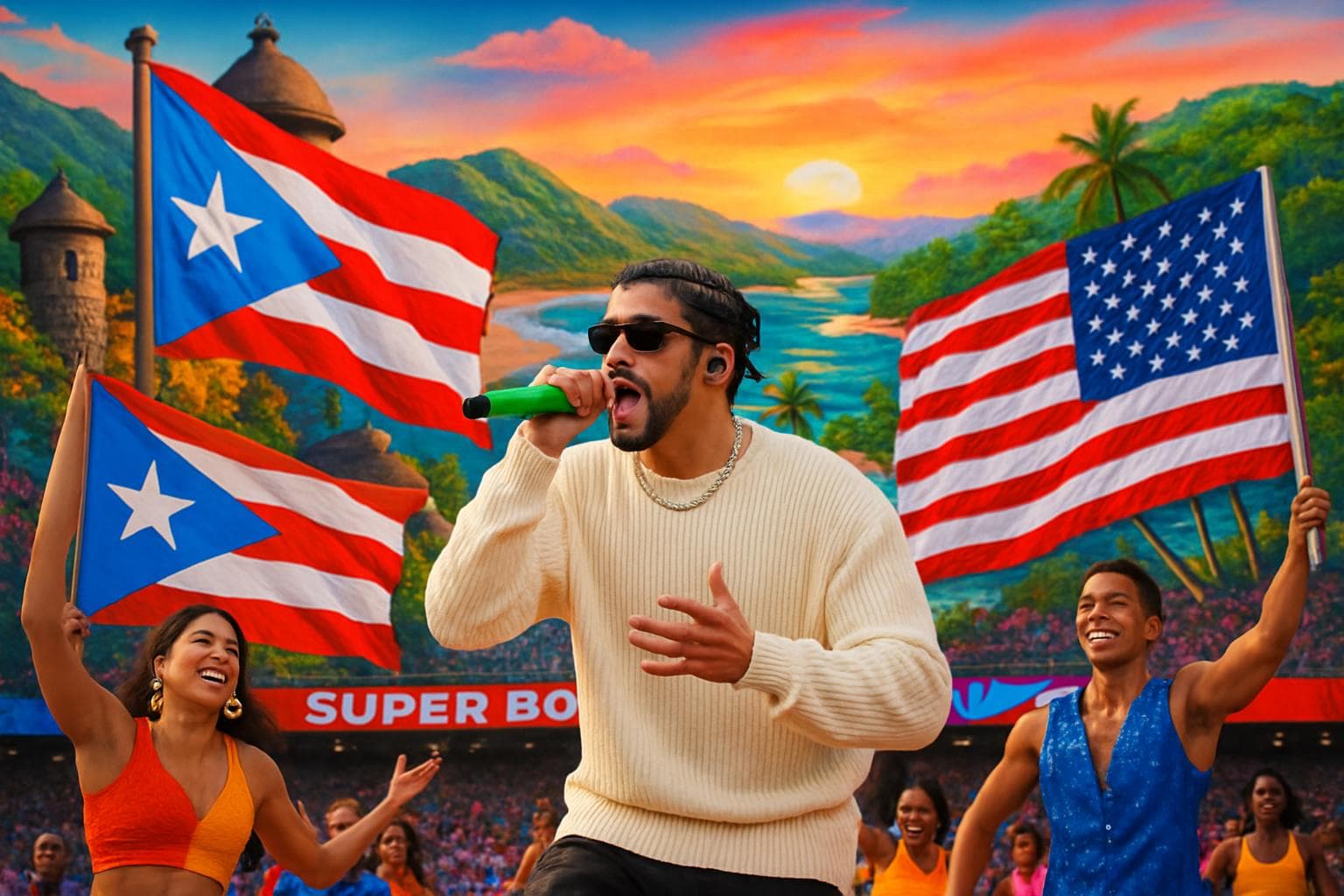
Bad Bunny delivered a groundbreaking performance at the Super Bowl halftime show, transforming Levi's Stadium in Santa Clara into a vibrant celebration of Puerto Rican culture and unity. The 13-minute set, performed entirely in Spanish, was a historic first, featuring guest appearances from music icons Lady Gaga and Ricky Martin.
A Cultural Milestone
The Puerto Rican artist, born Benito Antonio Martínez Ocasio, used the global platform to honor his roots and promote a message of American unity. With a backdrop of Puerto Rican landscapes and traditional elements, Bad Bunny performed a medley of his hits, including "Tití Me Preguntó" and "MONACO." His performance was a testament to Latino representation, resonating with millions of viewers worldwide.
Subtle Political Undertones
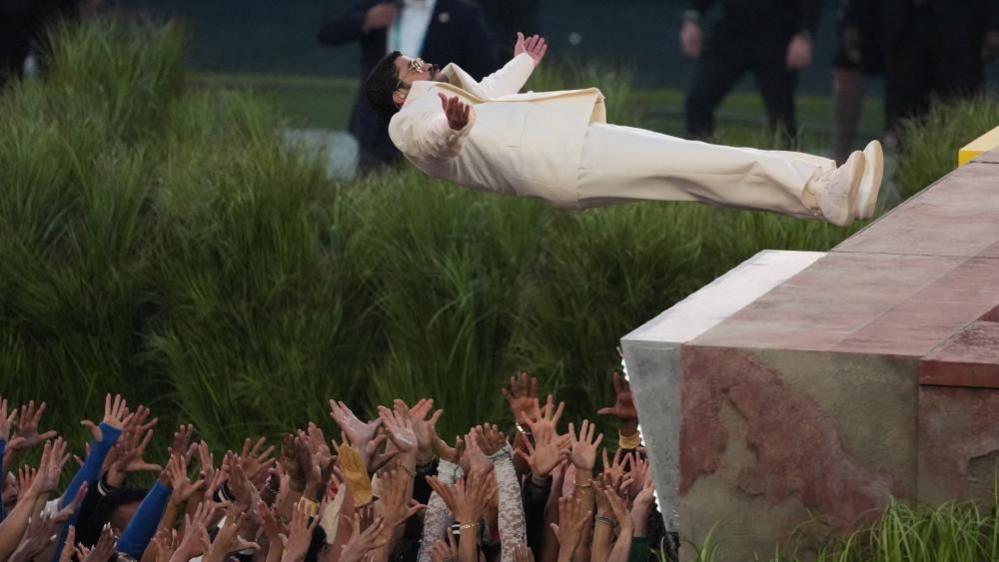
While the show was primarily a celebration, it also carried subtle political undertones. Bad Bunny paid tribute to the victims of Hurricane Maria by climbing an electricity pylon, symbolizing the storm's devastating impact on Puerto Rico's infrastructure. His outfit, emblazoned with the number 64, referenced the official death toll, a number widely criticized for underestimating the true loss of life.
A Message of Unity
Throughout the performance, Bad Bunny emphasized unity, with messages like "Together, We Are America" displayed prominently. This theme was further highlighted by the presence of a Puerto Rican flag alongside a US flag, symbolizing solidarity amidst political tensions. Despite expectations of direct criticism, the artist refrained from targeting the Trump administration, focusing instead on a broader message of love and togetherness.
Latino Representation on a Global Stage
Bad Bunny's performance was a significant cultural moment, showcasing the power of music as a form of resistance and celebration. His ability to blend political themes with vibrant entertainment underscored the importance of Latino voices in mainstream media. As Vanessa Díaz, co-author of "P FKN R: How Bad Bunny Became the Global Voice of Puerto Rican Resistance," noted, his artistry reflects a long tradition of "music as resistance and dance as joy."
WHAT THIS MIGHT MEAN
Bad Bunny's Super Bowl performance could have lasting implications for Latino representation in mainstream media. By highlighting Puerto Rican culture on such a prominent stage, he has set a precedent for future artists to embrace their heritage and address political issues through their art. The performance may also influence public discourse around immigration and cultural identity, encouraging a more inclusive narrative.
As the Trump administration continues its immigration enforcement efforts, Bad Bunny's message of unity and resistance could resonate with communities affected by these policies. His ability to navigate political themes without direct confrontation may inspire other artists to use their platforms for advocacy and change.
Images from the Web
Related Articles

Cuba Faces Widespread Blackout Amid Deepening Fuel Crisis
El Mencho's Death Sparks Violent Unrest Across Mexico
Venezuelan Political Prisoners Seek Amnesty Amidst Hopes for Democratic Transition
Willie Colón: The Salsa Legend Who Transformed Latin Music Passes Away at 75
China Sets Lowest GDP Growth Target in Decades Amid Economic Challenges

Tech Giants Pledge to Cover AI Data Center Energy Costs Amid Rising Electricity Concerns
Bad Bunny's Super Bowl Show: A Celebration of Puerto Rican Culture and Unity
In This Article
HIGHLIGHTS
- Bad Bunny's Super Bowl halftime show celebrated Puerto Rican culture and unity, marking the first all Spanish-language performance.
- The show included guest appearances from Lady Gaga and Ricky Martin, emphasizing a message of American unity.
- Bad Bunny subtly addressed political themes, such as Hurricane Maria and immigration, without directly criticizing the Trump administration.
- The performance was a cultural milestone, highlighting Latino representation on a global stage.
- The artist's set was a vibrant display of Puerto Rican pride, featuring traditional elements and personal tributes.
Bad Bunny delivered a groundbreaking performance at the Super Bowl halftime show, transforming Levi's Stadium in Santa Clara into a vibrant celebration of Puerto Rican culture and unity. The 13-minute set, performed entirely in Spanish, was a historic first, featuring guest appearances from music icons Lady Gaga and Ricky Martin.
A Cultural Milestone
The Puerto Rican artist, born Benito Antonio Martínez Ocasio, used the global platform to honor his roots and promote a message of American unity. With a backdrop of Puerto Rican landscapes and traditional elements, Bad Bunny performed a medley of his hits, including "Tití Me Preguntó" and "MONACO." His performance was a testament to Latino representation, resonating with millions of viewers worldwide.
Subtle Political Undertones
While the show was primarily a celebration, it also carried subtle political undertones. Bad Bunny paid tribute to the victims of Hurricane Maria by climbing an electricity pylon, symbolizing the storm's devastating impact on Puerto Rico's infrastructure. His outfit, emblazoned with the number 64, referenced the official death toll, a number widely criticized for underestimating the true loss of life.
A Message of Unity
Throughout the performance, Bad Bunny emphasized unity, with messages like "Together, We Are America" displayed prominently. This theme was further highlighted by the presence of a Puerto Rican flag alongside a US flag, symbolizing solidarity amidst political tensions. Despite expectations of direct criticism, the artist refrained from targeting the Trump administration, focusing instead on a broader message of love and togetherness.
Latino Representation on a Global Stage
Bad Bunny's performance was a significant cultural moment, showcasing the power of music as a form of resistance and celebration. His ability to blend political themes with vibrant entertainment underscored the importance of Latino voices in mainstream media. As Vanessa Díaz, co-author of "P FKN R: How Bad Bunny Became the Global Voice of Puerto Rican Resistance," noted, his artistry reflects a long tradition of "music as resistance and dance as joy."
WHAT THIS MIGHT MEAN
Bad Bunny's Super Bowl performance could have lasting implications for Latino representation in mainstream media. By highlighting Puerto Rican culture on such a prominent stage, he has set a precedent for future artists to embrace their heritage and address political issues through their art. The performance may also influence public discourse around immigration and cultural identity, encouraging a more inclusive narrative.
As the Trump administration continues its immigration enforcement efforts, Bad Bunny's message of unity and resistance could resonate with communities affected by these policies. His ability to navigate political themes without direct confrontation may inspire other artists to use their platforms for advocacy and change.
Images from the Web
Related Articles
Cuba Faces Widespread Blackout Amid Deepening Fuel Crisis
El Mencho's Death Sparks Violent Unrest Across Mexico
Venezuelan Political Prisoners Seek Amnesty Amidst Hopes for Democratic Transition
Willie Colón: The Salsa Legend Who Transformed Latin Music Passes Away at 75
China Sets Lowest GDP Growth Target in Decades Amid Economic Challenges
Tech Giants Pledge to Cover AI Data Center Energy Costs Amid Rising Electricity Concerns