
Bank of England Cuts Interest Rates: Implications for Mortgages and Savings
In This Article
HIGHLIGHTS
- The Bank of England has reduced interest rates from 4.25% to 4%, marking the lowest level since March 2023.
- Most UK mortgages are on fixed rates, so the rate cut will primarily benefit the 590,000 homeowners with tracker mortgages.
- Savings account interest rates are expected to decline further, negatively impacting savers as inflation is forecasted to rise to 4% by September.
- The rate cut aims to stabilize the UK economy but could potentially increase inflation by making borrowing cheaper.
- Approximately 900,000 fixed-rate mortgage deals are set to expire in the latter half of the year, potentially leading to higher payments for some borrowers.
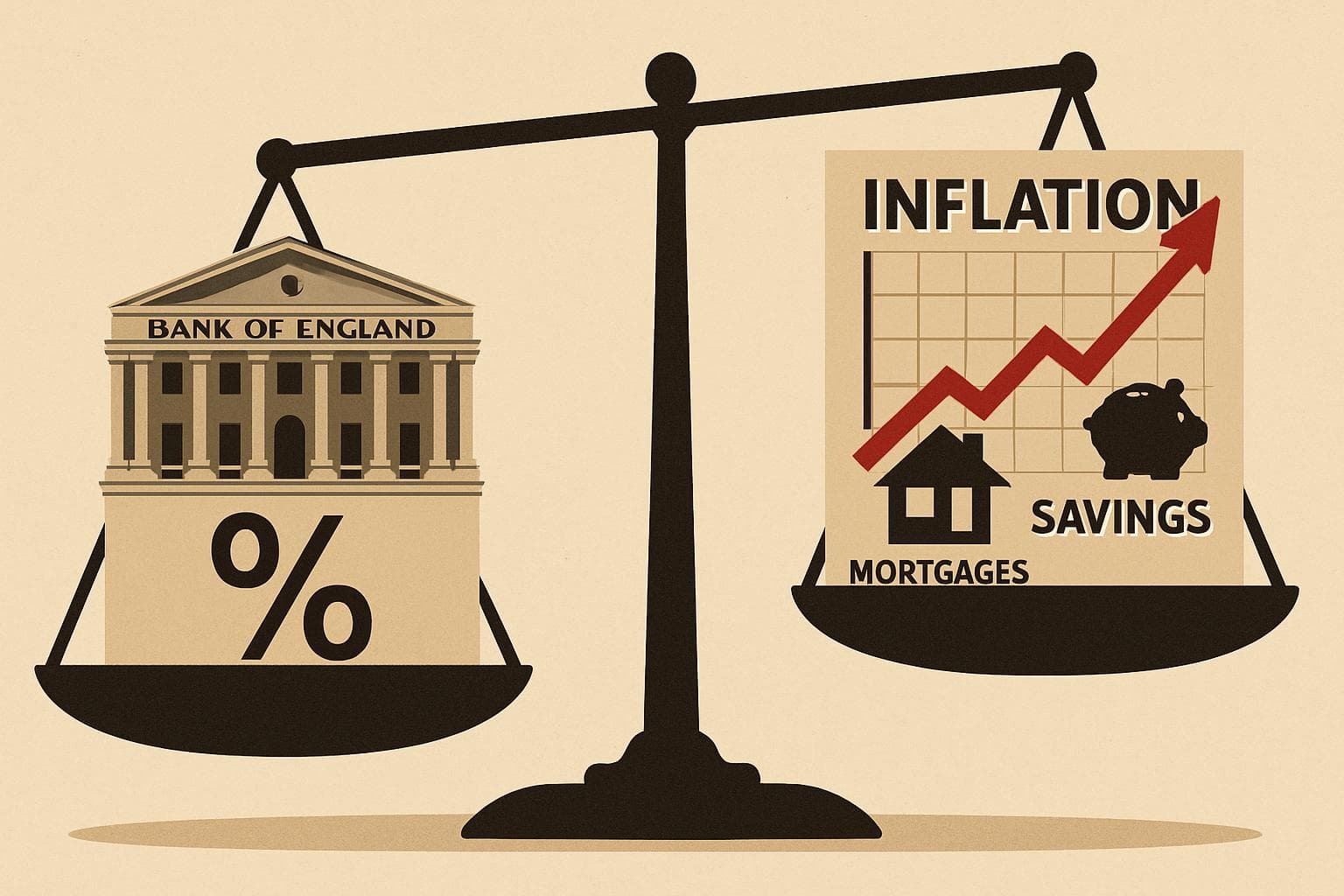
In a significant move to stabilize the UK economy, the Bank of England has reduced its interest rate from 4.25% to 4%, the lowest since March 2023. This decision marks the fifth rate cut within a year, reflecting ongoing efforts to manage economic challenges, including rising inflation and fluctuating mortgage rates.
Impact on Mortgages
While the interest rate cut is a welcome relief for some, its benefits will not be universally felt across the UK mortgage landscape. A vast majority, approximately 85% of the 8.4 million residential mortgages, are on fixed rates, meaning their monthly repayments remain unchanged. However, the 590,000 homeowners with base-rate tracker mortgages will see immediate benefits, with monthly payments decreasing by an average of £28.97, according to UK Finance.
For those on standard variable rate (SVR) mortgages, the outcome is less certain. Although lenders are likely to reduce their SVRs, they are not obligated to do so. UK Finance estimates a potential saving of £13.87 per month if lenders fully implement the Bank's rate cut.
Savings Accounts and Inflation Concerns
The interest rate reduction spells bad news for savers. Rachel Springall from Moneyfacts highlights that the average savings rate has dropped to 3.5%, with expectations of further declines. This is compounded by a forecasted rise in inflation to 4% by September, which could erode the real value of savings. Samuel Fuller of Financial Markets Online warns that the combination of falling interest rates and rising inflation will significantly diminish the purchasing power of savings.
Economic Stability and Future Outlook
The Bank of England's primary mandate is to maintain financial stability by controlling inflation, which currently stands at 3.6%. The rate cut aims to stimulate economic activity by making borrowing cheaper, but it also risks fueling inflation. The central bank's target is to keep inflation at 2%, a goal that remains challenging amid rising food prices and other economic pressures.
WHAT THIS MIGHT MEAN
Looking ahead, the Bank of England faces a delicate balancing act. While the rate cut is designed to spur economic growth, it could inadvertently lead to higher inflation, complicating efforts to achieve financial stability. As approximately 900,000 fixed-rate mortgage deals are set to expire later this year, borrowers may face increased payments, potentially impacting consumer spending and economic recovery.
Experts suggest that the central bank may need to adjust its strategies if inflation continues to rise. Future rate adjustments will likely depend on economic indicators and the broader global financial landscape. Policymakers will need to carefully monitor these developments to ensure that the UK economy remains on a stable footing.
Related Articles
Bank of England Poised to Hold Interest Rates Amid Inflation Concerns

Reform UK Pledges to Retain and Reform Budget Watchdog Amid Leadership Changes
UK House Prices Surpass £300,000 for the First Time, Halifax Reports

UK Government and Labour MPs Push for Credit Union Expansion Amid Cost of Living Crisis

Global Central Banks Rally Behind Fed Chair Powell Amid DOJ Probe
UK Government Borrowing Surpasses Expectations Amid Economic Pressures
Bank of England Cuts Interest Rates: Implications for Mortgages and Savings
In This Article
 Daniel Rivera| Published
 HIGHLIGHTS
- The Bank of England has reduced interest rates from 4.25% to 4%, marking the lowest level since March 2023.
- Most UK mortgages are on fixed rates, so the rate cut will primarily benefit the 590,000 homeowners with tracker mortgages.
- Savings account interest rates are expected to decline further, negatively impacting savers as inflation is forecasted to rise to 4% by September.
- The rate cut aims to stabilize the UK economy but could potentially increase inflation by making borrowing cheaper.
- Approximately 900,000 fixed-rate mortgage deals are set to expire in the latter half of the year, potentially leading to higher payments for some borrowers.
In a significant move to stabilize the UK economy, the Bank of England has reduced its interest rate from 4.25% to 4%, the lowest since March 2023. This decision marks the fifth rate cut within a year, reflecting ongoing efforts to manage economic challenges, including rising inflation and fluctuating mortgage rates.
Impact on Mortgages
While the interest rate cut is a welcome relief for some, its benefits will not be universally felt across the UK mortgage landscape. A vast majority, approximately 85% of the 8.4 million residential mortgages, are on fixed rates, meaning their monthly repayments remain unchanged. However, the 590,000 homeowners with base-rate tracker mortgages will see immediate benefits, with monthly payments decreasing by an average of £28.97, according to UK Finance.
For those on standard variable rate (SVR) mortgages, the outcome is less certain. Although lenders are likely to reduce their SVRs, they are not obligated to do so. UK Finance estimates a potential saving of £13.87 per month if lenders fully implement the Bank's rate cut.
Savings Accounts and Inflation Concerns
The interest rate reduction spells bad news for savers. Rachel Springall from Moneyfacts highlights that the average savings rate has dropped to 3.5%, with expectations of further declines. This is compounded by a forecasted rise in inflation to 4% by September, which could erode the real value of savings. Samuel Fuller of Financial Markets Online warns that the combination of falling interest rates and rising inflation will significantly diminish the purchasing power of savings.
Economic Stability and Future Outlook
The Bank of England's primary mandate is to maintain financial stability by controlling inflation, which currently stands at 3.6%. The rate cut aims to stimulate economic activity by making borrowing cheaper, but it also risks fueling inflation. The central bank's target is to keep inflation at 2%, a goal that remains challenging amid rising food prices and other economic pressures.
WHAT THIS MIGHT MEAN
Looking ahead, the Bank of England faces a delicate balancing act. While the rate cut is designed to spur economic growth, it could inadvertently lead to higher inflation, complicating efforts to achieve financial stability. As approximately 900,000 fixed-rate mortgage deals are set to expire later this year, borrowers may face increased payments, potentially impacting consumer spending and economic recovery.
Experts suggest that the central bank may need to adjust its strategies if inflation continues to rise. Future rate adjustments will likely depend on economic indicators and the broader global financial landscape. Policymakers will need to carefully monitor these developments to ensure that the UK economy remains on a stable footing.
Related Articles
Bank of England Poised to Hold Interest Rates Amid Inflation Concerns
Reform UK Pledges to Retain and Reform Budget Watchdog Amid Leadership Changes
UK House Prices Surpass £300,000 for the First Time, Halifax Reports
UK Government and Labour MPs Push for Credit Union Expansion Amid Cost of Living Crisis
Global Central Banks Rally Behind Fed Chair Powell Amid DOJ Probe
UK Government Borrowing Surpasses Expectations Amid Economic Pressures