
Bank of England Poised to Hold Interest Rates Amid Inflation Concerns
In This Article
HIGHLIGHTS
- The Bank of England's Monetary Policy Committee is expected to maintain the interest rate at 3.75% during its upcoming meeting.
- Inflation remains above the target at 3.4%, influencing the committee's cautious approach to rate adjustments.
- Approximately 1.8 million fixed-rate mortgage deals are set to expire in 2026, prompting borrowers to seek new home loans.
- Fixed mortgage rates have decreased as lenders compete, but broader economic pressures may hinder further cuts.
- Savings rates have been reduced, affecting savers negatively, as inflation continues to outpace returns.
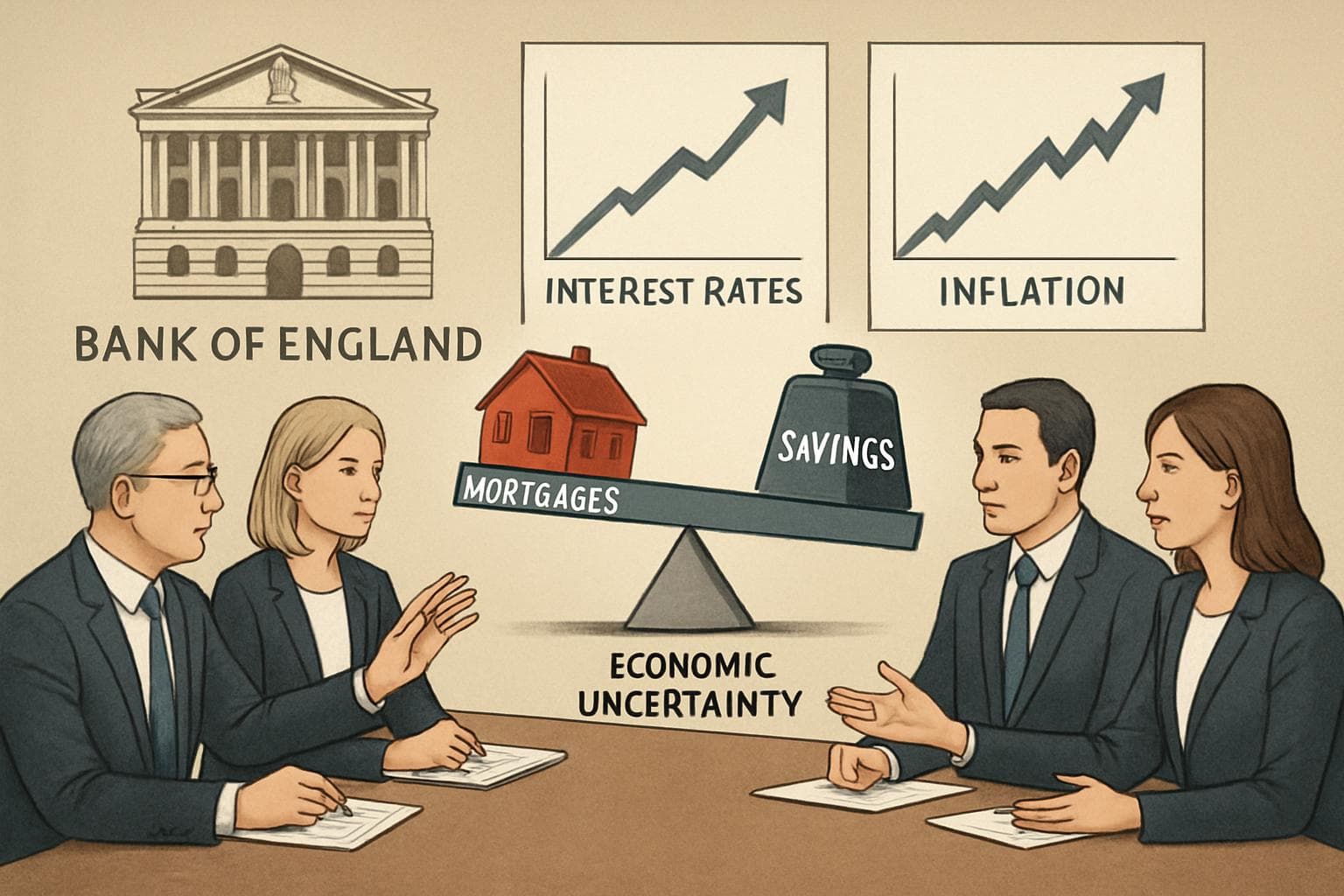
As the Bank of England's Monetary Policy Committee (MPC) convenes for its first meeting of the year, analysts widely anticipate that the interest rate will remain steady at 3.75%. This decision follows a December reduction from 4% and reflects ongoing concerns about inflation, which currently stands at 3.4%, above the Bank's 2% target.
Inflation and Economic Growth
The MPC's primary tool for managing inflation is the Bank rate, which significantly influences loan and mortgage interest rates, as well as savings returns. Despite the December rate cut, inflation remains persistent, prompting the committee to adopt a cautious stance. Analysts predict that the MPC will refrain from providing specific guidance on future rate cuts, awaiting clearer economic indicators.
Mortgage Market Dynamics
The mortgage market is bracing for significant changes, with around 1.8 million fixed-rate deals set to expire in 2026. Borrowers coming off five-year fixed deals may face increased payments, while those with two-year deals could see savings. The potential for further Bank rate cuts this year could lead to more competitive mortgage deals, though economic pressures might limit reductions.
Impact on Savers
The December rate cut has also affected savings rates, with over 70% of providers reducing their offerings. Rachel Springall from Moneyfacts highlights the challenges faced by savers, noting that real returns on cash savings are weak due to inflation. This situation has led to concerns about savers' apathy towards their financial returns.
The MPC, which meets eight times a year, will release its quarterly Monetary Policy Report alongside its latest decision, providing economic analysis and projections that inform its policy choices.
WHAT THIS MIGHT MEAN
Looking ahead, the Bank of England's cautious approach to interest rates suggests that any future adjustments will be data-driven, with a focus on balancing inflation control and economic growth. Should inflation persist above target, the MPC may delay further rate cuts, impacting mortgage and savings markets. Conversely, a clearer economic outlook could prompt more decisive action, potentially benefiting borrowers seeking new mortgage deals. As the economic landscape evolves, stakeholders will closely monitor the MPC's decisions and their implications for the broader financial environment.
Related Articles

Reform UK Pledges to Retain and Reform Budget Watchdog Amid Leadership Changes

UK House Prices Surpass £300,000 for the First Time, Halifax Reports
Bank of England Holds Interest Rates Steady Amid Inflation and Economic Concerns

UK Government and Labour MPs Push for Credit Union Expansion Amid Cost of Living Crisis

Global Central Banks Rally Behind Fed Chair Powell Amid DOJ Probe

UK Government Borrowing Surpasses Expectations Amid Economic Pressures
Bank of England Poised to Hold Interest Rates Amid Inflation Concerns
In This Article
 Daniel Rivera| Published
 HIGHLIGHTS
- The Bank of England's Monetary Policy Committee is expected to maintain the interest rate at 3.75% during its upcoming meeting.
- Inflation remains above the target at 3.4%, influencing the committee's cautious approach to rate adjustments.
- Approximately 1.8 million fixed-rate mortgage deals are set to expire in 2026, prompting borrowers to seek new home loans.
- Fixed mortgage rates have decreased as lenders compete, but broader economic pressures may hinder further cuts.
- Savings rates have been reduced, affecting savers negatively, as inflation continues to outpace returns.
As the Bank of England's Monetary Policy Committee (MPC) convenes for its first meeting of the year, analysts widely anticipate that the interest rate will remain steady at 3.75%. This decision follows a December reduction from 4% and reflects ongoing concerns about inflation, which currently stands at 3.4%, above the Bank's 2% target.
Inflation and Economic Growth
The MPC's primary tool for managing inflation is the Bank rate, which significantly influences loan and mortgage interest rates, as well as savings returns. Despite the December rate cut, inflation remains persistent, prompting the committee to adopt a cautious stance. Analysts predict that the MPC will refrain from providing specific guidance on future rate cuts, awaiting clearer economic indicators.
Mortgage Market Dynamics
The mortgage market is bracing for significant changes, with around 1.8 million fixed-rate deals set to expire in 2026. Borrowers coming off five-year fixed deals may face increased payments, while those with two-year deals could see savings. The potential for further Bank rate cuts this year could lead to more competitive mortgage deals, though economic pressures might limit reductions.
Impact on Savers
The December rate cut has also affected savings rates, with over 70% of providers reducing their offerings. Rachel Springall from Moneyfacts highlights the challenges faced by savers, noting that real returns on cash savings are weak due to inflation. This situation has led to concerns about savers' apathy towards their financial returns.
The MPC, which meets eight times a year, will release its quarterly Monetary Policy Report alongside its latest decision, providing economic analysis and projections that inform its policy choices.
WHAT THIS MIGHT MEAN
Looking ahead, the Bank of England's cautious approach to interest rates suggests that any future adjustments will be data-driven, with a focus on balancing inflation control and economic growth. Should inflation persist above target, the MPC may delay further rate cuts, impacting mortgage and savings markets. Conversely, a clearer economic outlook could prompt more decisive action, potentially benefiting borrowers seeking new mortgage deals. As the economic landscape evolves, stakeholders will closely monitor the MPC's decisions and their implications for the broader financial environment.
Related Articles
Reform UK Pledges to Retain and Reform Budget Watchdog Amid Leadership Changes
UK House Prices Surpass £300,000 for the First Time, Halifax Reports
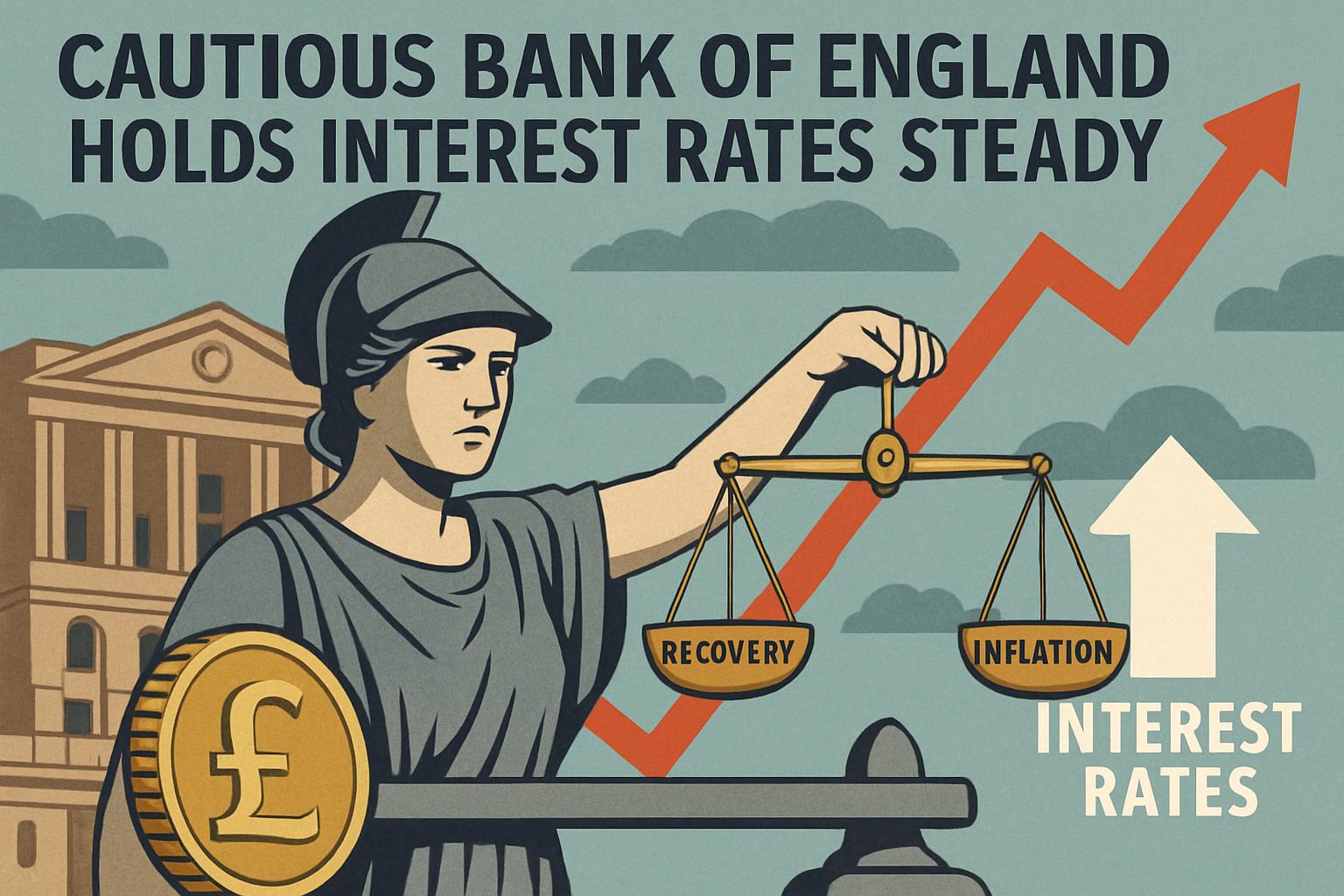
Bank of England Holds Interest Rates Steady Amid Inflation and Economic Concerns
UK Government and Labour MPs Push for Credit Union Expansion Amid Cost of Living Crisis
Global Central Banks Rally Behind Fed Chair Powell Amid DOJ Probe
UK Government Borrowing Surpasses Expectations Amid Economic Pressures