
UK House Prices Surpass £300,000 for the First Time, Halifax Reports
In This Article
HIGHLIGHTS
- The average UK house price surpassed £300,000 in January, marking a significant milestone, according to Halifax.
- House prices rose by 0.7% month-on-month, reversing a previous 0.5% decline in December.
- Wage growth has outpaced house price inflation since 2022, improving affordability for buyers.
- The Bank of England hinted at potential interest rate cuts, which could further lower mortgage rates.
- Regional variations show Northern Ireland leading with a 5.9% annual increase in house prices.
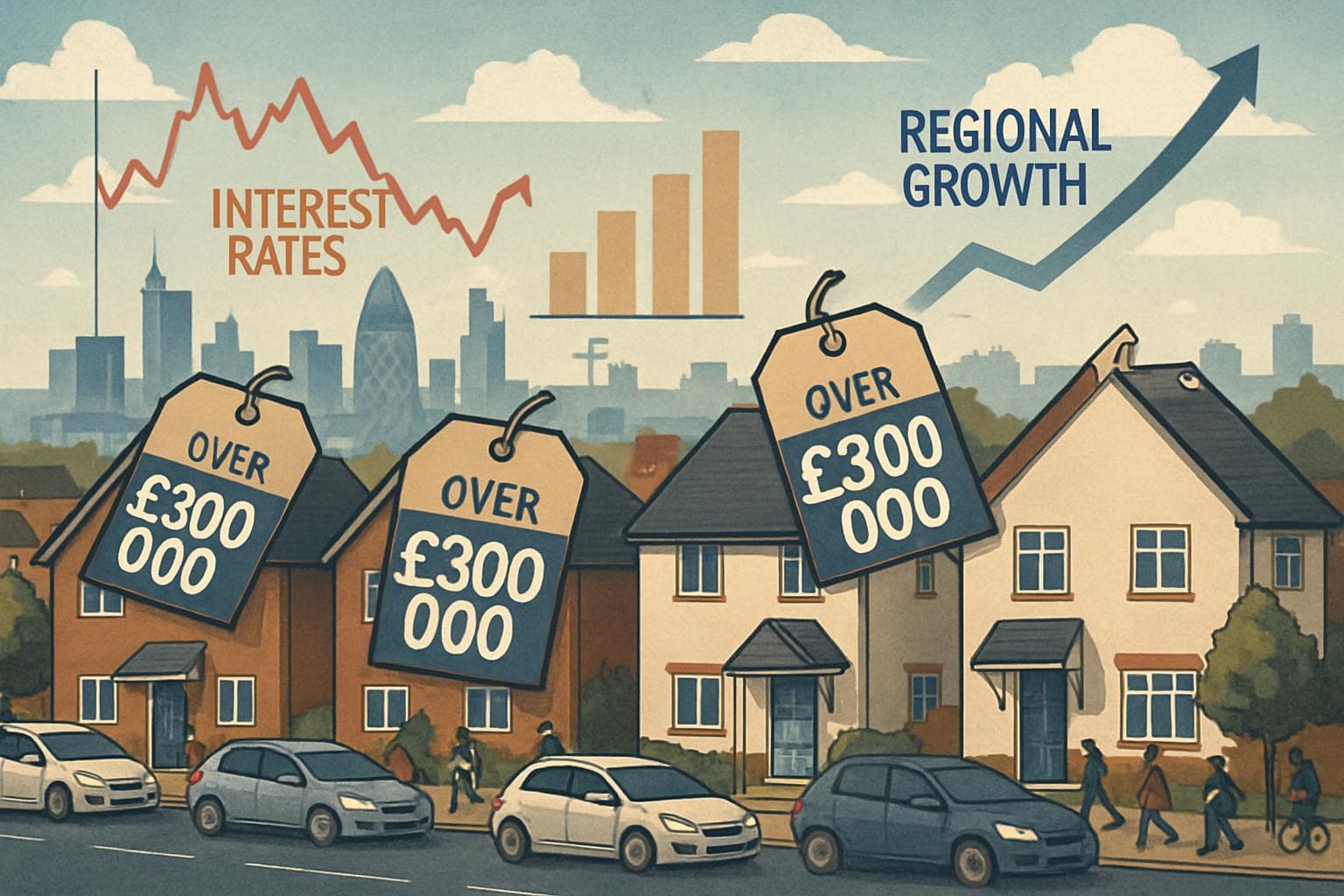
The average cost of a UK home has exceeded £300,000 for the first time, according to the latest data from Halifax, part of Lloyds Banking Group. This milestone comes as house prices increased by 0.7% in January, reversing a 0.5% decline from the previous month. The annual growth rate stands at 1%, highlighting a resilient housing market despite ongoing affordability challenges.
Rising Prices and Affordability
Halifax's report underscores the growing challenge for first-time buyers, as the average property price reaches £300,077. Amanda Bryden, head of mortgages at Halifax, acknowledged the milestone but emphasized that affordability remains a significant hurdle for many prospective buyers. However, she noted that wage growth has been outpacing house price inflation since 2022, which has gradually improved affordability.
Interest Rates and Mortgage Trends
The Bank of England's recent indication of potential interest rate cuts later this year could further ease mortgage rates, offering some relief to homebuyers. Currently, mortgage deals below 4% are becoming more common, and if inflation continues to ease, further reductions are anticipated. The Bank of England maintained its base rate at 3.75% in December, with analysts predicting further cuts in the coming months.
Regional Variations in House Prices
Regionally, Northern Ireland leads with a 5.9% annual increase in house prices, followed by Scotland at 5.4%. In contrast, Wales saw only a 0.5% growth, while the north-west of England experienced a 2.1% rise. These variations highlight the diverse nature of the UK's housing market, with some areas experiencing more robust growth than others.
Mortgage expert Karen Noye from Quilter commented on the potential impact of future rate cuts, suggesting that they would likely provide gradual support for affordability rather than causing a sudden spike in prices. Anthony Codling, an analyst at RBC Capital Markets, added that rising wages, falling mortgage rates, and eased lending limits have all contributed to the national increase in house prices.
WHAT THIS MIGHT MEAN
Looking ahead, the trajectory of UK house prices will largely depend on the Bank of England's monetary policy decisions. If anticipated interest rate cuts materialize, they could provide further support for affordability, potentially stabilizing the market. However, persistent inflation remains a concern, which could influence the pace and extent of any rate adjustments.
Regional disparities in house price growth may continue, driven by local economic conditions and demand-supply dynamics. As the market adapts to these changes, first-time buyers may find more opportunities, particularly if wage growth continues to outpace house price inflation.
Overall, while the milestone of surpassing £300,000 is significant, the focus remains on balancing affordability with sustainable growth in the housing market.
Related Articles

Saharan Dust to Illuminate UK Skies with Vivid Sunrises and Sunsets

Sisters Tragically Drown at Eryri National Park's Watkin Path

Labour MP's Husband Arrested in UK-China Espionage Probe

Police Federation Chief Arrested Amid Fraud Investigation

Government Announces £4 Billion Overhaul of SEND Support in England

UK Government Announces Major Overhaul of SEND System with £3.4 Billion Investment
UK House Prices Surpass £300,000 for the First Time, Halifax Reports
In This Article
 Daniel Rivera| Published
 HIGHLIGHTS
- The average UK house price surpassed £300,000 in January, marking a significant milestone, according to Halifax.
- House prices rose by 0.7% month-on-month, reversing a previous 0.5% decline in December.
- Wage growth has outpaced house price inflation since 2022, improving affordability for buyers.
- The Bank of England hinted at potential interest rate cuts, which could further lower mortgage rates.
- Regional variations show Northern Ireland leading with a 5.9% annual increase in house prices.
The average cost of a UK home has exceeded £300,000 for the first time, according to the latest data from Halifax, part of Lloyds Banking Group. This milestone comes as house prices increased by 0.7% in January, reversing a 0.5% decline from the previous month. The annual growth rate stands at 1%, highlighting a resilient housing market despite ongoing affordability challenges.
Rising Prices and Affordability
Halifax's report underscores the growing challenge for first-time buyers, as the average property price reaches £300,077. Amanda Bryden, head of mortgages at Halifax, acknowledged the milestone but emphasized that affordability remains a significant hurdle for many prospective buyers. However, she noted that wage growth has been outpacing house price inflation since 2022, which has gradually improved affordability.
Interest Rates and Mortgage Trends
The Bank of England's recent indication of potential interest rate cuts later this year could further ease mortgage rates, offering some relief to homebuyers. Currently, mortgage deals below 4% are becoming more common, and if inflation continues to ease, further reductions are anticipated. The Bank of England maintained its base rate at 3.75% in December, with analysts predicting further cuts in the coming months.
Regional Variations in House Prices
Regionally, Northern Ireland leads with a 5.9% annual increase in house prices, followed by Scotland at 5.4%. In contrast, Wales saw only a 0.5% growth, while the north-west of England experienced a 2.1% rise. These variations highlight the diverse nature of the UK's housing market, with some areas experiencing more robust growth than others.
Mortgage expert Karen Noye from Quilter commented on the potential impact of future rate cuts, suggesting that they would likely provide gradual support for affordability rather than causing a sudden spike in prices. Anthony Codling, an analyst at RBC Capital Markets, added that rising wages, falling mortgage rates, and eased lending limits have all contributed to the national increase in house prices.
WHAT THIS MIGHT MEAN
Looking ahead, the trajectory of UK house prices will largely depend on the Bank of England's monetary policy decisions. If anticipated interest rate cuts materialize, they could provide further support for affordability, potentially stabilizing the market. However, persistent inflation remains a concern, which could influence the pace and extent of any rate adjustments.
Regional disparities in house price growth may continue, driven by local economic conditions and demand-supply dynamics. As the market adapts to these changes, first-time buyers may find more opportunities, particularly if wage growth continues to outpace house price inflation.
Overall, while the milestone of surpassing £300,000 is significant, the focus remains on balancing affordability with sustainable growth in the housing market.
Related Articles
Saharan Dust to Illuminate UK Skies with Vivid Sunrises and Sunsets
Sisters Tragically Drown at Eryri National Park's Watkin Path
Labour MP's Husband Arrested in UK-China Espionage Probe
Police Federation Chief Arrested Amid Fraud Investigation
Government Announces £4 Billion Overhaul of SEND Support in England
UK Government Announces Major Overhaul of SEND System with £3.4 Billion Investment