
Bank of England's Festive Rate Cut: A Boost for the UK Economy?
In This Article
HIGHLIGHTS
- The Bank of England reduced the base interest rate from 4% to 3.75%, marking a significant move in its monetary policy.
- Governor Andrew Bailey indicated that the UK has "passed the peak of inflation," with a 2% target now expected by April.
- The Monetary Policy Committee (MPC) remains divided, with some members suggesting the rate-cutting cycle may soon end.
- Economic growth in the UK remains stagnant, with the economy forecasted to flatline in the fourth quarter.
- The recent budget measures are expected to help reduce inflation, potentially achieving the Bank's target earlier than anticipated.
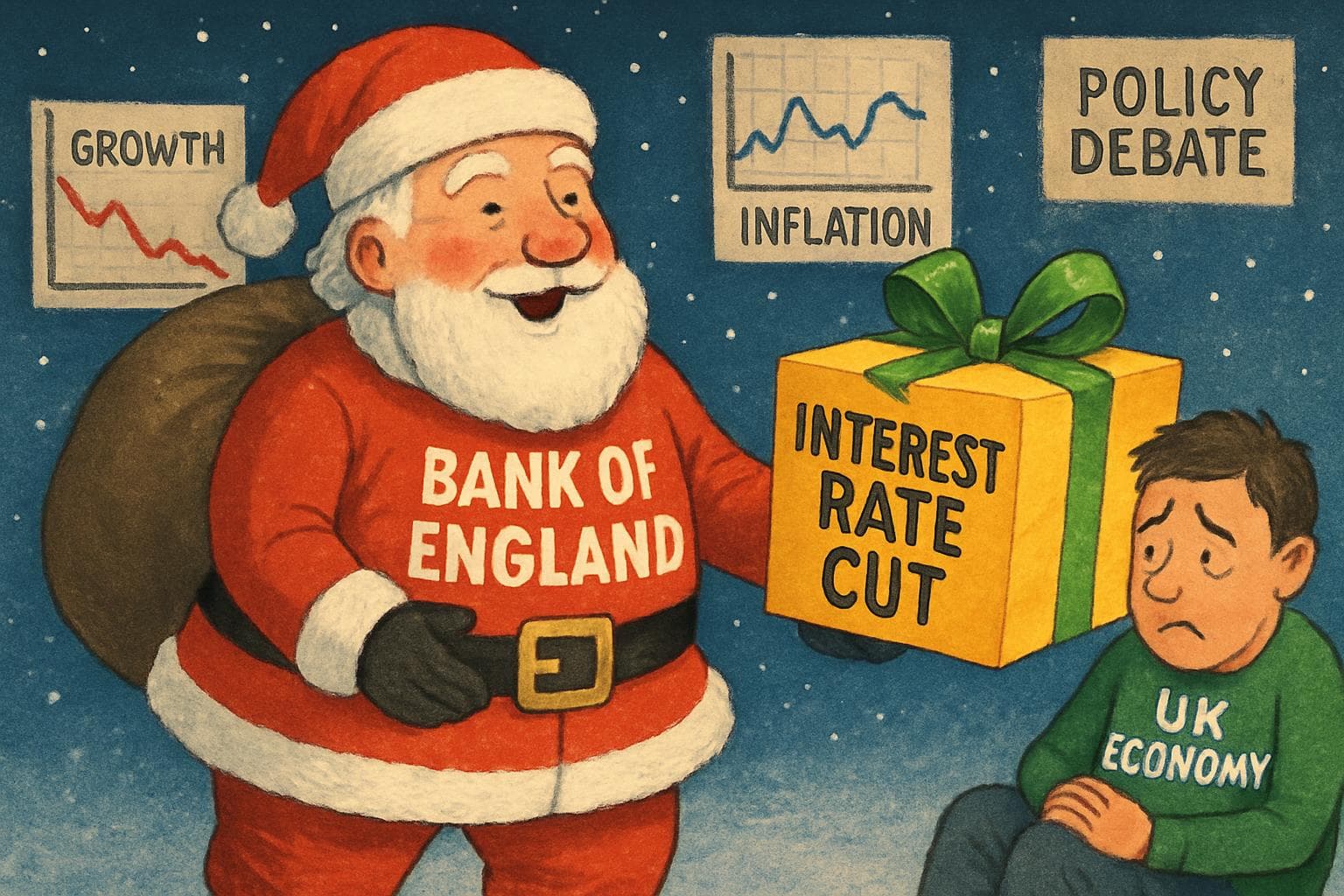
In a move that has sparked both optimism and debate, the Bank of England has announced a pre-Christmas interest rate cut, reducing the base rate from 4% to 3.75%. This decision, described by some as a "Santa cut," aims to invigorate a sluggish UK economy and ease the burden on borrowers.
A Narrow Decision with Broad Implications
The decision was not without contention. The Monetary Policy Committee (MPC) was split, with five members, including Governor Andrew Bailey, supporting the cut. Bailey expressed confidence that the UK has "passed the peak of inflation," with the Bank's 2% inflation target now in sight by April. However, the governor cautioned that future rate cuts would be closely contested, reflecting deep divisions within the MPC regarding the UK's inflation prospects.
Economic Stagnation and Inflation Concerns
Despite the rate cut, the UK economy continues to struggle. Economic growth is forecasted to flatline in the fourth quarter, with unemployment on the rise. The recent budget, which includes relief on energy bills and other measures, is expected to reduce headline inflation by 0.5 percentage points from the second quarter of next year. This could help achieve the Bank's inflation target earlier than previously anticipated.
Diverging Views on the Path Forward
While some MPC members believe further rate cuts are justified due to economic weakness, others are concerned about underlying issues, such as wage growth, which remains higher than usual given the current economic conditions. The Bank's network of agents predicts annual pay settlements next year will be around 3.5%, a figure that could challenge efforts to maintain inflation near the 2% target.
The Role of Consumer Confidence
Governor Bailey also highlighted the impact of consumer confidence on the economy, noting that high savings rates, particularly among older savers, are holding back economic momentum. He emphasized that lower interest rates and inflation could help restore confidence and stimulate spending.
WHAT THIS MIGHT MEAN
Looking ahead, the Bank of England faces a delicate balancing act. While the recent rate cut provides temporary relief, the path to sustained economic recovery remains uncertain. If inflation continues to decline as expected, further rate cuts could be on the horizon. However, persistent wage growth and economic stagnation may complicate these efforts.
Politically, the rate cut offers some respite for the government, aligning with recent budget measures aimed at reducing inflation. Yet, the ongoing divisions within the MPC highlight the challenges of navigating the UK's complex economic landscape. As the new year approaches, all eyes will be on the Bank's next moves and their implications for the broader economy.
Related Articles

Trump's New Tariff Strategy Sparks Global Trade Uncertainty

US Supreme Court Ruling on Tariffs Sparks Uncertainty for UK and Global Trade

Canada and Australia Forge Strategic Partnership Amid Global Uncertainty

UK Government to Reform Asylum Seeker Support and Employment Policies
Middle East Conflict Drives UK Energy Prices to New Highs

UK Faces Dilemmas Amid Iran Conflict and China Spying Allegations
Bank of England's Festive Rate Cut: A Boost for the UK Economy?
In This Article
 Daniel Rivera| Published
 HIGHLIGHTS
- The Bank of England reduced the base interest rate from 4% to 3.75%, marking a significant move in its monetary policy.
- Governor Andrew Bailey indicated that the UK has "passed the peak of inflation," with a 2% target now expected by April.
- The Monetary Policy Committee (MPC) remains divided, with some members suggesting the rate-cutting cycle may soon end.
- Economic growth in the UK remains stagnant, with the economy forecasted to flatline in the fourth quarter.
- The recent budget measures are expected to help reduce inflation, potentially achieving the Bank's target earlier than anticipated.
In a move that has sparked both optimism and debate, the Bank of England has announced a pre-Christmas interest rate cut, reducing the base rate from 4% to 3.75%. This decision, described by some as a "Santa cut," aims to invigorate a sluggish UK economy and ease the burden on borrowers.
A Narrow Decision with Broad Implications
The decision was not without contention. The Monetary Policy Committee (MPC) was split, with five members, including Governor Andrew Bailey, supporting the cut. Bailey expressed confidence that the UK has "passed the peak of inflation," with the Bank's 2% inflation target now in sight by April. However, the governor cautioned that future rate cuts would be closely contested, reflecting deep divisions within the MPC regarding the UK's inflation prospects.
Economic Stagnation and Inflation Concerns
Despite the rate cut, the UK economy continues to struggle. Economic growth is forecasted to flatline in the fourth quarter, with unemployment on the rise. The recent budget, which includes relief on energy bills and other measures, is expected to reduce headline inflation by 0.5 percentage points from the second quarter of next year. This could help achieve the Bank's inflation target earlier than previously anticipated.
Diverging Views on the Path Forward
While some MPC members believe further rate cuts are justified due to economic weakness, others are concerned about underlying issues, such as wage growth, which remains higher than usual given the current economic conditions. The Bank's network of agents predicts annual pay settlements next year will be around 3.5%, a figure that could challenge efforts to maintain inflation near the 2% target.
The Role of Consumer Confidence
Governor Bailey also highlighted the impact of consumer confidence on the economy, noting that high savings rates, particularly among older savers, are holding back economic momentum. He emphasized that lower interest rates and inflation could help restore confidence and stimulate spending.
WHAT THIS MIGHT MEAN
Looking ahead, the Bank of England faces a delicate balancing act. While the recent rate cut provides temporary relief, the path to sustained economic recovery remains uncertain. If inflation continues to decline as expected, further rate cuts could be on the horizon. However, persistent wage growth and economic stagnation may complicate these efforts.
Politically, the rate cut offers some respite for the government, aligning with recent budget measures aimed at reducing inflation. Yet, the ongoing divisions within the MPC highlight the challenges of navigating the UK's complex economic landscape. As the new year approaches, all eyes will be on the Bank's next moves and their implications for the broader economy.
Related Articles
Trump's New Tariff Strategy Sparks Global Trade Uncertainty
US Supreme Court Ruling on Tariffs Sparks Uncertainty for UK and Global Trade
Canada and Australia Forge Strategic Partnership Amid Global Uncertainty
UK Government to Reform Asylum Seeker Support and Employment Policies
Middle East Conflict Drives UK Energy Prices to New Highs
UK Faces Dilemmas Amid Iran Conflict and China Spying Allegations