
Bank of England Signals Potential Rate Cuts Amid Economic Slowdown
In This Article
HIGHLIGHTS
- The Bank of England may cut interest rates if the UK job market continues to slow, according to Governor Andrew Bailey.
- Interest rates currently stand at 4.25%, with a potential cut expected at the Bank's next meeting on 7 August.
- The UK economy contracted by 0.1% in May, with a notable drop in manufacturing and retail sales.
- The pound has fallen to a three-week low following Bailey's comments on potential rate cuts.
- Employers face challenges due to increased national insurance contributions, impacting hiring and pay rises.
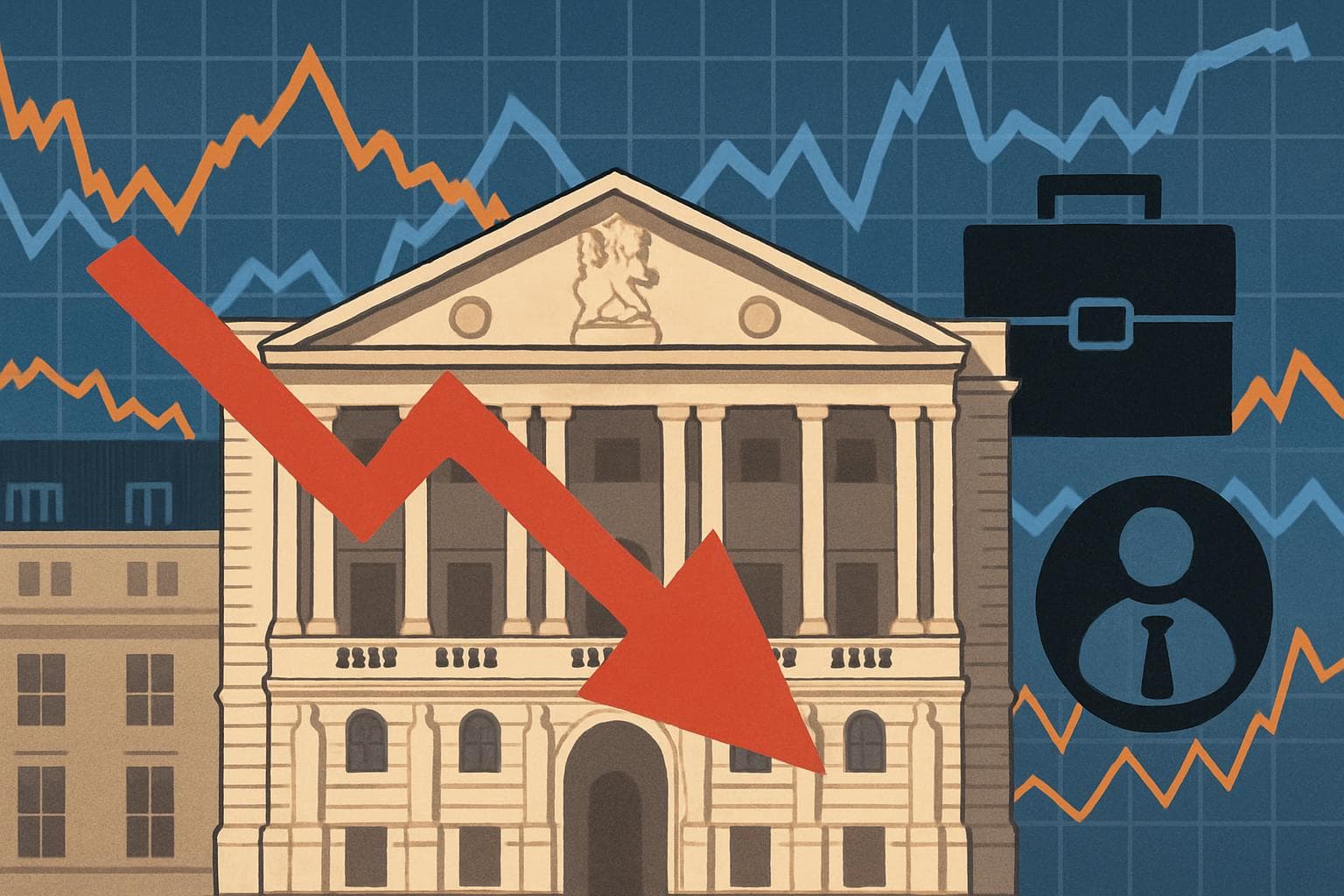
The Bank of England is poised to implement further interest rate cuts if the UK job market continues to show signs of weakening, Governor Andrew Bailey has indicated. Speaking to The Times, Bailey emphasized that the trajectory for interest rates is "downward," with the current rate standing at 4.25%. The Bank's next meeting on 7 August is anticipated to bring a decision on whether to reduce rates further, a move that could impact mortgage, credit card, and savings rates for millions.
Economic Context and Job Market Concerns
The UK economy has been grappling with a contraction, shrinking by 0.1% in May following a similar decline in April. This downturn has been largely attributed to a decrease in manufacturing output and weak retail sales, according to the Office for National Statistics. Bailey noted that "slack" is emerging in the economy, a term referring to unused resources such as unutilized labor or idle factories, which could help in reducing inflation.
The job market is also under pressure, with the number of vacancies dropping to 736,000 over the three months to May, the lowest since the pandemic. A survey by KPMG and the Recruitment and Employment Confederation highlighted a rapid increase in the number of people available for work, the fastest since the pandemic's onset.
Impact of National Insurance Contributions
The increase in employer national insurance contributions, raised from 13.8% to 15% by Chancellor Rachel Reeves, has further strained businesses. This move, expected to generate £25 billion annually, has led companies to adjust employment and hours, offering smaller pay rises. Ian McAllister, CEO of MAN Commercial Protection, expressed concerns over hiring challenges, stating that a rate cut would be beneficial.
Market Reactions and Future Outlook
Bailey's remarks have already influenced the financial markets, with the pound dropping to a three-week low of $1.3467. The money markets are now pricing in an 85% chance of a rate cut in August, up from 76% last week. Victoria Scholar, head of investment at interactive investor, noted that the upcoming UK inflation report will be crucial in shaping the Bank's decision.
WHAT THIS MIGHT MEAN
As the Bank of England navigates these economic challenges, the potential for interest rate cuts could provide relief to businesses and consumers alike. However, the broader implications of such monetary policy adjustments will depend on the evolving economic landscape, particularly inflation rates and job market dynamics. Experts suggest that while rate cuts could stimulate economic activity, they must be balanced against the risk of exacerbating inflationary pressures. The upcoming inflation report will be pivotal in determining the Bank's course of action, as policymakers strive to stabilize the economy amidst ongoing uncertainties.
Related Articles
Trump's New Tariff Strategy Sparks Global Trade Uncertainty

US Supreme Court Ruling on Tariffs Sparks Uncertainty for UK and Global Trade
Middle East Conflict Drives UK Energy Prices to New Highs

Canada and Australia Forge Strategic Partnership Amid Global Uncertainty

UK Government to Reform Asylum Seeker Support and Employment Policies

UK Faces Dilemmas Amid Iran Conflict and China Spying Allegations
Bank of England Signals Potential Rate Cuts Amid Economic Slowdown
In This Article
 Daniel Rivera| Published
 HIGHLIGHTS
- The Bank of England may cut interest rates if the UK job market continues to slow, according to Governor Andrew Bailey.
- Interest rates currently stand at 4.25%, with a potential cut expected at the Bank's next meeting on 7 August.
- The UK economy contracted by 0.1% in May, with a notable drop in manufacturing and retail sales.
- The pound has fallen to a three-week low following Bailey's comments on potential rate cuts.
- Employers face challenges due to increased national insurance contributions, impacting hiring and pay rises.
The Bank of England is poised to implement further interest rate cuts if the UK job market continues to show signs of weakening, Governor Andrew Bailey has indicated. Speaking to The Times, Bailey emphasized that the trajectory for interest rates is "downward," with the current rate standing at 4.25%. The Bank's next meeting on 7 August is anticipated to bring a decision on whether to reduce rates further, a move that could impact mortgage, credit card, and savings rates for millions.
Economic Context and Job Market Concerns
The UK economy has been grappling with a contraction, shrinking by 0.1% in May following a similar decline in April. This downturn has been largely attributed to a decrease in manufacturing output and weak retail sales, according to the Office for National Statistics. Bailey noted that "slack" is emerging in the economy, a term referring to unused resources such as unutilized labor or idle factories, which could help in reducing inflation.
The job market is also under pressure, with the number of vacancies dropping to 736,000 over the three months to May, the lowest since the pandemic. A survey by KPMG and the Recruitment and Employment Confederation highlighted a rapid increase in the number of people available for work, the fastest since the pandemic's onset.
Impact of National Insurance Contributions
The increase in employer national insurance contributions, raised from 13.8% to 15% by Chancellor Rachel Reeves, has further strained businesses. This move, expected to generate £25 billion annually, has led companies to adjust employment and hours, offering smaller pay rises. Ian McAllister, CEO of MAN Commercial Protection, expressed concerns over hiring challenges, stating that a rate cut would be beneficial.
Market Reactions and Future Outlook
Bailey's remarks have already influenced the financial markets, with the pound dropping to a three-week low of $1.3467. The money markets are now pricing in an 85% chance of a rate cut in August, up from 76% last week. Victoria Scholar, head of investment at interactive investor, noted that the upcoming UK inflation report will be crucial in shaping the Bank's decision.
WHAT THIS MIGHT MEAN
As the Bank of England navigates these economic challenges, the potential for interest rate cuts could provide relief to businesses and consumers alike. However, the broader implications of such monetary policy adjustments will depend on the evolving economic landscape, particularly inflation rates and job market dynamics. Experts suggest that while rate cuts could stimulate economic activity, they must be balanced against the risk of exacerbating inflationary pressures. The upcoming inflation report will be pivotal in determining the Bank's course of action, as policymakers strive to stabilize the economy amidst ongoing uncertainties.
Related Articles
Trump's New Tariff Strategy Sparks Global Trade Uncertainty
US Supreme Court Ruling on Tariffs Sparks Uncertainty for UK and Global Trade
Middle East Conflict Drives UK Energy Prices to New Highs
Canada and Australia Forge Strategic Partnership Amid Global Uncertainty
UK Government to Reform Asylum Seeker Support and Employment Policies
UK Faces Dilemmas Amid Iran Conflict and China Spying Allegations