
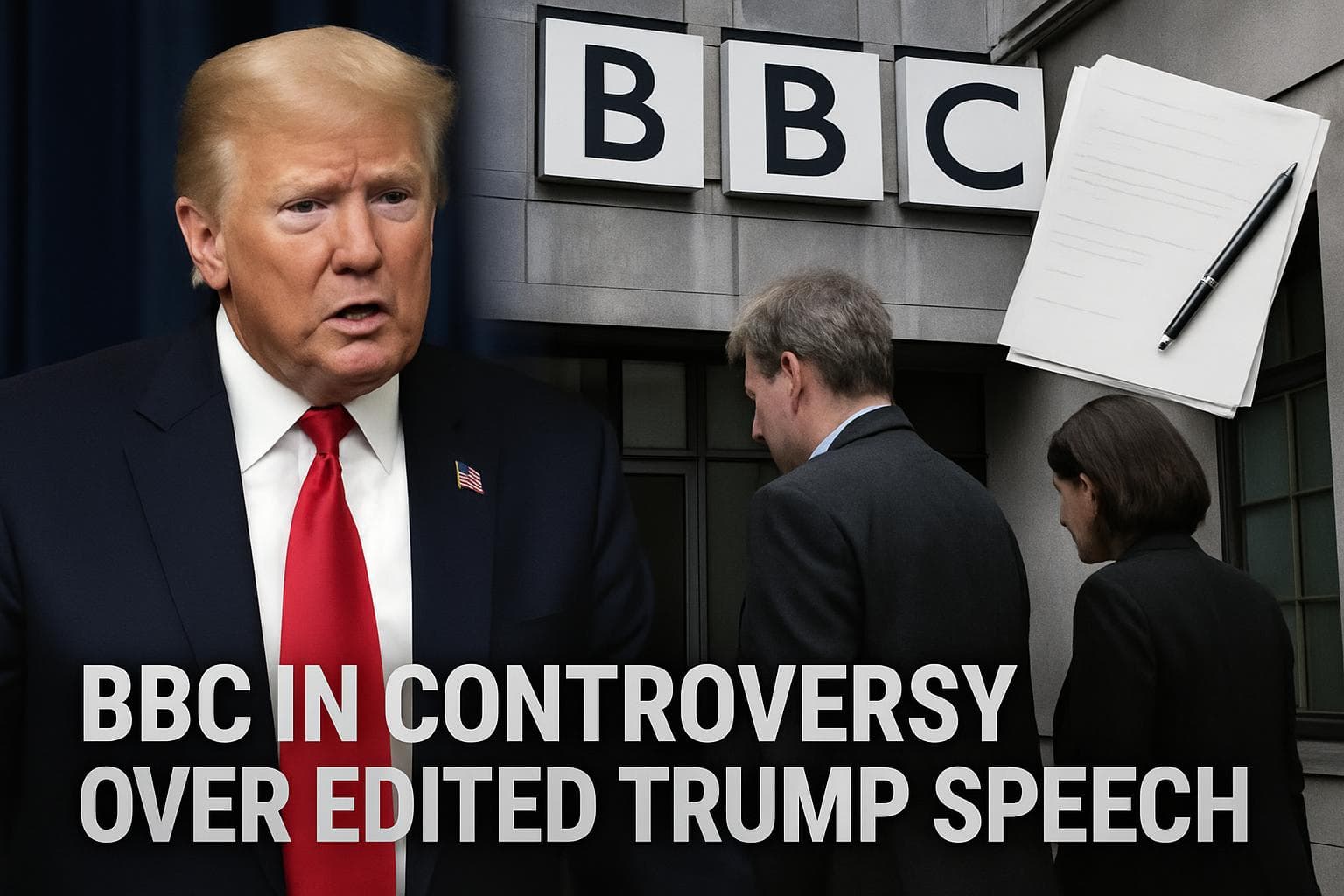
BBC Faces Legal Threats Over Edited Trump Speech Amid Resignations
In This Article
HIGHLIGHTS
- The BBC has apologized to Donald Trump for editing his January 6, 2021, speech in a way that suggested a call for violence, but it refuses to pay the demanded $1 billion compensation.
- The controversy led to the resignations of BBC director general Tim Davie and head of news Deborah Turness, highlighting issues of media ethics and editorial standards.
- Trump's legal team has threatened a defamation lawsuit, claiming the BBC engaged in a pattern of defamation against him.
- The BBC has decided not to rebroadcast the controversial Panorama episode and is reviewing its editorial practices.
- Legal experts question the viability of Trump's lawsuit due to Florida's liberal libel laws and the time elapsed since the broadcast.
The BBC is embroiled in a significant controversy following the editing of a speech by former U.S. President Donald Trump, which has led to high-profile resignations and potential legal battles. The issue centers on a Panorama documentary that aired an edited version of Trump's January 6, 2021, speech, which critics argue misleadingly suggested he incited violence at the Capitol riots.
Apology and Resignations
The BBC has issued an apology to Trump, acknowledging that the edited footage gave "the mistaken impression that President Trump had made a direct call for violent action." Despite this, the corporation has rejected Trump's demands for $1 billion in compensation. The fallout from this incident has been severe, resulting in the resignations of BBC director general Tim Davie and head of news Deborah Turness. The BBC has also decided not to rebroadcast the contentious Panorama episode.
Legal Threats and Editorial Standards
Trump's legal team has threatened to sue the BBC for defamation, alleging a pattern of defamatory practices. A spokesperson for Trump's legal team stated, "It is now clear that the BBC engaged in a pattern of defamation against President Trump." The BBC, however, maintains that while the edit was regrettable, it does not constitute defamation. The corporation is currently reviewing its editorial standards to prevent similar issues in the future.
Media Ethics Under Scrutiny
The controversy has sparked a broader debate about media ethics and the responsibilities of news organizations in editing and presenting information. Former White House chief of staff Mick Mulvaney criticized the BBC for splicing together parts of Trump's speech, which he argued altered its intended meaning. The BBC has stated it holds itself to the highest editorial standards and is investigating the matter further.
WHAT THIS MIGHT MEAN
The BBC's handling of this situation could have lasting implications for its reputation and editorial practices. If Trump proceeds with his lawsuit, the case could test the boundaries of defamation law, particularly given Florida's liberal libel laws. Legal experts suggest that Trump's chances of success may be limited, but the case could still draw significant public attention. Meanwhile, the BBC's commitment to reviewing its editorial standards may lead to more stringent guidelines, potentially influencing how media organizations globally handle sensitive content.
Related Articles

UK Faces Dilemmas Amid Iran Conflict and China Spying Allegations
UK-Iran Tensions: Starmer Defends Cautious Approach Amid Trump Criticism
Diplomatic Tensions Rise as Trump Criticizes Starmer's Iran Policy
Armed Intruder Fatally Shot at Mar-a-Lago by Secret Service

Tech Giants Pledge to Cover AI Data Center Energy Costs Amid Rising Electricity Concerns
Congress Subpoenas Attorney General Bondi in Epstein Investigation
BBC Faces Legal Threats Over Edited Trump Speech Amid Resignations
In This Article
 Ethan Brooks| Published
 HIGHLIGHTS
- The BBC has apologized to Donald Trump for editing his January 6, 2021, speech in a way that suggested a call for violence, but it refuses to pay the demanded $1 billion compensation.
- The controversy led to the resignations of BBC director general Tim Davie and head of news Deborah Turness, highlighting issues of media ethics and editorial standards.
- Trump's legal team has threatened a defamation lawsuit, claiming the BBC engaged in a pattern of defamation against him.
- The BBC has decided not to rebroadcast the controversial Panorama episode and is reviewing its editorial practices.
- Legal experts question the viability of Trump's lawsuit due to Florida's liberal libel laws and the time elapsed since the broadcast.
The BBC is embroiled in a significant controversy following the editing of a speech by former U.S. President Donald Trump, which has led to high-profile resignations and potential legal battles. The issue centers on a Panorama documentary that aired an edited version of Trump's January 6, 2021, speech, which critics argue misleadingly suggested he incited violence at the Capitol riots.
Apology and Resignations
The BBC has issued an apology to Trump, acknowledging that the edited footage gave "the mistaken impression that President Trump had made a direct call for violent action." Despite this, the corporation has rejected Trump's demands for $1 billion in compensation. The fallout from this incident has been severe, resulting in the resignations of BBC director general Tim Davie and head of news Deborah Turness. The BBC has also decided not to rebroadcast the contentious Panorama episode.
Legal Threats and Editorial Standards
Trump's legal team has threatened to sue the BBC for defamation, alleging a pattern of defamatory practices. A spokesperson for Trump's legal team stated, "It is now clear that the BBC engaged in a pattern of defamation against President Trump." The BBC, however, maintains that while the edit was regrettable, it does not constitute defamation. The corporation is currently reviewing its editorial standards to prevent similar issues in the future.
Media Ethics Under Scrutiny
The controversy has sparked a broader debate about media ethics and the responsibilities of news organizations in editing and presenting information. Former White House chief of staff Mick Mulvaney criticized the BBC for splicing together parts of Trump's speech, which he argued altered its intended meaning. The BBC has stated it holds itself to the highest editorial standards and is investigating the matter further.
WHAT THIS MIGHT MEAN
The BBC's handling of this situation could have lasting implications for its reputation and editorial practices. If Trump proceeds with his lawsuit, the case could test the boundaries of defamation law, particularly given Florida's liberal libel laws. Legal experts suggest that Trump's chances of success may be limited, but the case could still draw significant public attention. Meanwhile, the BBC's commitment to reviewing its editorial standards may lead to more stringent guidelines, potentially influencing how media organizations globally handle sensitive content.
Related Articles
UK Faces Dilemmas Amid Iran Conflict and China Spying Allegations
UK-Iran Tensions: Starmer Defends Cautious Approach Amid Trump Criticism
Diplomatic Tensions Rise as Trump Criticizes Starmer's Iran Policy
Armed Intruder Fatally Shot at Mar-a-Lago by Secret Service
Tech Giants Pledge to Cover AI Data Center Energy Costs Amid Rising Electricity Concerns
Congress Subpoenas Attorney General Bondi in Epstein Investigation