
California's Redistricting Measure: A Strategic Move in the Battle for the House
In This Article
HIGHLIGHTS
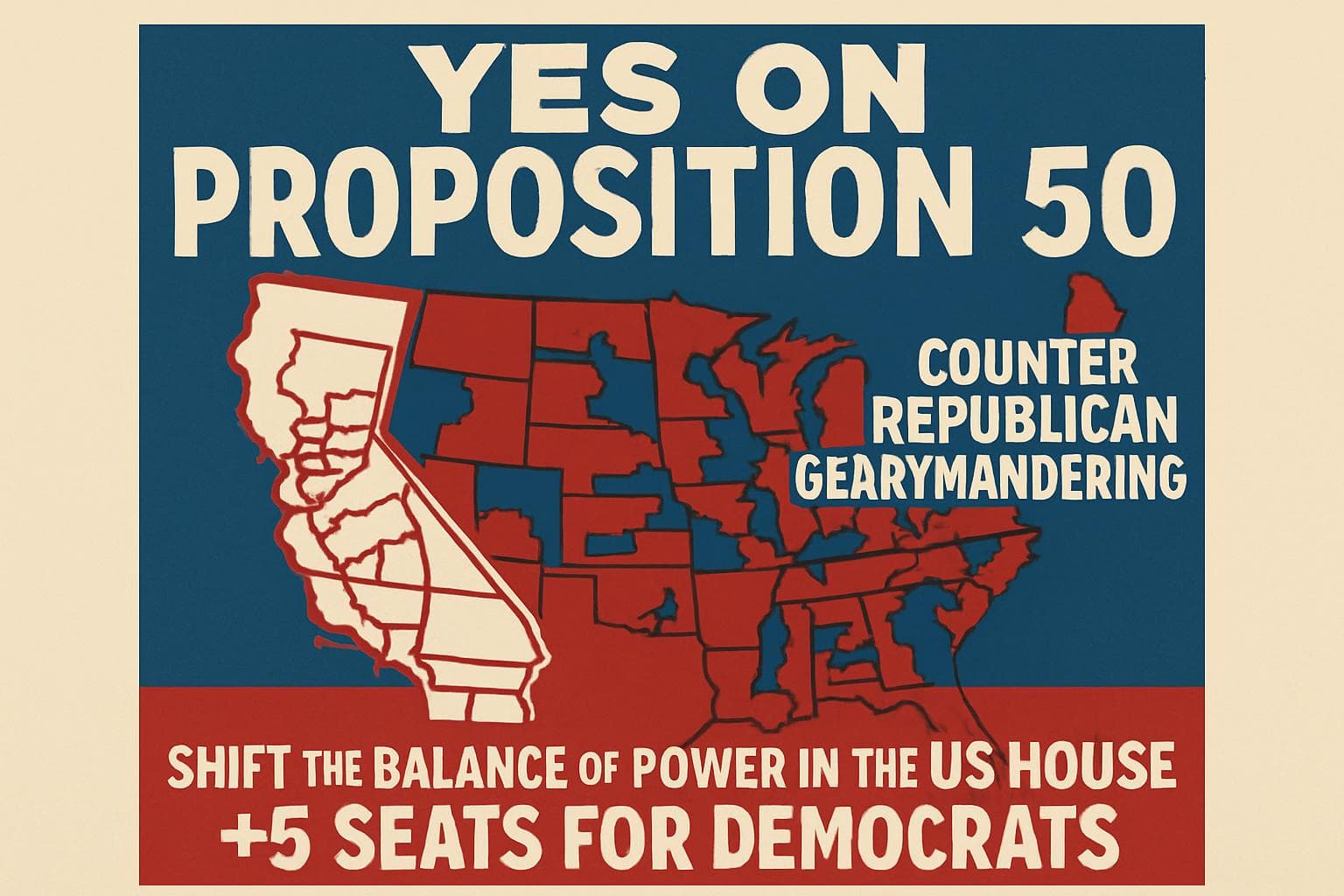
- California voters approved Proposition 50, allowing the state legislature to redraw congressional districts to favor Democrats.
- The measure aims to counter Republican-led gerrymandering efforts, particularly in Texas, and could help Democrats gain up to five House seats.
- Prop 50's passage is seen as a strategic move to challenge President Trump's influence and agenda in the upcoming 2026 midterm elections.
- Historically, the president's party often loses seats in midterms, and experts suggest Republicans face an uphill battle to maintain control of the House.
- Governor Gavin Newsom and prominent Democrats, including Barack Obama, have championed the measure as a defense of democracy.
California voters have decisively approved Proposition 50, a redistricting measure poised to reshape the political landscape in favor of Democrats. This strategic move comes as a countermeasure to Republican-led gerrymandering efforts across the United States, particularly in Texas, and aims to influence the balance of power in the US House of Representatives ahead of the 2026 midterm elections.
A Political Counterattack
Proposition 50 allows California's state legislature to redraw congressional districts, potentially enabling Democrats to secure up to five additional House seats. This initiative is a direct response to partisan gerrymandering efforts in Republican strongholds, where states like Texas have redrawn maps to create safe Republican districts at the behest of President Donald Trump. California Governor Gavin Newsom, a vocal advocate for Prop 50, emphasized its importance in countering Trump's agenda and preserving democratic processes. "We stood firm in response to Donald Trump’s recklessness," Newsom declared, celebrating the measure's passage.
National Implications
The approval of Prop 50 is not just a victory for California Democrats but a significant development in the national political arena. With Republicans currently holding a slim five-seat majority in the 435-member House, the potential shift of five seats could be pivotal. Historically, the president's party often loses seats during midterm elections, a trend that could challenge Republican efforts to maintain control. Galen Sheely, research director for the State Voting Laws Roundup project, noted, "This is an uphill battle for Republicans," highlighting the historical context of midterm losses for the president's party.
The Broader Redistricting Battle
The redistricting battle is not confined to California. More than a dozen states are considering similar measures, reflecting a nationwide struggle over political gerrymandering. While Republican-led states have redrawn lines to secure advantages, Democratic states like California are pushing back. Kevin Kiley, a California Republican representative, criticized the measure, stating, "With California’s new gerrymander, the redistricting arms race has no end in sight."
WHAT THIS MIGHT MEAN
As the 2026 midterm elections approach, the implications of California's redistricting measure will unfold. If Democrats succeed in flipping the targeted seats, they could gain a majority in the House, potentially stalling President Trump's legislative agenda and increasing congressional oversight of his administration. This could lead to investigations and even impeachment proceedings. However, the effectiveness of Prop 50 will depend on voter turnout and the broader political climate. Experts suggest that while the measure strengthens Democratic prospects, the ultimate outcome will hinge on the dynamic interplay of national and state-level political strategies.
Related Articles

Congress Subpoenas Attorney General Bondi in Epstein Investigation

James Talarico Secures Democratic Nomination in Texas Senate Race Amidst Republican Runoff

Cuba Faces Widespread Blackout Amid Deepening Fuel Crisis

UK Faces Dilemmas Amid Iran Conflict and China Spying Allegations

Senate Blocks Resolution to Limit Trump's Military Actions in Iran

China Sets Lowest GDP Growth Target in Decades Amid Economic Challenges
California's Redistricting Measure: A Strategic Move in the Battle for the House
In This Article
 Alex Carter| Published
 HIGHLIGHTS
- California voters approved Proposition 50, allowing the state legislature to redraw congressional districts to favor Democrats.
- The measure aims to counter Republican-led gerrymandering efforts, particularly in Texas, and could help Democrats gain up to five House seats.
- Prop 50's passage is seen as a strategic move to challenge President Trump's influence and agenda in the upcoming 2026 midterm elections.
- Historically, the president's party often loses seats in midterms, and experts suggest Republicans face an uphill battle to maintain control of the House.
- Governor Gavin Newsom and prominent Democrats, including Barack Obama, have championed the measure as a defense of democracy.
California voters have decisively approved Proposition 50, a redistricting measure poised to reshape the political landscape in favor of Democrats. This strategic move comes as a countermeasure to Republican-led gerrymandering efforts across the United States, particularly in Texas, and aims to influence the balance of power in the US House of Representatives ahead of the 2026 midterm elections.
A Political Counterattack
Proposition 50 allows California's state legislature to redraw congressional districts, potentially enabling Democrats to secure up to five additional House seats. This initiative is a direct response to partisan gerrymandering efforts in Republican strongholds, where states like Texas have redrawn maps to create safe Republican districts at the behest of President Donald Trump. California Governor Gavin Newsom, a vocal advocate for Prop 50, emphasized its importance in countering Trump's agenda and preserving democratic processes. "We stood firm in response to Donald Trump’s recklessness," Newsom declared, celebrating the measure's passage.
National Implications
The approval of Prop 50 is not just a victory for California Democrats but a significant development in the national political arena. With Republicans currently holding a slim five-seat majority in the 435-member House, the potential shift of five seats could be pivotal. Historically, the president's party often loses seats during midterm elections, a trend that could challenge Republican efforts to maintain control. Galen Sheely, research director for the State Voting Laws Roundup project, noted, "This is an uphill battle for Republicans," highlighting the historical context of midterm losses for the president's party.
The Broader Redistricting Battle
The redistricting battle is not confined to California. More than a dozen states are considering similar measures, reflecting a nationwide struggle over political gerrymandering. While Republican-led states have redrawn lines to secure advantages, Democratic states like California are pushing back. Kevin Kiley, a California Republican representative, criticized the measure, stating, "With California’s new gerrymander, the redistricting arms race has no end in sight."
WHAT THIS MIGHT MEAN
As the 2026 midterm elections approach, the implications of California's redistricting measure will unfold. If Democrats succeed in flipping the targeted seats, they could gain a majority in the House, potentially stalling President Trump's legislative agenda and increasing congressional oversight of his administration. This could lead to investigations and even impeachment proceedings. However, the effectiveness of Prop 50 will depend on voter turnout and the broader political climate. Experts suggest that while the measure strengthens Democratic prospects, the ultimate outcome will hinge on the dynamic interplay of national and state-level political strategies.
Related Articles
Congress Subpoenas Attorney General Bondi in Epstein Investigation
James Talarico Secures Democratic Nomination in Texas Senate Race Amidst Republican Runoff
Cuba Faces Widespread Blackout Amid Deepening Fuel Crisis
UK Faces Dilemmas Amid Iran Conflict and China Spying Allegations
Senate Blocks Resolution to Limit Trump's Military Actions in Iran
China Sets Lowest GDP Growth Target in Decades Amid Economic Challenges