
Canada's Ambitious Budget Aims to Counter US Tariffs and Boost Economy
In This Article
HIGHLIGHTS
- Canada's Prime Minister Mark Carney unveiled a federal budget with a C$78bn deficit to counteract US tariffs and boost economic growth.
- The budget aims to attract C$1tn in investment over five years, focusing on infrastructure and competitiveness.
- Defence spending will increase by nearly C$82bn over five years, aligning with NATO commitments.
- The budget proposes a 10% reduction in the federal workforce, aiming for C$60bn in savings.
- Opposition parties criticize the budget's spending levels, but a key MP's defection strengthens Carney's minority government.
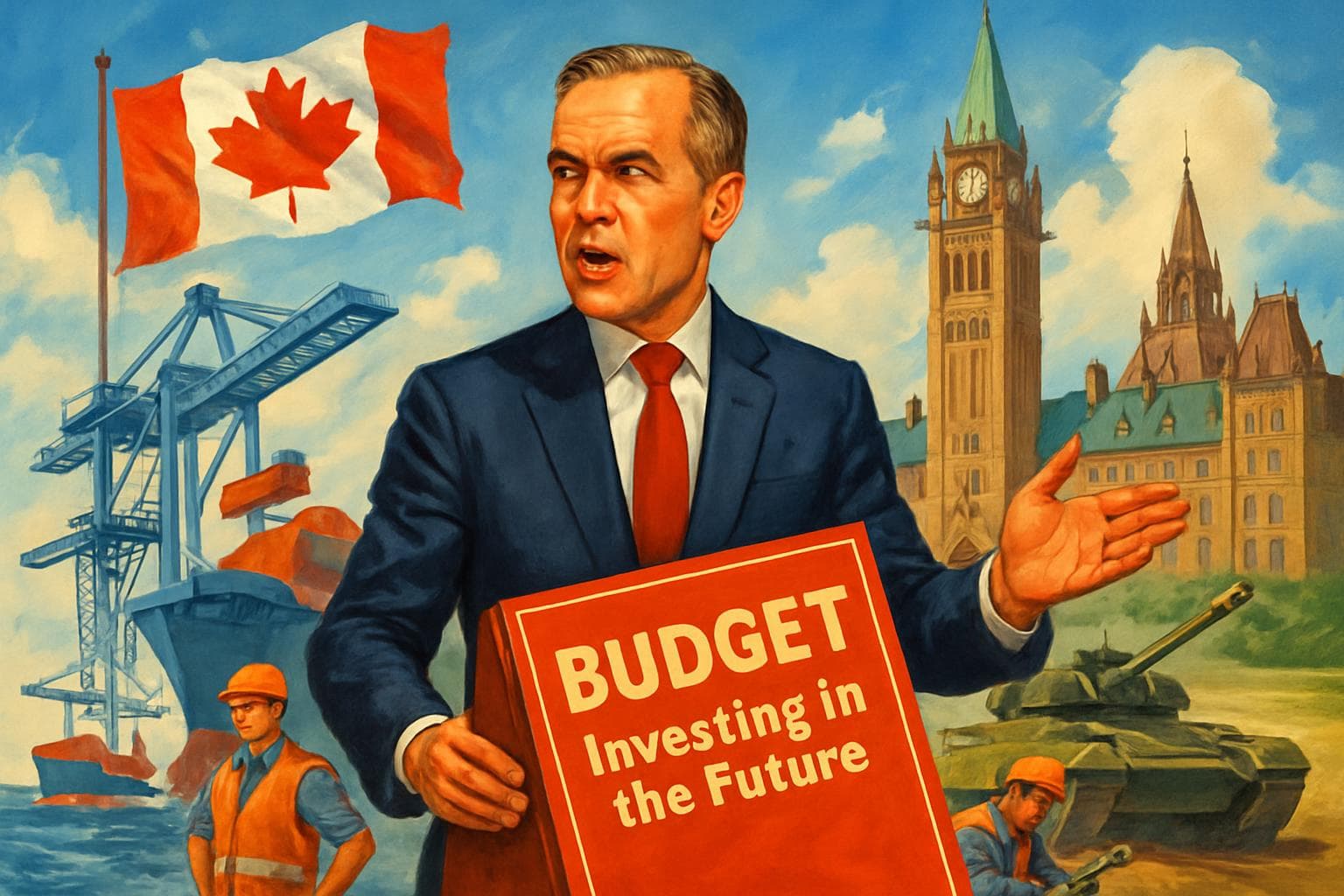
In a bold move to reshape Canada's economic landscape, Prime Minister Mark Carney has presented his first federal budget, which outlines a significant increase in deficit spending to counteract the impact of US tariffs and stimulate growth. The budget, described as an "investment budget," projects a C$78bn deficit, the second-largest in Canadian history, as it seeks to attract C$1tn in investment over the next five years.
Economic Transformation and Investment
The budget, presented by Finance Minister François-Philippe Champagne, emphasizes the need for swift action in response to a rapidly changing global environment. With US tariffs on Canadian goods, including steel, aluminium, and automobiles, causing job losses and investment uncertainty, the government plans to spend C$280bn over five years to enhance productivity and competitiveness. This includes upgrading trade infrastructure and doubling exports to non-US markets within a decade.
Defence and Workforce Adjustments
Defence spending is set to rise by nearly C$82bn over five years, aligning with NATO's 2% GDP target. Additionally, the budget proposes a 10% reduction in the federal workforce, aiming for C$60bn in savings through attrition and AI adoption. This move is part of a broader strategy to streamline government operations while maintaining essential services.
Political Reactions and Implications
The budget has sparked debate among opposition parties, with some criticizing the scale of spending. However, the defection of Conservative MP Chris d’Entremont to the Liberal caucus has bolstered Carney's minority government, reducing the number of additional votes needed to pass the budget. Parliament is set to debate the budget over four days, with a vote expected soon.
WHAT THIS MIGHT MEAN
As Canada navigates the challenges posed by US tariffs and a shifting global economy, the success of Carney's budget will hinge on its ability to attract the promised C$1tn in investment. If successful, this could position Canada as a more attractive business environment than the US, potentially reshaping trade dynamics. However, the ambitious spending plan also carries risks, including increased national debt and potential public resistance to workforce reductions. Political dynamics may shift further if the budget fails to deliver immediate economic relief, influencing future elections and policy directions.
Related Articles

Canada and Australia Forge Strategic Partnership Amid Global Uncertainty

US Supreme Court Ruling on Tariffs Sparks Uncertainty for UK and Global Trade
US Supreme Court Ruling on Trump's Tariffs Sparks Trade Policy Uncertainty
Trump's Tariff Strategy Faces Supreme Court Setback, New Measures Announced

Tech Giants Pledge to Cover AI Data Center Energy Costs Amid Rising Electricity Concerns

UK-Iran Tensions: Starmer Defends Cautious Approach Amid Trump Criticism
Canada's Ambitious Budget Aims to Counter US Tariffs and Boost Economy
In This Article
 Daniel Rivera| Published
 HIGHLIGHTS
- Canada's Prime Minister Mark Carney unveiled a federal budget with a C$78bn deficit to counteract US tariffs and boost economic growth.
- The budget aims to attract C$1tn in investment over five years, focusing on infrastructure and competitiveness.
- Defence spending will increase by nearly C$82bn over five years, aligning with NATO commitments.
- The budget proposes a 10% reduction in the federal workforce, aiming for C$60bn in savings.
- Opposition parties criticize the budget's spending levels, but a key MP's defection strengthens Carney's minority government.
In a bold move to reshape Canada's economic landscape, Prime Minister Mark Carney has presented his first federal budget, which outlines a significant increase in deficit spending to counteract the impact of US tariffs and stimulate growth. The budget, described as an "investment budget," projects a C$78bn deficit, the second-largest in Canadian history, as it seeks to attract C$1tn in investment over the next five years.
Economic Transformation and Investment
The budget, presented by Finance Minister François-Philippe Champagne, emphasizes the need for swift action in response to a rapidly changing global environment. With US tariffs on Canadian goods, including steel, aluminium, and automobiles, causing job losses and investment uncertainty, the government plans to spend C$280bn over five years to enhance productivity and competitiveness. This includes upgrading trade infrastructure and doubling exports to non-US markets within a decade.
Defence and Workforce Adjustments
Defence spending is set to rise by nearly C$82bn over five years, aligning with NATO's 2% GDP target. Additionally, the budget proposes a 10% reduction in the federal workforce, aiming for C$60bn in savings through attrition and AI adoption. This move is part of a broader strategy to streamline government operations while maintaining essential services.
Political Reactions and Implications
The budget has sparked debate among opposition parties, with some criticizing the scale of spending. However, the defection of Conservative MP Chris d’Entremont to the Liberal caucus has bolstered Carney's minority government, reducing the number of additional votes needed to pass the budget. Parliament is set to debate the budget over four days, with a vote expected soon.
WHAT THIS MIGHT MEAN
As Canada navigates the challenges posed by US tariffs and a shifting global economy, the success of Carney's budget will hinge on its ability to attract the promised C$1tn in investment. If successful, this could position Canada as a more attractive business environment than the US, potentially reshaping trade dynamics. However, the ambitious spending plan also carries risks, including increased national debt and potential public resistance to workforce reductions. Political dynamics may shift further if the budget fails to deliver immediate economic relief, influencing future elections and policy directions.
Related Articles
Canada and Australia Forge Strategic Partnership Amid Global Uncertainty
US Supreme Court Ruling on Tariffs Sparks Uncertainty for UK and Global Trade
US Supreme Court Ruling on Trump's Tariffs Sparks Trade Policy Uncertainty
Trump's Tariff Strategy Faces Supreme Court Setback, New Measures Announced
Tech Giants Pledge to Cover AI Data Center Energy Costs Amid Rising Electricity Concerns
UK-Iran Tensions: Starmer Defends Cautious Approach Amid Trump Criticism