
Canada's Federal Budget: Sacrifices and Strategic Investments Amid Trade Tensions
In This Article
HIGHLIGHTS
- Prime Minister Mark Carney will present Canada's first federal budget, emphasizing "sacrifices" amid a trade war with the US.
- The budget aims to reduce reliance on US trade and includes significant cuts and investments, with a potential deficit exceeding C$70bn.
- The Liberal Party, lacking a majority, needs support from other parties to pass the budget, risking a snap election if it fails.
- Finance Minister François-Philippe Champagne highlights a focus on resilience and prosperity, with investments in defence and infrastructure.
- Opposition parties express skepticism, with concerns over spending cuts and the potential impact on Canada's economic future.
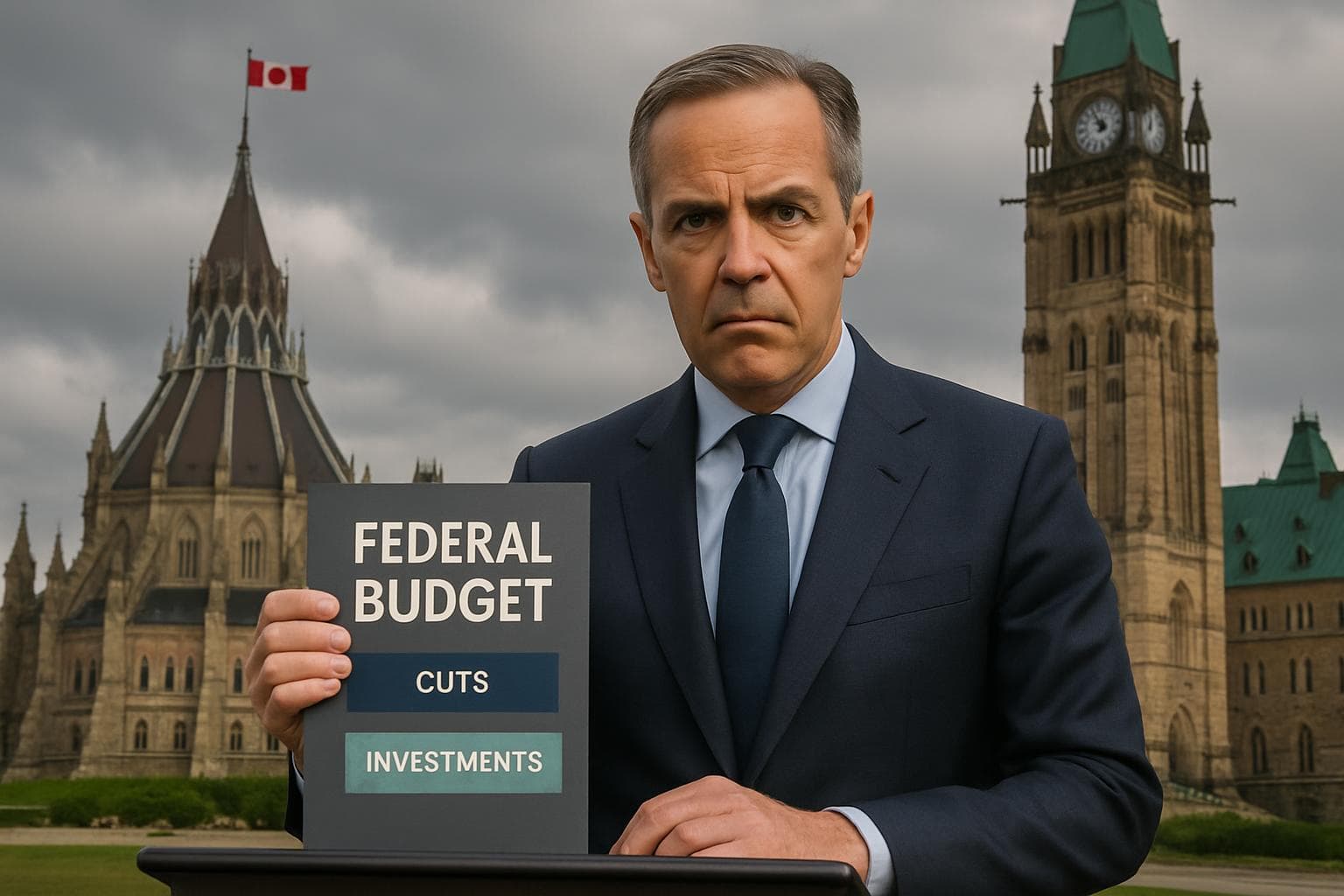
Prime Minister Mark Carney is poised to unveil Canada's first federal budget, a pivotal moment for his administration as it grapples with economic challenges exacerbated by a trade war with the United States. The budget, set to be presented on Tuesday, is expected to introduce both substantial cuts and strategic investments aimed at fortifying the Canadian economy and reducing its dependence on US trade.
Economic Strategy and Defence Commitments
Carney's budget is anticipated to outline a path toward doubling Canada's non-US exports over the next decade, a move seen as crucial given the country's vulnerability to tariff shocks. The plan also includes a commitment to increase defence spending to 5% of GDP by 2035, aligning with NATO obligations. Analysts predict the federal deficit could soar beyond C$70bn, a significant increase from last year's C$51.7bn.
Finance Minister François-Philippe Champagne emphasized the government's focus on resilience and prosperity, stating, "We're moving from reliance to resilience, from uncertainty to prosperity." The budget will also address infrastructure and support for industries impacted by tariffs, with federal ministries tasked with identifying up to 15% in program spending cuts to fund these initiatives.
Political Dynamics and Potential Snap Election
The Liberal Party, holding 169 seats in the House of Commons, is three seats short of a majority and must secure backing from other parties to pass the budget. Failure to do so could trigger a snap election, the second in less than a year. Opposition parties have voiced skepticism, critiquing the budget for either excessive spending or insufficient investment.
Carney, a former central banker, has acknowledged the challenges ahead, stating, "We won’t transform our economy overnight – it will take sacrifice and time." His remarks have drawn criticism from Conservative leader Pierre Poilievre, who accused the Liberals of seeking a "permanent reduction in our quality of life."
Public and Expert Reactions
The budget's unveiling comes amid heightened political tensions, with the government accusing opposition parties of leveraging fiscal demands for political gain. As the budget vote looms, the possibility of a "Christmas election" remains a contentious issue, particularly as the Liberals navigate their minority status.
WHAT THIS MIGHT MEAN
The upcoming budget vote is a critical juncture for Prime Minister Mark Carney's administration. Should the budget fail to pass, Canada could face a snap election, adding political uncertainty to an already challenging economic landscape. Experts suggest that successful passage of the budget could stabilize the government and provide a clear path forward for economic recovery and growth.
If the budget is approved, the focus will likely shift to implementing the proposed investments and cuts, with particular attention on how these measures impact Canada's trade dynamics and defence commitments. The government's ability to navigate these complex issues will be crucial in determining Canada's economic trajectory in the coming years.
Related Articles
China Sets Lowest GDP Growth Target in Decades Amid Economic Challenges
Canada Calls for De-escalation Amid US-Israel Strikes on Iran
Canada and Australia Forge Strategic Partnership Amid Global Uncertainty
Cuba Faces Widespread Blackout Amid Deepening Fuel Crisis

UK Faces Dilemmas Amid Iran Conflict and China Spying Allegations

Google Faces Legal Battle Over AI Chatbot's Alleged Role in Tragic Death
Canada's Federal Budget: Sacrifices and Strategic Investments Amid Trade Tensions
In This Article
 Daniel Rivera| Published
 HIGHLIGHTS
- Prime Minister Mark Carney will present Canada's first federal budget, emphasizing "sacrifices" amid a trade war with the US.
- The budget aims to reduce reliance on US trade and includes significant cuts and investments, with a potential deficit exceeding C$70bn.
- The Liberal Party, lacking a majority, needs support from other parties to pass the budget, risking a snap election if it fails.
- Finance Minister François-Philippe Champagne highlights a focus on resilience and prosperity, with investments in defence and infrastructure.
- Opposition parties express skepticism, with concerns over spending cuts and the potential impact on Canada's economic future.
Prime Minister Mark Carney is poised to unveil Canada's first federal budget, a pivotal moment for his administration as it grapples with economic challenges exacerbated by a trade war with the United States. The budget, set to be presented on Tuesday, is expected to introduce both substantial cuts and strategic investments aimed at fortifying the Canadian economy and reducing its dependence on US trade.
Economic Strategy and Defence Commitments
Carney's budget is anticipated to outline a path toward doubling Canada's non-US exports over the next decade, a move seen as crucial given the country's vulnerability to tariff shocks. The plan also includes a commitment to increase defence spending to 5% of GDP by 2035, aligning with NATO obligations. Analysts predict the federal deficit could soar beyond C$70bn, a significant increase from last year's C$51.7bn.
Finance Minister François-Philippe Champagne emphasized the government's focus on resilience and prosperity, stating, "We're moving from reliance to resilience, from uncertainty to prosperity." The budget will also address infrastructure and support for industries impacted by tariffs, with federal ministries tasked with identifying up to 15% in program spending cuts to fund these initiatives.
Political Dynamics and Potential Snap Election
The Liberal Party, holding 169 seats in the House of Commons, is three seats short of a majority and must secure backing from other parties to pass the budget. Failure to do so could trigger a snap election, the second in less than a year. Opposition parties have voiced skepticism, critiquing the budget for either excessive spending or insufficient investment.
Carney, a former central banker, has acknowledged the challenges ahead, stating, "We won’t transform our economy overnight – it will take sacrifice and time." His remarks have drawn criticism from Conservative leader Pierre Poilievre, who accused the Liberals of seeking a "permanent reduction in our quality of life."
Public and Expert Reactions
The budget's unveiling comes amid heightened political tensions, with the government accusing opposition parties of leveraging fiscal demands for political gain. As the budget vote looms, the possibility of a "Christmas election" remains a contentious issue, particularly as the Liberals navigate their minority status.
WHAT THIS MIGHT MEAN
The upcoming budget vote is a critical juncture for Prime Minister Mark Carney's administration. Should the budget fail to pass, Canada could face a snap election, adding political uncertainty to an already challenging economic landscape. Experts suggest that successful passage of the budget could stabilize the government and provide a clear path forward for economic recovery and growth.
If the budget is approved, the focus will likely shift to implementing the proposed investments and cuts, with particular attention on how these measures impact Canada's trade dynamics and defence commitments. The government's ability to navigate these complex issues will be crucial in determining Canada's economic trajectory in the coming years.
Related Articles
China Sets Lowest GDP Growth Target in Decades Amid Economic Challenges
Canada Calls for De-escalation Amid US-Israel Strikes on Iran
Canada and Australia Forge Strategic Partnership Amid Global Uncertainty
Cuba Faces Widespread Blackout Amid Deepening Fuel Crisis
UK Faces Dilemmas Amid Iran Conflict and China Spying Allegations
Google Faces Legal Battle Over AI Chatbot's Alleged Role in Tragic Death