
China's Population Decline Accelerates Amid Record Low Birth Rates

In This Article
HIGHLIGHTS
- China's birth rate hit a record low of 5.63 per 1,000 people in 2025, marking the fourth consecutive year of population decline.
- The population decreased by 3.39 million to 1.4 billion, with deaths rising to 11.31 million, the highest since 1968.
- Despite incentives like childcare subsidies and tax changes, the fertility rate remains around one birth per woman, below the replacement rate.
- Economic pressures and high costs of raising children contribute to the declining birth rate, with the average cost of raising a child exceeding six times China's GDP per capita.
- Experts predict continued population decline, posing significant economic and social challenges for China.
China's population has continued its downward trajectory for the fourth consecutive year, with the birth rate plummeting to an unprecedented low in 2025. According to the National Bureau of Statistics, the birth rate fell to 5.63 per 1,000 people, the lowest since records began in 1949. This decline has resulted in a population decrease of 3.39 million, bringing the total to 1.4 billion by the end of the year.
Demographic Challenges and Economic Pressures
The drop in birth rates comes despite a series of government initiatives aimed at reversing the trend. In recent years, Beijing has introduced policies such as a nationwide childcare subsidy program and expanded healthcare coverage for childbirth-related expenses. However, these measures have yet to yield significant results. The fertility rate remains at approximately one birth per woman, far below the replacement rate of 2.1.
Economic factors play a crucial role in this demographic shift. The cost of raising a child in China is notably high, with estimates suggesting it is more than six times the country's GDP per capita. This financial burden, coupled with high unemployment and slowing economic growth, deters many young couples from having children. "Given the current environment, it is a miracle that anyone is willing to have kids at all," commented a user on the social media platform Weibo.
Legacy of the One-Child Policy
The legacy of China's one-child policy, which was only lifted in 2017, continues to impact the nation's demographic landscape. Many of the current child-bearing generation have been conditioned to favor smaller families, and the pool of potential parents is shrinking as the population ages. By 2035, it is projected that over-60s will account for 400 million people, equivalent to the current population of the United States.
Controversial Measures and Public Reaction
In a bid to encourage higher birth rates, the government has introduced controversial measures, such as a 13% tax on contraceptives, including condoms. While free contraceptives are still available through government programs, this move has sparked concerns about rising unwanted pregnancies and HIV rates. Despite these efforts, many predict that the birth rate will continue to decline, exacerbating the challenges faced by the world's second-largest economy.
WHAT THIS MIGHT MEAN
The continued decline in China's population poses significant economic and social challenges. As the workforce shrinks and the population ages, the strain on social services and pension systems is likely to intensify. Experts warn that without a reversal in birth rates, China may struggle to maintain its economic growth and global influence.
In the coming years, Beijing may need to consider more radical policy changes to address these demographic challenges. This could include further financial incentives for families, reforms in housing and education, or even immigration policies to bolster the workforce. The effectiveness of these measures will be crucial in determining China's future economic stability and social cohesion.
Related Articles
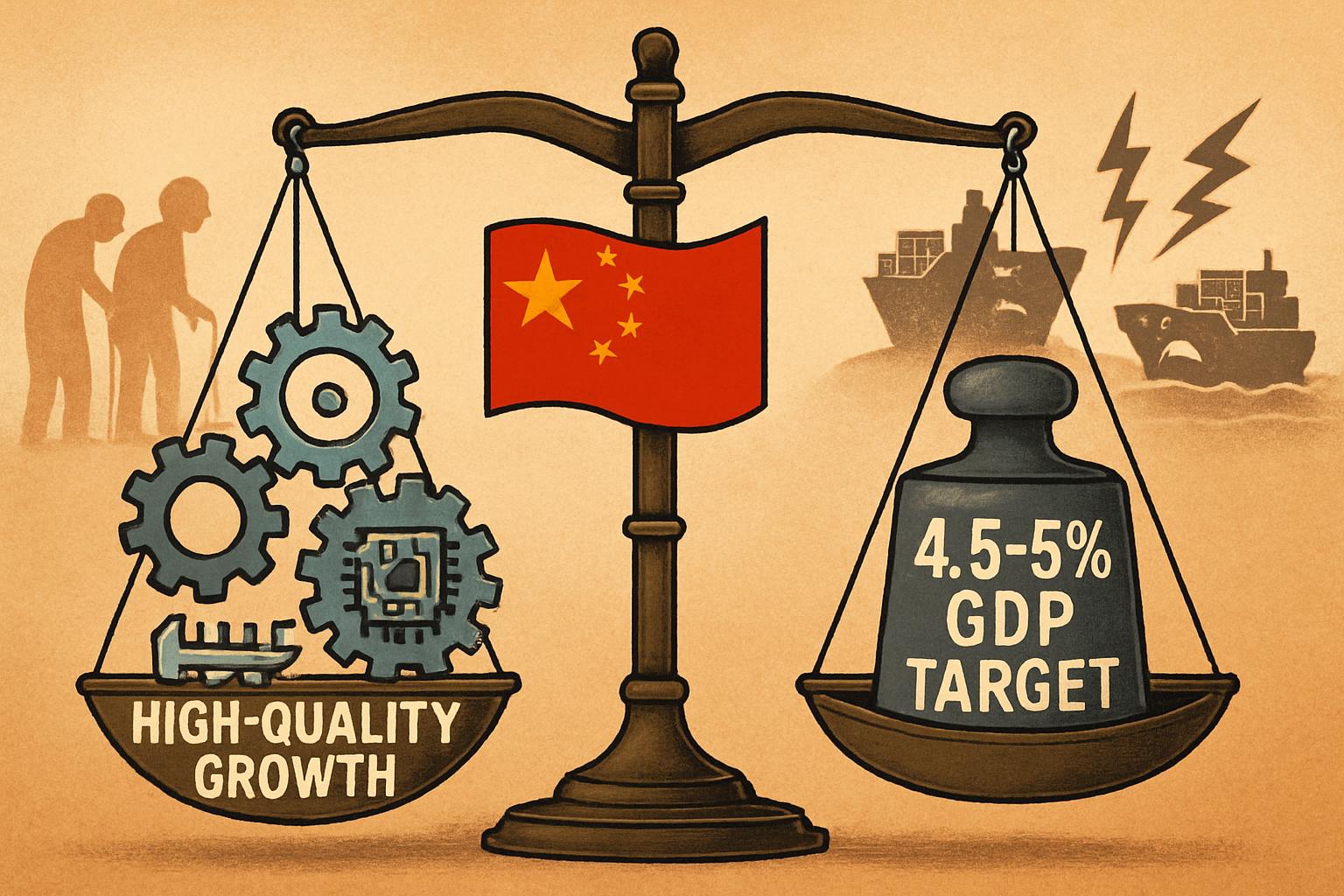
China Sets Lowest GDP Growth Target in Decades Amid Economic Challenges

UK Faces Dilemmas Amid Iran Conflict and China Spying Allegations

Trump's New Tariff Strategy Sparks Global Trade Uncertainty

Cuba Faces Widespread Blackout Amid Deepening Fuel Crisis

Google Faces Legal Battle Over AI Chatbot's Alleged Role in Tragic Death

Labour MP's Husband Arrested in UK-China Espionage Probe
China's Population Decline Accelerates Amid Record Low Birth Rates
In This Article
 Daniel Rivera| Published
 HIGHLIGHTS
- China's birth rate hit a record low of 5.63 per 1,000 people in 2025, marking the fourth consecutive year of population decline.
- The population decreased by 3.39 million to 1.4 billion, with deaths rising to 11.31 million, the highest since 1968.
- Despite incentives like childcare subsidies and tax changes, the fertility rate remains around one birth per woman, below the replacement rate.
- Economic pressures and high costs of raising children contribute to the declining birth rate, with the average cost of raising a child exceeding six times China's GDP per capita.
- Experts predict continued population decline, posing significant economic and social challenges for China.
China's population has continued its downward trajectory for the fourth consecutive year, with the birth rate plummeting to an unprecedented low in 2025. According to the National Bureau of Statistics, the birth rate fell to 5.63 per 1,000 people, the lowest since records began in 1949. This decline has resulted in a population decrease of 3.39 million, bringing the total to 1.4 billion by the end of the year.
Demographic Challenges and Economic Pressures
The drop in birth rates comes despite a series of government initiatives aimed at reversing the trend. In recent years, Beijing has introduced policies such as a nationwide childcare subsidy program and expanded healthcare coverage for childbirth-related expenses. However, these measures have yet to yield significant results. The fertility rate remains at approximately one birth per woman, far below the replacement rate of 2.1.
Economic factors play a crucial role in this demographic shift. The cost of raising a child in China is notably high, with estimates suggesting it is more than six times the country's GDP per capita. This financial burden, coupled with high unemployment and slowing economic growth, deters many young couples from having children. "Given the current environment, it is a miracle that anyone is willing to have kids at all," commented a user on the social media platform Weibo.
Legacy of the One-Child Policy
The legacy of China's one-child policy, which was only lifted in 2017, continues to impact the nation's demographic landscape. Many of the current child-bearing generation have been conditioned to favor smaller families, and the pool of potential parents is shrinking as the population ages. By 2035, it is projected that over-60s will account for 400 million people, equivalent to the current population of the United States.
Controversial Measures and Public Reaction
In a bid to encourage higher birth rates, the government has introduced controversial measures, such as a 13% tax on contraceptives, including condoms. While free contraceptives are still available through government programs, this move has sparked concerns about rising unwanted pregnancies and HIV rates. Despite these efforts, many predict that the birth rate will continue to decline, exacerbating the challenges faced by the world's second-largest economy.
WHAT THIS MIGHT MEAN
The continued decline in China's population poses significant economic and social challenges. As the workforce shrinks and the population ages, the strain on social services and pension systems is likely to intensify. Experts warn that without a reversal in birth rates, China may struggle to maintain its economic growth and global influence.
In the coming years, Beijing may need to consider more radical policy changes to address these demographic challenges. This could include further financial incentives for families, reforms in housing and education, or even immigration policies to bolster the workforce. The effectiveness of these measures will be crucial in determining China's future economic stability and social cohesion.
Related Articles
China Sets Lowest GDP Growth Target in Decades Amid Economic Challenges
UK Faces Dilemmas Amid Iran Conflict and China Spying Allegations
Trump's New Tariff Strategy Sparks Global Trade Uncertainty
Cuba Faces Widespread Blackout Amid Deepening Fuel Crisis
Google Faces Legal Battle Over AI Chatbot's Alleged Role in Tragic Death
Labour MP's Husband Arrested in UK-China Espionage Probe